What Is Segovia, and What Is Its Aqueduct?

Iconic Roman aqueduct in Segovia with arches overlooking the cityscape. — illustrating What Is Segovia, and What Is Its Aqueduct?

Segovia is a city of around 50,000 people in the Castilian plateau, roughly 90 minutes north-west of Madrid by road or under 30 minutes by high-speed train. Its landmark is a Roman aqueduct: a raised stone channel, built without mortar, that still stands more than 800 metres through the middle of the old town. What … Read more

How Much Green Space Does Madrid Have, and Where Is It?

Stunning view of Crystal Palace in Retiro Park, Madrid, surrounded by lush greenery. — illustrating How Much Green Space Does Madrid Have, and Where Is It?

Madrid has a substantial amount of green space for a European capital, spread across a handful of very large parks rather than evenly distributed through the built city. The Madrid City Council’s own environmental reports put roughly a fifth of the municipal area under some form of green cover, though the exact figure moves between … Read more

What Is the Sierra de Guadarrama, and How Close Is It?

Discover Toledo, Spain's stunning view with historic architecture and the Tagus River flowing nearby. — illustrating What Is the Sierra de Guadarrama, and How Close Is It?

The Sierra de Guadarrama is the mountain range that closes off the northern edge of the Madrid basin, part of the wider Sistema Central that runs across the middle of the Iberian Peninsula. Its nearest ridges lie roughly 50–60 km from central Madrid, and its closer towns are reachable by suburban train in under two … Read more

Where Can You See Madrid From Above? A Clear Guide

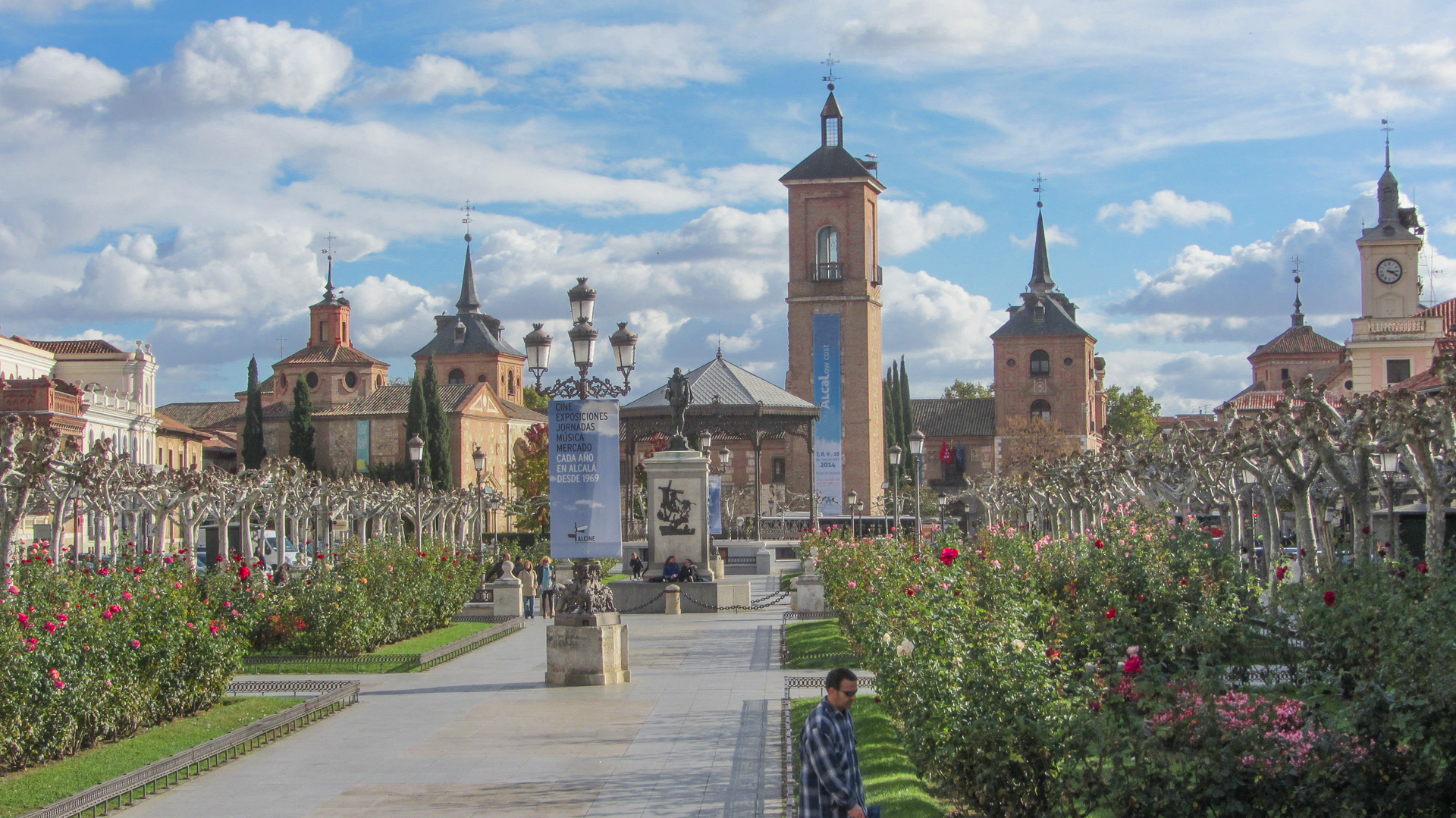
Vibrant view of Plaza Mayor in Madrid with historical architecture and bustling tourists. — illustrating Where Can You See Madrid From Above? A Clear Guide

Madrid has a small, specific set of places built or adapted for looking down at the city: an observation tower at Moncloa, a rooftop terrace on a private cultural foundation, a mirador inside the city council’s own headquarters, a viewing deck near Plaza de España, and a cable car that crosses the Parque del Oeste … Read more

What Is the Parque del Oeste? Madrid’s Western Park

Stunning view of Crystal Palace in Retiro Park, Madrid, surrounded by lush greenery. — illustrating What Is the Parque del Oeste? Madrid's Western Park

The Parque del Oeste is a long, sloping public park in western Madrid, running from the Príncipe Pío and Moncloa area down toward the Manzanares river. It was laid out in the early twentieth century as an English-style landscape garden, and it now holds a rose garden, a cable car station, and the grounds around … Read more

What Is the Real Jardín Botánico in Madrid?

Stunning view of Crystal Palace in Retiro Park, Madrid, surrounded by lush greenery. — illustrating What Is the Real Jardín Botánico in Madrid?

The Real Jardín Botánico is Madrid’s royal botanical garden, founded in 1755, now run as a scientific institution by the CSIC (Spain’s national research council) rather than as a city park. It sits beside the Prado Museum, holds thousands of catalogued plant species across terraced grounds, and charges an entry fee, unlike the free public … Read more

What Is Madrid Río, and What Was There Before?

Stunning view of Crystal Palace in Retiro Park, Madrid, surrounded by lush greenery. — illustrating What Is Madrid Río, and What Was There Before?

Madrid Río is a six-kilometre park that runs along both banks of the Manzanares river, from the Puente de los Franceses in the north down past Puente de Toledo. Before it existed, this stretch of riverbank carried the M-30 ring road at surface level, cutting the river off from the city it ran through. The … Read more

What Is Casa de Campo, and How Big Is It?

Casa de Campo L5 3.jpg — illustrating What Is Casa de Campo, and How Big Is It?

Casa de Campo is Madrid’s largest park, a former royal hunting estate on the west bank of the Manzanares river, now open to the public and covering roughly 1,700 hectares — about five times the size of Parque del Retiro and among the largest urban parks in Europe. What is Casa de Campo? Casa de … Read more

About what you read here. Access Madrid is an independent guide written from published, checkable sources — museum and transport operators’ own information, official city and tourism data, and the public record. We have not visited the places we write about, and we do not publish personal recommendations or invented “local favourites”. Where we point to something notable we say who says so.

Opening times, fares, closures and prices change, often at short notice. Everything here is a starting point, not a booking confirmation — always check the venue’s or operator’s own site before you build a day around it. We are not a travel agency and we give no advice on visas, insurance, health or safety requirements; for those, use your own government’s official guidance.