The Museo del Traje is Spain’s national museum of clothing and textile history, holding a collection of garments, accessories and fabric that runs from the sixteenth century to contemporary fashion. It sits in a purpose-built modern building near Ciudad Universitaria in Madrid and is run as one of the state’s national museums, under the Ministry of Culture.
What does the museum actually collect?
Its full name is the Museo del Traje: Centro de Investigación del Patrimonio Etnológico (Costume Museum: Centre for Research into Ethnological Heritage), and the collection reflects that dual mandate — dress as fashion object and dress as social record.
According to the museum’s own account of its holdings, the collection includes:
- Historic Spanish dress from the sixteenth century onward, including court and religious garments
- Regional and traditional costume from across Spain, gathered as ethnological material rather than as decorative folklore
- Twentieth-century Spanish haute couture, including work associated with designers such as Cristóbal Balenciaga and Manuel Pertegaz
- Underwear, accessories, textiles and related archival material documenting how clothing was made and worn
The museum grew out of earlier state collections of costume and folk dress that were consolidated in the twentieth century, and it opened on its current site in 2004. It is not a fashion-industry showcase; its stated remit is closer to social and material history, using clothing as the primary evidence.
Where is the Museo del Traje, and why is it there?
The museum is on Avenida Juan de Herrera, in the university district near Ciudad Universitaria and Moncloa, on the western edge of central Madrid. It is set within its own gardens, separate from the cluster of art museums along the Paseo del Prado.
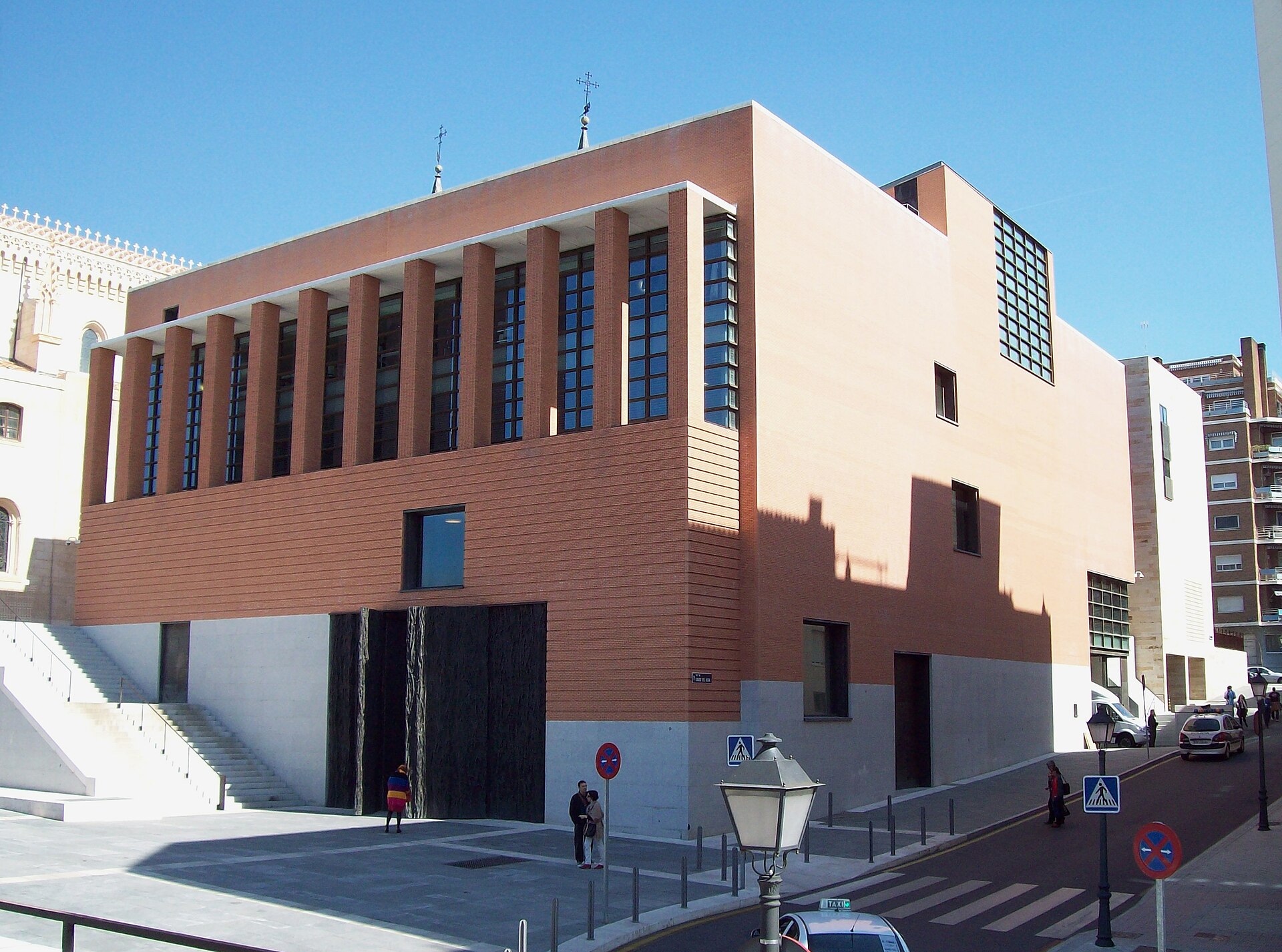
The building itself predates the museum’s arrival. It was designed in the late 1960s and constructed in the early 1970s as a piece of Spanish modernist architecture, originally conceived to house a museum of contemporary art. That project did not take the form originally planned, and the building was later adapted to hold the costume and textile collections instead. The result is a rare case in Madrid of a national museum occupying a structure built from scratch for museum use, rather than a converted palace or former convent — which is the more common pattern among the city’s historic house-museums.
Is it a national museum, and what does that mean for a visit?
Yes. The Museo del Traje is administered by Spain’s Ministry of Culture as one of its network of national museums, alongside institutions such as the Museo del Prado and the Museo Arqueológico Nacional, though it is far smaller and less visited than either.
That national status matters practically. Spain’s national museums generally observe a free-entry window on certain days or hours, set by the ministry rather than by the individual museum, and the pattern of these windows — and who qualifies for reduced or free entry year-round — is explained in more detail in this site’s guide to how Madrid’s national museum free-entry windows work. As with fares and ticket prices generally, the specific days and hours are the kind of detail that changes; the museum’s own site is the source to confirm before visiting.
Like most of Madrid’s major museums, the Museo del Traje also has a fixed weekly closure. The pattern of Monday closures across the city’s national and municipal museums — and the reasoning behind it — is covered separately in why so many Madrid museums close on Mondays.
_04.jpg)
How does it compare with Madrid’s other historic collections?
Madrid’s house-museums tend to preserve a single owner’s taste or a single period frozen in place. The Museo Cerralbo keeps the aristocratic collection and interiors of a nineteenth-century marquis; the Museo Sorolla is the painter’s own house and studio; the Museo Lázaro Galdiano holds one private collector’s eclectic haul of decorative art and painting.
The Museo del Traje works differently. It is not built around one collector or one household, but around a category of object — clothing — tracked across centuries and social classes. It has more in common, structurally, with a specialist national archive than with a preserved home. Its closest institutional relatives in Madrid are other subject-specific national museums such as the Museo Arqueológico Nacional, which organises Spain’s material past by period and artefact type rather than by a single donor’s taste.
It sits well outside the cluster of galleries usually described as Madrid’s Golden Triangle of Art — the Prado, the Thyssen-Bornemisza and the Reina Sofía, all strung along the Paseo del Prado — and it draws a different kind of attention: researchers of textile and social history, and visitors specifically interested in dress rather than painting.
Does it hold anything comparable to a major painting collection?
No, and it does not attempt to. Readers looking for Madrid’s core painting collections — the Prado’s holdings of Spanish, Italian and Flemish old masters, the Thyssen’s private-collection sweep from medieval to modern, or the Reina Sofía’s twentieth-century Spanish art including Picasso’s Guernica — should look to those institutions directly. This site covers what is in the Museo del Prado and how it is arranged, what the Thyssen-Bornemisza collection holds and how it arrived in Madrid, and what is in the Reina Sofía and how Guernica arrived there in separate detail, along with a practical look at how much of the Prado can realistically be seen in one visit.
The Museo del Traje’s value is narrower and more specific: it is the state’s primary repository for the history of what people in Spain actually wore, from court dress to working clothes to twentieth-century couture, backed by conservation and research work that a general art museum does not carry out.
Who is the museum actually useful for?
Its clearest audience is anyone with a specific interest in textile history, historic tailoring, regional Spanish dress, or twentieth-century Spanish fashion design. It also functions as a teaching and research resource, consistent with its formal status as a research centre for ethnological heritage, not only a display space.
For a general first-time visitor to Madrid with limited time, it is not typically grouped with the essential stops in the way the Prado or Reina Sofía are — but for residents and repeat visitors looking to move beyond the Golden Triangle, it represents a different, less-crowded kind of national collection, in a building that is itself an unusual piece of Madrid’s modern architectural record.
Readers building a broader sense of what the city’s museums cover, beyond painting and sculpture, can find the fuller range — from decorative arts to archaeology to house-museums like the Museo Cerralbo and institutions such as the CaixaForum Madrid and the Real Academia de Bellas Artes de San Fernando — indexed in this site’s Museums & Galleries section.
Access Madrid is an independent guide written from published, checkable sources. We have not visited the places described here and we do not publish personal recommendations or invented ‘local favourites’ — where something is singled out as notable, we say who says so. Opening times, fares, closures and prices change at short notice, so treat everything here as a starting point and confirm with the museum, operator or venue directly before building a day around it. We give no advice on visas, insurance, health or safety; use your own government’s official guidance for those.
Featured image: Photo by Luis García (Zaqarbal), source, CC BY-SA 4.0
_23.jpg)