The Museo Arqueológico Nacional (National Archaeological Museum) is Spain’s state museum of archaeology and applied arts, tracing the peninsula’s material history from prehistory through the medieval period. It holds objects rather than paintings — pottery, jewellery, coins, mosaics, sculpture — organised broadly in chronological order across several floors on Calle de Serrano in Madrid.
What kind of museum is it?
It is a national museum run by Spain’s Ministry of Culture, not a municipal or private collection. Its remit is the archaeology of the Iberian Peninsula and its historical cultures, plus a smaller holding of material from ancient Egypt, Greece and the Near East acquired for comparative and teaching purposes in the 19th century.
The museum was founded in 1867 by royal decree, under Isabel II, as part of a wave of state museum-building that also produced the archive and library institutions it once shared a building with. It has occupied its current site on Calle de Serrano, in the Salamanca district, since the 1890s, in a building originally designed to house the National Library alongside it.
That shared building — the Palacio de Biblioteca y Museos Nacionales — still holds the Biblioteca Nacional de España in its other wing. The archaeological museum underwent a lengthy structural renovation that closed most of the galleries between 2008 and 2014, with a phased reopening completed by 2014. The building visitors see today is substantially a modern museum interior built inside a 19th-century shell.
What does the collection actually cover?
The collection is organised as a chronological walk through the peninsula’s past, from the Palaeolithic to roughly the 19th century, with the heaviest concentration of material in prehistory, the Iberian and Celtiberian cultures, Roman Hispania, the Visigothic kingdom, and Al-Andalus.
- Prehistory: stone tools, ceramics and grave goods from sites across the peninsula, plus material illustrating the shift from hunter-gatherer to agricultural and metalworking societies.
- Iberian culture: the pre-Roman peoples of eastern and southern Iberia, known largely through sculpture, sanctuary offerings and painted pottery.
- Roman Hispania: mosaics, inscriptions, portrait sculpture and everyday objects from Roman-period towns and villas across Spain.
- Visigothic Spain: metalwork and liturgical objects from the post-Roman kingdom that controlled much of the peninsula before 711.
- Al-Andalus: ceramics, ivories and architectural fragments from the Islamic period, spanning the Caliphate of Córdoba through the later Taifa and Nasrid states.
- Medieval Christian Spain: objects from the Reconquista-era kingdoms, including church treasures and coinage.
A separate, smaller section holds Egyptian, Greek, Etruscan and Near Eastern material, collected mainly to give 19th-century Spanish scholars comparative reference points rather than to build a comprehensive foreign-antiquities collection on the scale of the British Museum or the Louvre.
What are the museum’s best-known pieces?
Several individual objects in the collection are widely cited in Spanish archaeology and are usually the ones a visitor is directed toward first. None require advance research to appreciate, but each has a documented, checkable backstory.
- The Lady of Elche (Dama de Elche): a painted limestone bust of a woman, generally dated to the 4th or 5th century BC and attributed to Iberian culture with debated Punic or Greek stylistic influence. It was found near Elche, in the Valencian region, in 1897, and is treated as one of the defining works of pre-Roman Iberian sculpture.
- The Treasure of Guarrazar: a hoard of Visigothic gold votive crowns and crosses, found near Toledo in the 19th century, and among the most significant surviving pieces of Visigothic metalwork anywhere.
- Material from Numantia: objects from the Celtiberian settlement near modern Soria, site of a prolonged siege by Roman forces in the 2nd century BC, an episode still referenced in Spanish historical memory.
- The Bicha de Balazote: a stone sculpture of a bull-like creature with a human face, from the Iberian period, whose exact original purpose remains debated by archaeologists.
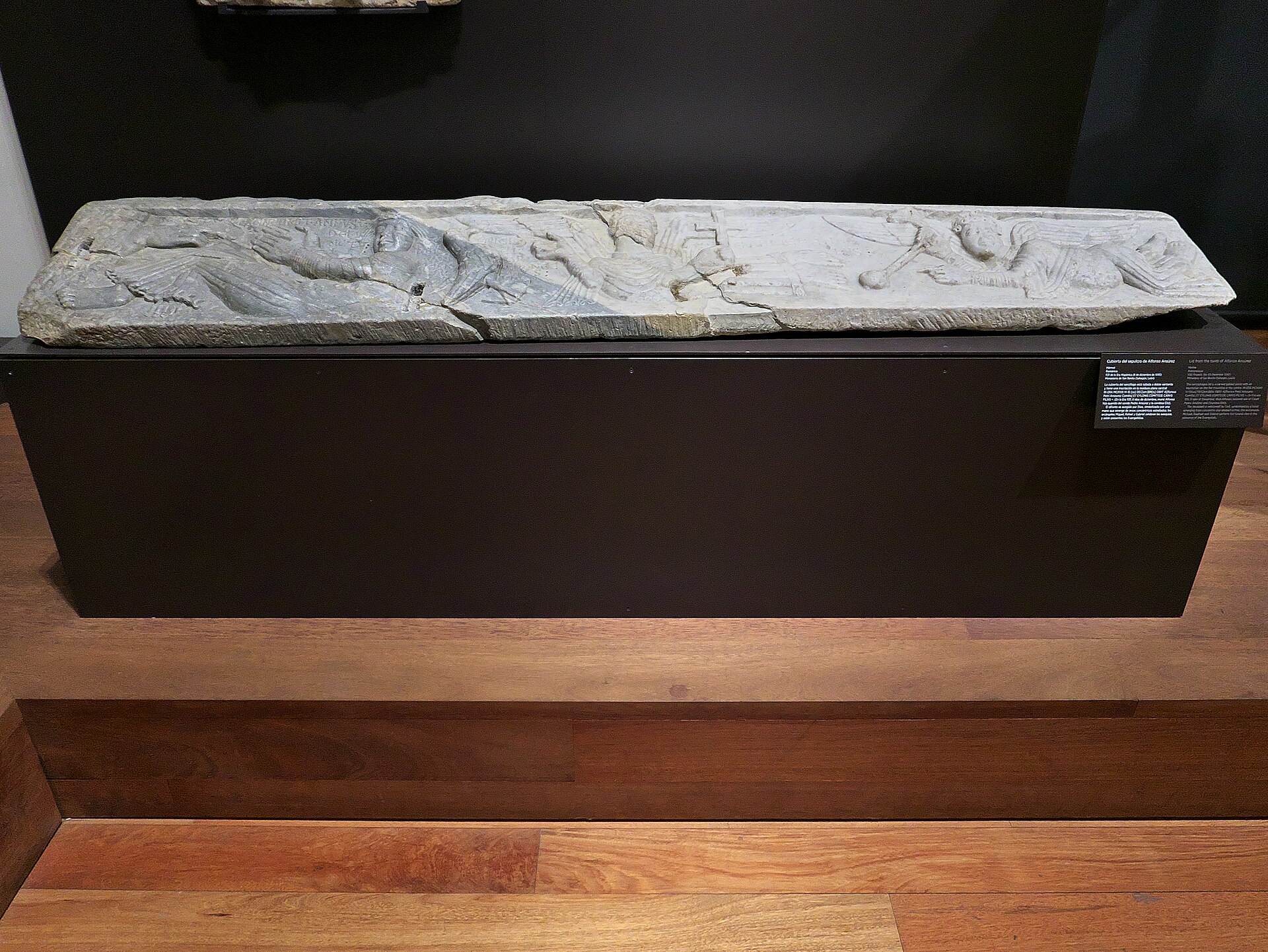

How is the museum arranged for a visit?
The permanent collection runs across three main floors, moving roughly chronologically from prehistory on the lower levels to the medieval period on the upper ones, with the non-Iberian ancient world (Egypt, Greece, the Near East) held in a separate section rather than folded into the main chronological sequence.
This layout means a visitor working through the museum in order effectively walks a condensed history of the peninsula — prehistoric settlement, Iberian and Roman rule, the Visigothic kingdom, and the roughly eight centuries of Islamic and Christian coexistence and conflict that followed. Object labels and gallery texts, according to the museum’s own site, are provided in Spanish and English.
The museum is considerably less crowded than Madrid’s three major art museums and can generally be seen at a slower pace than a visit to the Prado or the Reina Sofía, where volume of material and footfall both shape the experience differently. For a sense of how much ground a comparably large collection covers in one visit, see the discussion of how much of the Prado can be seen in one visit, which addresses the same scale-of-collection problem from the painting side.
Is it part of Madrid’s “Golden Triangle” of museums?
No. The Golden Triangle refers specifically to the Prado, the Thyssen-Bornemisza and the Reina Sofía, three art museums strung along the Paseo del Prado. The Museo Arqueológico Nacional sits apart from that grouping, both geographically — it is in Salamanca, not on the Paseo del Prado — and by subject, since it holds archaeological and historical objects rather than paintings.
Readers building an itinerary around Madrid’s major museums may find it useful to read the explainer on Madrid’s Golden Triangle of Art for context on how those three institutions relate to each other, alongside separate pieces on what the Prado’s collection contains, the Reina Sofía and how Guernica arrived there, and the Thyssen-Bornemisza collection and how it was assembled. The archaeological museum is best understood as a fourth, separate strand of Madrid’s state museum network rather than a competitor to those three.
Does it close on Mondays, and is entry free?
Like most Spanish state museums, the Museo Arqueológico Nacional generally closes one day a week and offers windows of free or reduced admission at certain times. Exact days and hours should always be confirmed on the museum’s own site before a visit, since both can change.
The pattern of a weekly closure — usually Monday, though not universally across every Madrid institution — is common enough across the city’s state-run museums that it is worth understanding as a system rather than memorising case by case. The site’s explainer on why so many Madrid museums close on Mondays covers the administrative reasoning behind the pattern.
Free-entry windows work similarly: Spain’s national museums, including this one, typically offer specific free hours on set days, sometimes narrowed to particular visitor categories such as EU residents or those under a certain age, alongside broader free days tied to national holidays. Rather than quote a specific schedule here — the kind of detail this site treats as perishable — readers can consult how Madrid’s national museum free-entry windows work for the general structure, and confirm current terms on the Museo Arqueológico Nacional’s own website before visiting.
Where does it fit for someone living in Madrid, not just visiting?
For residents, the museum functions less as a one-time stop and more as a reference collection worth returning to in sections — the Visigothic and Al-Andalus galleries, for instance, connect directly to sites elsewhere in Spain (Toledo, Córdoba, Mérida) that residents are more likely to visit on weekend trips than tourists on a short stay.
Because the museum is state-run, it is also affected by the same national holiday calendar and free-entry logic as Spain’s other public museums, which matters for anyone planning repeat visits across a year rather than a single trip. The general archive of Madrid’s museum sector, including how these institutions relate to one another administratively, is covered in the site’s museums and galleries section.
As with any state institution, opening arrangements can shift around public holidays, temporary exhibitions or building work, so the museum’s own published calendar remains the only reliable source for a specific date.
Access Madrid is an independent guide written from published, checkable sources. We have not visited the places described here and we do not publish personal recommendations or invented ‘local favourites’ — where something is singled out as notable, we say who says so. Opening times, fares, closures and prices change at short notice, so treat everything here as a starting point and confirm with the museum, operator or venue directly before building a day around it. We give no advice on visas, insurance, health or safety; use your own government’s official guidance for those.
Featured image: Photo by Jl FilpoC, source, CC BY-SA 4.0
.jpg)