A short list holds up: cocido madrileño (a three-course chickpea and meat stew), callos a la madrileña (tripe in paprika sauce), the bocadillo de calamares (a fried-squid roll), and gallinejas y entresijos (fried lamb offal). Torreznos, soldaditos de pavía and huevos rotos are common tapas in the city but not unique to it. Churros con chocolate belong to the wider morning-and-late-night pattern rather than to Madrid alone.
What is cocido madrileño, and why does it define the city’s food?
Cocido madrileño is a chickpea stew built around slow-cooked meats — usually beef, chicken, chorizo, morcilla and a pork bone or two — served traditionally in three separate courses from a single pot: first the broth as a soup, then the chickpeas and vegetables, then the meats. It is the dish most consistently cited by Madrid’s own tourism authorities and by regional gastronomy writers as the city’s signature plate, rather than a borrowed regional stew.
The full structure, its regional variants, and where it is documented as originating are covered in detail in a separate explainer on cocido madrileño. It remains the one dish a reader can point to as unambiguously “Madrid’s own” in the way that paella is Valencia’s or fabada is Asturias’s.
What is callos a la madrileña?
Callos a la madrileña is a stew of beef or veal tripe cooked with chorizo, morcilla, paprika and sometimes a pig’s trotter, giving a thick, dark-red sauce. It shares a family with cocido — both use offcuts and organ meat that were historically cheap and slow to cook — and both are winter dishes, heavier than the light, vegetable-forward cooking associated with much of Spain’s Mediterranean coast.
Spanish gastronomy references and Madrid’s municipal tourism material consistently list callos alongside cocido as one of the two dishes that define what is sometimes called cocina castiza — the traditional, working-class cooking of the old city, as distinct from the imported or coastal cuisines that now dominate much of Madrid’s restaurant scene.
What is a bocadillo de calamares, and why is it linked to central Madrid?
A bocadillo de calamares is a bread roll filled with rings of squid, battered and fried, usually served plain or with a squeeze of lemon. It is strongly associated with the area immediately around Plaza Mayor, where the sandwich became a fixture of bars serving the square and the surrounding streets of Madrid de los Austrias.
The dish’s popularity there is well documented in press coverage and municipal food guides, though the pairing of squid with a plain roll rather than a sauce or salad marks it out as a specifically Madrid habit rather than a coastal one — notable precisely because Madrid is landlocked. The Austrias district explainer covers the historic streets around the square where the sandwich is most closely tied.

What are gallinejas and entresijos?
Gallinejas and entresijos are fried lamb intestines and mesentery, sold as a hot snack, traditionally from street stalls along the banks of the Río Manzanares. They are among the oldest documented Madrid street foods, tied historically to the city’s slaughterhouses and to the area now occupied by Matadero Madrid, itself a former abattoir complex converted into a cultural centre.
The dish is most visible during San Isidro, Madrid’s patron-saint festival held in mid-May, when stalls selling gallinejas and entresijos are a recurring feature of the celebrations along the river and in the Pradera de San Isidro. It is a dish that divides opinion even within Madrid, and it appears in almost every serious account of the city’s traditional street-food repertoire specifically because of that intensity.
What other tapas count as distinctly Madrid?
A handful of tapas are heavily associated with Madrid’s tabernas without being exclusive to the city:
- Torreznos — cured, twice-fried pork belly, technically more closely tied to Castilla y León but a fixture of Madrid bar menus.
- Soldaditos de pavía — battered, salted cod fritters, named after 19th-century Hussar uniforms for their colour, and a standard tapa across the city’s traditional bars.
- Huevos rotos — fried eggs broken over a bed of fried potatoes, often with ham or chorizo, common on menus across central Spain but ubiquitous in Madrid specifically.
- Oreja a la plancha — grilled pig’s ear, another offal dish in the same tradition as callos and cocido.
None of these carries the same claim to Madrid origin as cocido or callos, but together they describe the offal-and-fried-food register that Madrid’s traditional cooking sits in, distinct from the seafood-led cooking of the coasts or the rice dishes of the east.
Where does churros con chocolate fit in?
Churros con chocolate — fried dough strips dipped in thick hot chocolate — are eaten across Spain, not invented in Madrid, but the city has one of the country’s best-known settings for them: a historic chocolatería near Puerta del Sol that has operated for well over a century and is regularly cited by Spanish and international press as one of the oldest of its kind still trading. The pairing is associated with two very different moments in the Madrid day — a traditional breakfast, and a food eaten late, after a night out, before dawn.
That second use connects to a broader pattern covered in what counts as late in a Madrid evening and in how Spanish meal times reshape a day — Madrid’s eating schedule runs later than in much of northern Europe, and churrerías that stay open into the small hours are part of why that schedule works.
Are any of these dishes tied to the calendar?
Several are seasonal rather than available year-round in the same volume. Roscón de Reyes, a ring-shaped pastry with candied fruit and a hidden figure inside, is eaten nationally around 6 January (Epiphany) but is heavily produced and sold across Madrid’s bakeries in the days before. Torrijas — bread soaked in milk or wine, then fried and sugared — are the standard Easter and Holy Week sweet across the city.
Gallinejas, entresijos and the fried rosquillas sold at street stalls cluster around San Isidro in May, when stalls appear along the river and in the traditional festival ground. The public holidays explainer and the San Isidro festival guide set out roughly when these dates fall each year — both note that exact dates should be confirmed against the current year’s calendar rather than assumed from a previous one.
Where can these dishes actually be found in Madrid?
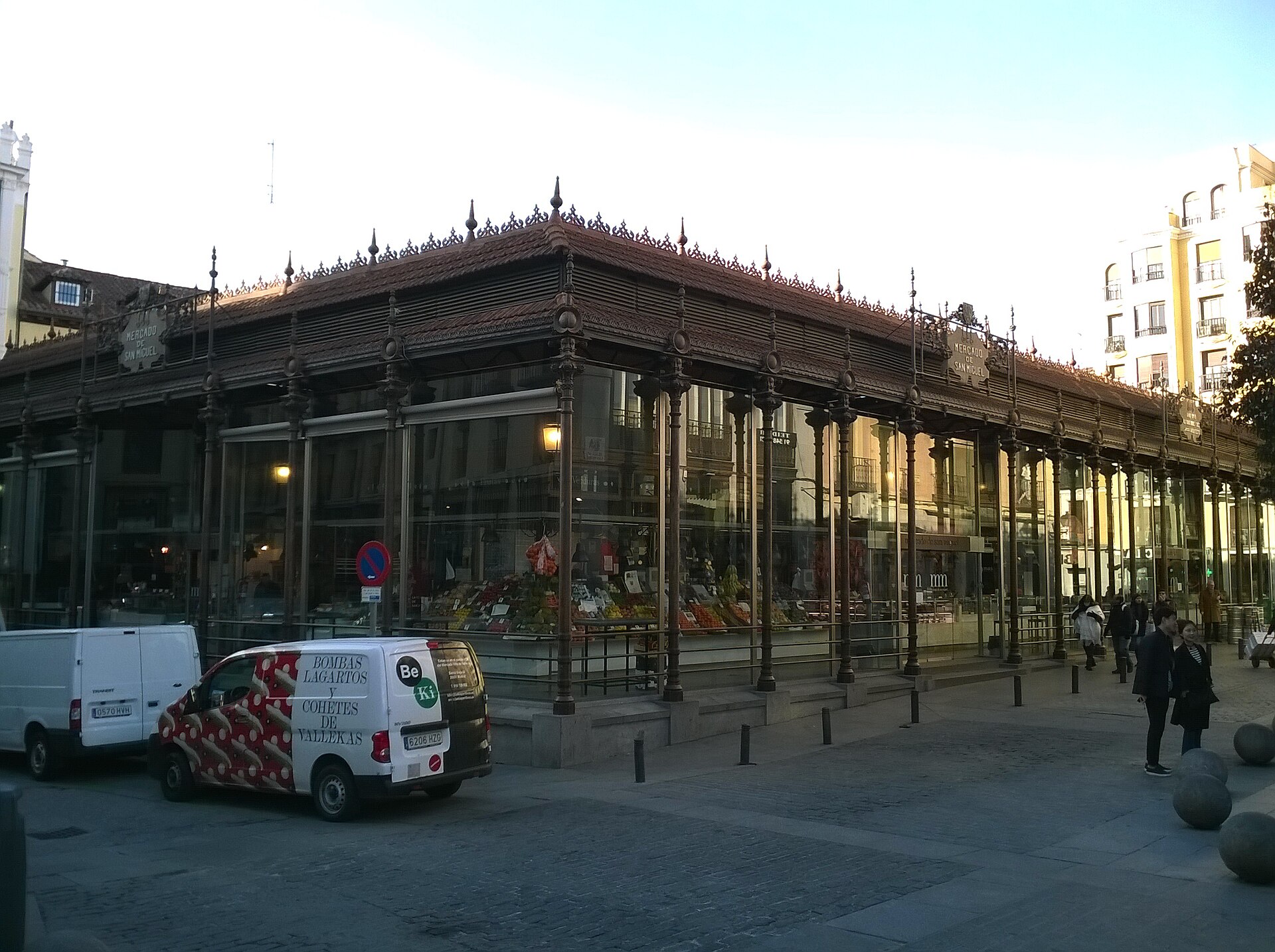
Traditional tabernas across the old city serve cocido, callos and the standard tapas list, and Madrid’s market halls are a reliable way to sample several dishes in one visit rather than committing to a single sit-down meal. The distinction between a working neighbourhood market and a food-hall-style market aimed largely at visitors is explained in what a Madrid market hall actually is, and the separate piece on Mercado de San Miguel covers what that specific, heavily restored market now functions as.
Sunday mornings around El Rastro, Madrid’s long-running flea market in the streets south of La Latina, are also traditionally paired with a stop for vermouth and tapas in the surrounding bars — a pattern that predates the market’s current tourist profile. Broader browsing of the city’s food culture, including markets outside the core tourist strip, sits in the Food & Markets archive.
Does meal timing change when you’d actually eat these dishes?
Yes. Cocido and callos are lunch dishes, tied to Madrid’s late main meal, which typically runs well past 1pm and often past 2pm on weekdays. Gallinejas, bocadillos de calamares and churros function more as snacks, eaten at almost any hour, including very late. The mechanics of why Madrid’s meals sit later than much of northern Europe, and what that means for planning a day around them, are set out in the Spanish meal times explainer, part of the wider practical planning hub covering food, transport and itineraries together with the main Madrid guide for context on where these dishes sit within the city’s neighbourhoods and markets.
Access Madrid is an independent guide written from published, checkable sources. We have not visited the places described here and we do not publish personal recommendations or invented ‘local favourites’ — where something is singled out as notable, we say who says so. Opening times, fares, closures and prices change at short notice, so treat everything here as a starting point and confirm with the museum, operator or venue directly before building a day around it. We give no advice on visas, insurance, health or safety; use your own government’s official guidance for those.
Featured image: Photo by Tiia Monto, source, CC BY-SA 3.0
