San Isidro is Madrid’s festival for its patron saint, Isidro Labrador. It centres on 15 May each year, though the associated events — open-air dances, traditional dress, a bullfighting season and a pilgrimage to a meadow by the Manzanares — spread across several days around that date. It is a religious feast day that became a city-wide popular festival.
Who was San Isidro Labrador?
Isidro Labrador was a farm labourer said to have lived and worked in the fields around Madrid in the eleventh and twelfth centuries. He was canonised in 1622, and the Catholic Church recognises 15 May as his feast day. “Labrador” simply means farmhand or field worker — it describes his trade rather than functioning as a surname.
Popular tradition ties him to a well near what is now the western edge of the city, said to have produced water when he was in need, and to miracles worked through his intercession. Madrid adopted him as its patron, and the saint’s remains are kept, according to the Church, in a chapel associated with the Colegiata de San Isidro in the historic centre, rather than at the meadow site most associated with the festival today.
When does San Isidro fall each year?
The feast day itself is fixed at 15 May. The wider festival built around it typically runs for roughly a week either side, though the exact programme of concerts, dances and bullfighting dates is set annually by the Ayuntamiento de Madrid and the Las Ventas bullring respectively, and changes from year to year.
Because 15 May is a fixed calendar date rather than a moveable feast, it does not shift with Easter the way some Spanish festivals do. It falls in late spring, when Madrid’s climate has usually moved past the cool, changeable weeks of April into warmer, more settled conditions — a detail covered in more depth in the guide to Madrid’s climate through the year. Readers planning a trip around it should confirm the current year’s dates on the city council’s own site, since the associated public holiday and municipal programme are published annually rather than fixed by tradition.
What actually happens during the festival?
The festival combines religious observance with several days of secular street celebration. The recognisable elements include:
- A romería (pilgrimage) to the meadow historically associated with the saint’s well, on the city’s south-western edge near the river.
- Chulapos and chulapas — Madrid’s traditional working-class dress, with men in checked caps and women in embroidered shawls and headscarves, worn for the occasion and strongly associated with the festival’s visual identity.
- Verbenas, open-air dances and live music held across squares and parks, historically centred on the chotis, a couple’s dance particular to Madrid.
- A bullfighting season at Las Ventas, timed to coincide with the festival — see the separate guide to Las Ventas, Madrid’s bullring for what the venue is and how its calendar works.
- Municipal cultural programming — concerts, markets and family events organised by the city across multiple districts, not confined to one neighbourhood.
The festival is documented in Spanish art as well as civic tradition: Francisco de Goya’s painting La pradera de San Isidro, held by the Museo del Prado, depicts the meadow crowded with Madrileños on the saint’s day in the late eighteenth century, and is one of the clearest visual records of how long the festival has drawn crowds to that specific site. The Prado’s own catalogue describes the work as an unfinished but significant record of Madrid’s popular festive life. Readers interested in the painting’s context can consult the wider overview of the Prado’s collection.
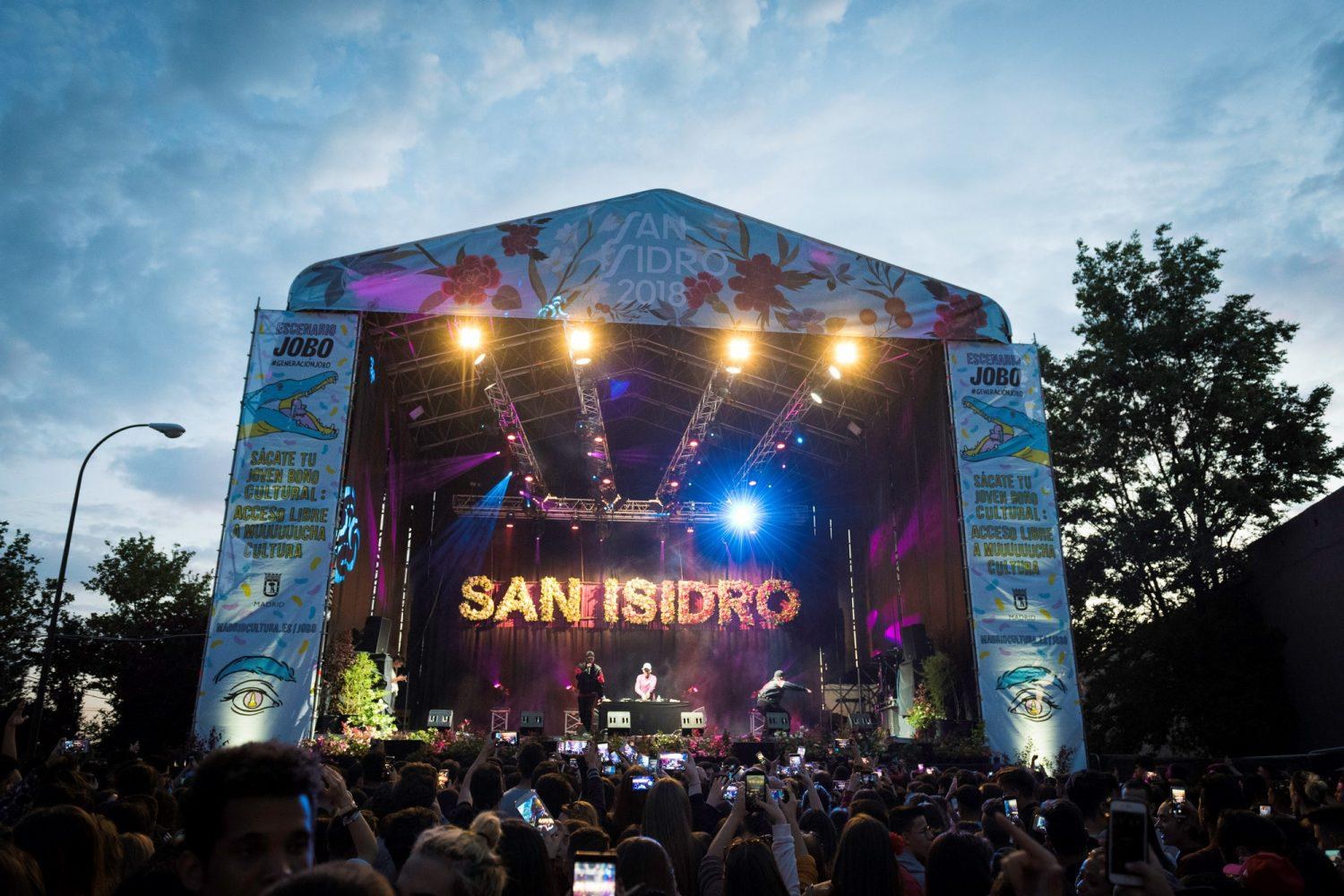

Where does San Isidro festival take place in Madrid?
The meadow at the centre of the pilgrimage tradition, the Pradera de San Isidro, sits on the right bank of the Manzanares, in the district of Carabanchel, across the river from the historic centre. It remains a public park and is the traditional site of the romería and its associated open-air gathering, though the wider festival’s concerts and events are distributed across several parts of the city, not confined to this one location.
The Ermita de San Isidro, a chapel near the meadow, is where tradition places the well linked to the saint. It is separate from the Colegiata de San Isidro in central Madrid, which holds a more formal liturgical role and, according to Church tradition, the saint’s relics. For general orientation on how the city’s districts relate to one another, the guide to how Madrid is divided into districts and barrios sets out the broader geography, and the district profile of Carabanchel covers the area around the meadow in more detail. The festival’s historic core near the river and old town also borders La Latina, one of the city’s older quarters and a common staging point for festival-related events in the centre.
How does San Isidro affect bullfighting season?
Las Ventas, Madrid’s bullring, runs its principal annual season — the Feria de San Isidro — timed to the festival, typically extending for several weeks from around the feast day rather than being confined to a single day. This is the bullring’s most concentrated period of scheduled events in the calendar year. Specific dates, fixtures and ticketing are set by the venue and published on its own site each season; the guide to what Las Ventas is and how it operates covers the building and its role in more depth, without listing dated fixtures that would go stale.
Does San Isidro close things down in Madrid?
15 May is a local public holiday in the municipality of Madrid, which means many shops, offices and some public services adjust their hours or close for the day, in the pattern typical of Spanish public holidays generally. The wider festival period does not close the city down — museums, transport and most businesses operate close to normal — but it does add crowds, road closures around event routes, and a heavier concentration of concerts and public gatherings than an average May week.
For how a single public holiday interacts with the broader pattern of closures across the year, the explainer on which public holidays close things in Madrid sets out the general mechanics — worth reading alongside this one, since San Isidro is one instance of a wider pattern rather than an exception to it. The related guide to typical opening hours in Madrid covers how holidays and weekends generally affect trading hours in the city.
How should visitors and residents plan around it?
For a resident, San Isidro is mainly a marker in the annual rhythm of the city — a public holiday, a spike in bullfighting-related travel and crowding around Las Ventas, and a period when outdoor dances and municipal programming appear across several parks and squares rather than one part of town. For a visitor, it is a chance to see a festival with a genuinely long civic history rather than one staged for tourism, though it is worth noting it draws its own crowds and traffic disruption, and hotel and transport demand can rise accordingly around the dates.
Because May sits within Madrid’s more temperate stretch of the year, the timing also overlaps with broader seasonal advice on when the city is most comfortable to visit; the guide to the best time of year to visit Madrid discusses May’s place in that wider seasonal picture. Those planning transport around the festival period, particularly if travelling to Las Ventas or the Pradera de San Isidro from central Madrid, may find the overview in the practical guide to getting around the city useful for working out routes in advance. Broader context on how the city’s calendar and daily life fit together across the year is covered in the guide to living in Madrid, and the wider set of landmarks, museums and neighbourhoods connected to the festival’s history can be explored from the main Madrid guide.
As with any dated event, readers should confirm the current year’s specific programme, closures and bullfighting fixtures on the Ayuntamiento de Madrid’s and Las Ventas’ own sites before making arrangements, since the fixed point is the feast day of 15 May — everything built around it is set fresh each year.
Access Madrid is an independent guide written from published, checkable sources. We have not visited the places described here and we do not publish personal recommendations or invented ‘local favourites’ — where something is singled out as notable, we say who says so. Opening times, fares, closures and prices change at short notice, so treat everything here as a starting point and confirm with the museum, operator or venue directly before building a day around it. We give no advice on visas, insurance, health or safety; use your own government’s official guidance for those.
Featured image: Photo by Barcex, source, CC BY-SA 4.0
