Tipping in Spain is optional and modest. There is no fixed percentage, no expectation built into the bill, and no social penalty for leaving nothing. Where it happens, it is usually small change rounded up at a bar, or a few euros left in cash at a restaurant — not a calculated share of the total.
Is tipping expected in Madrid?
No. Spanish law requires that service charges, if any, be included in the menu price, and restaurant staff are salaried employees rather than workers dependent on gratuities. A tip is read as a discretionary gesture of satisfaction, not an obligation, and its absence is not noticed the way it would be in a country where wages assume it.
This is a genuine structural difference from tipping cultures built around a low base wage topped up by customers. In Spain, the price on the menu is meant to already cover the cost of the service, which is part of why menus are required to display taxes included and why a printed bill rarely has a blank line for gratuity.
How much do people actually leave, when they leave anything?
Practice varies by context, and none of it is fixed by rule:
- Bars and cafés: rounding up to the nearest euro, or leaving small coins from the change, is common and unremarkable.
- Sit-down restaurants: where service has been notably attentive, a few euros left in cash, or roughly 5% of the bill, is a reasonable upper range reported in general guidance on Spanish customs — not a rule, and not expected on every visit.
- Taxis: rounding the fare up to a round number is the most common form tipping takes; a percentage tip is unusual.
- Hotels: porters or housekeeping may receive a small cash amount at the traveller’s discretion; there is no standard figure and no obligation.
None of these amounts are set by any authority. They reflect general observation of custom rather than an enforceable norm, and a reader should treat any specific figure quoted online, including here, as a loose social convention rather than a fixed tariff.
Do restaurants add a service charge automatically?
Occasionally, particularly for large groups or set-menu bookings, but it is not the default. Where a service charge does appear, Spanish consumer rules require it to be shown clearly on the bill rather than folded silently into the total. If a bill looks unclear, asking for it to be itemised is a normal and unremarkable request, not a confrontation.
This differs from the fixed cover charge or bread-and-water charge sometimes seen in some other countries; Spanish practice does not generally include such automatic add-ons, though a small “pan y cubiertos” (bread and cutlery) charge occasionally appears in some regions and should also be itemised.
Does tipping culture change between a bar, a café and a formal restaurant?
Yes, and the distinction tracks how the venue itself is understood. A standing bar counter, where a coffee or a caña (small draught beer) is drunk quickly, functions closer to a quick transaction — rounding up is the natural gesture, if any. A sit-down restaurant with table service, a printed menu and a longer meal is where a cash tip, if left, tends to be somewhat higher, and is placed on the table rather than added to a card payment.
This maps onto how Spanish meal times in Madrid are structured — a long lunch service built around a set-price menú del día invites a different register of interaction than a fast counter order, even if neither obliges a tip.
Can you tip by card, or does it need to be cash?
Cash is by far the more common method, largely because most card terminals in Spain have no built-in prompt or field for adding a gratuity, unlike systems common in the US or UK. Where a diner wants to leave something, carrying a small amount of loose change or a few notes is more practical than assuming the terminal will ask.
Some newer point-of-sale systems in larger cities do now allow a discretionary top-up to be added digitally, but this remains the exception rather than the rule, and a card tip should never be assumed to be an option.
What about taxis, tour guides and other services?
For taxis and ride-hailing in Madrid, rounding the fare to a convenient round number covers the norm; a driver will not expect more. For ride-hailing apps, tipping functions are sometimes built into the app itself, at the passenger’s discretion, but is not a general expectation.
Guided tours, where staffed by a private operator rather than a national or municipal institution, sometimes carry their own tipping convention, and that is a matter for the operator concerned to state — this site does not run or book tours and has no view on any specific operator’s practice.
Does this apply the same way outside Madrid?
Broadly yes. Tipping norms in Spain are national rather than city-specific, rooted in the same wage and pricing structure across the country. Regional variation is minor and mostly cosmetic — a different name for a small charge, a slightly different rounding habit — rather than a different underlying system.
Visitors travelling on from Madrid, whether by train to other Spanish cities or otherwise, can generally apply the same low-key approach elsewhere in the country.
Why does Spain work this way?
The short answer is labour structure. Hospitality wages in Spain are set through sector-wide collective bargaining agreements rather than assuming a tip top-up, and service charges are, by consumer protection rules, required to be transparent rather than hidden as an add-on. A tip left in Spain is therefore closer to a bonus for good service than a wage subsidy, which is the reverse of how the practice functions in countries where waiting staff are paid a sub-minimum base rate.
This is worth bearing in mind for anyone reading Madrid through a lens shaped by tipping cultures elsewhere: overtipping is not rude, but it is also not read as generous in the way it might be at home — it is simply unusual, and staff are not trained to expect it as part of the transaction.
How does this fit into planning a visit or living day to day?
For a short visit, the practical takeaway is to keep a small amount of coins and low-denomination notes on hand, use them at discretion, and not worry about calculating a percentage. For anyone settling into life in the city longer-term, the wider question of how daily costs and services are structured is covered in more general terms in the site’s guide to living in Madrid, and the mechanics of eating out — set menus, meal timing, and how a bill is typically presented — are set out in the guide to Spanish meal times.
Broader groundwork for a first visit, including how the city’s transport and opening-hours patterns work, is covered in the practical planning hub, and general background on neighbourhoods and museums sits in the Madrid guide hub. For everyday questions about what’s open when — a factor that affects how service is delivered as much as tipping does — the guide to typical opening hours in Madrid is a useful companion piece.
The short version
- Tipping in Spain is optional and never built into the bill by default.
- Where it happens, it is small — rounding up at a bar, a few euros or a modest percentage at a restaurant, none of it fixed by rule.
- Cash is the practical default; card terminals rarely prompt for a tip.
- Any service charge that does appear must, by consumer rules, be itemised clearly rather than hidden.
- The underlying reason is structural: Spanish hospitality wages are not built around tip income the way they are in some other countries.
Access Madrid is an independent guide written from published, checkable sources. We have not visited the places described here and we do not publish personal recommendations or invented ‘local favourites’ — where something is singled out as notable, we say who says so. Opening times, fares, closures and prices change at short notice, so treat everything here as a starting point and confirm with the museum, operator or venue directly before building a day around it. We give no advice on visas, insurance, health or safety; use your own government’s official guidance for those.
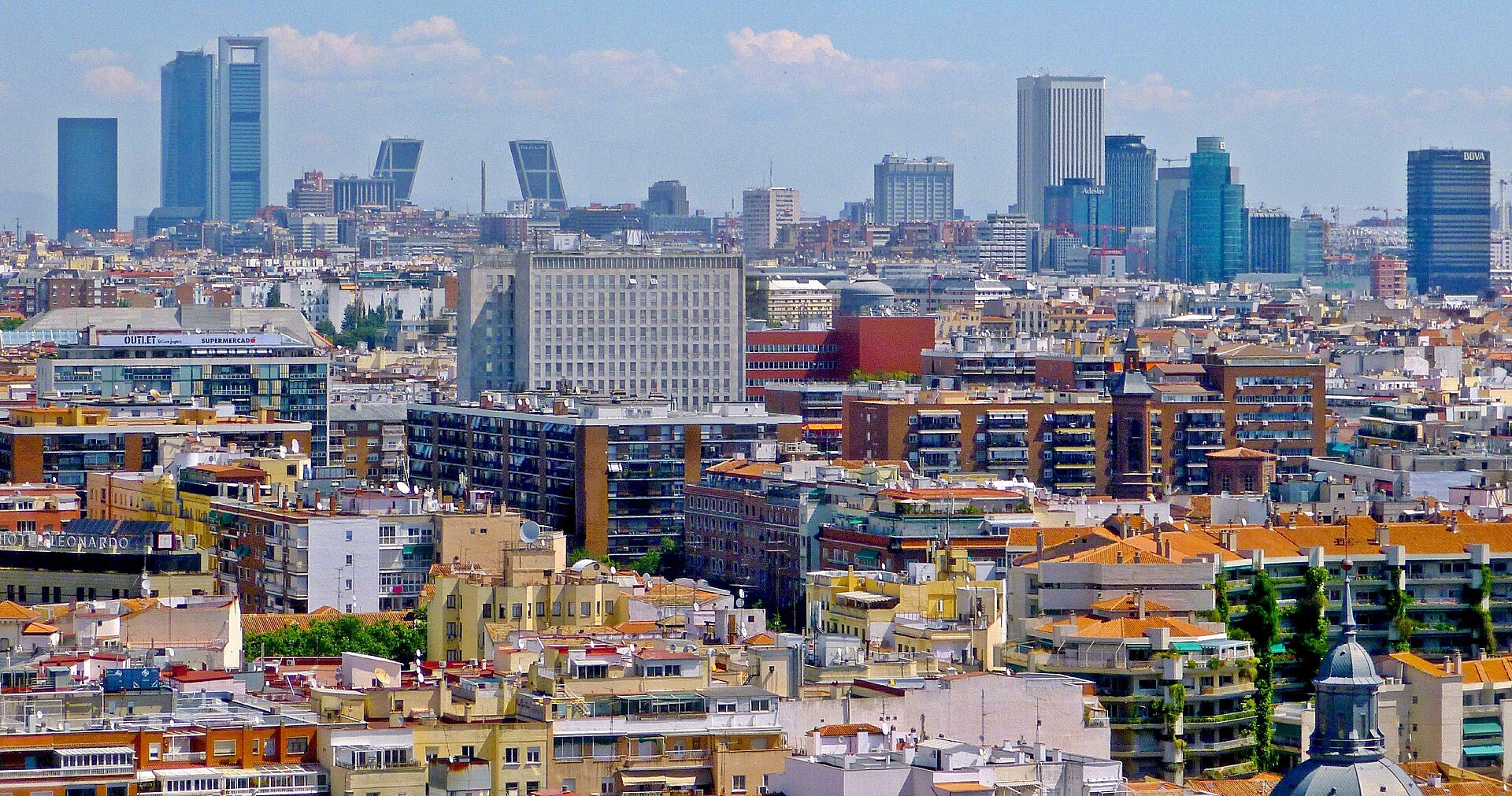
Featured image: Photo by Luis García, source, CC BY-SA 2.5
