Madrid has a continental Mediterranean climate: summers are hot and dry with very low humidity, winters are cold with sharp overnight drops, and rain concentrates mostly in spring and autumn. The gap between day and night temperature is unusually wide for a European capital, and it shapes how the city runs its hours.
What kind of climate does Madrid actually have?
Meteorologists classify Madrid’s climate as continental Mediterranean, sometimes labelled semi-arid. It sits on a plateau — the Meseta Central — at over 600 metres above sea level, with no coastline nearby to moderate temperature. That elevation and distance from the sea are the two facts that explain almost everything else: strong sun, dry air, and a temperature range between summer and winter that is wider than in coastal Spanish cities such as Barcelona or Valencia.
Spain’s national meteorological agency, AEMET (Agencia Estatal de Meteorología), publishes long-term averages and daily forecasts for the city and is the most reliable source for current or historical figures, rather than any secondhand summary, including this one.
How hot does Madrid get in summer?
Summer in Madrid, roughly June to September, is consistently hot, dry, and sunny, with July and August the peak. Afternoon highs regularly reach the mid-to-high 30s Celsius, and heatwaves pushing past 40°C are recorded most years, according to AEMET’s published records.
The dryness matters as much as the heat. Humidity is low, so the air feels different from the damp heat of Mediterranean coastal cities, but direct sun is intense and shade is scarce in the newer, wider boulevards compared with the narrow streets of the historic centre. Many residents and businesses shift their day around it: the traditional pattern is an early start, a quieter, indoor middle of the afternoon, and a second working and social stretch in the evening once the heat breaks — a rhythm that shows up in shop hours as much as in restaurant timings across the city.
August in particular sees much of the resident population leave for the coast or for family towns elsewhere in Spain, and some smaller, family-run businesses close for stretches of the month. This is a genuine seasonal pattern rather than a rumour, though it is not universal — museums and major sights generally stay open, and the guidance on the Planning & Practicalities hub covers what tends to run as normal versus what quietens down.
What is winter like in Madrid?
Winter, roughly December to February, is cold and can be sharp, particularly at night. Daytime highs commonly sit in single digits to low double digits Celsius, and overnight temperatures frequently fall below freezing. Snow is infrequent within the city itself but not unheard of, and the surrounding Sierra de Guadarrama to the north sees far more regular snowfall.
Skies in winter are often clear rather than grey — Madrid gets a high number of sunny days year-round, even in the coldest months — but the dry air means that once the sun drops, temperature drops fast with it. Layering for a wide daily range matters more here than protection against sustained damp cold.
This is also the season in which museum-going works differently: interiors are heated, days are shorter, and the weekly closure pattern most Madrid museums follow becomes more noticeable when there are fewer daylight hours to plan around it.

How does the climate change in spring and autumn?
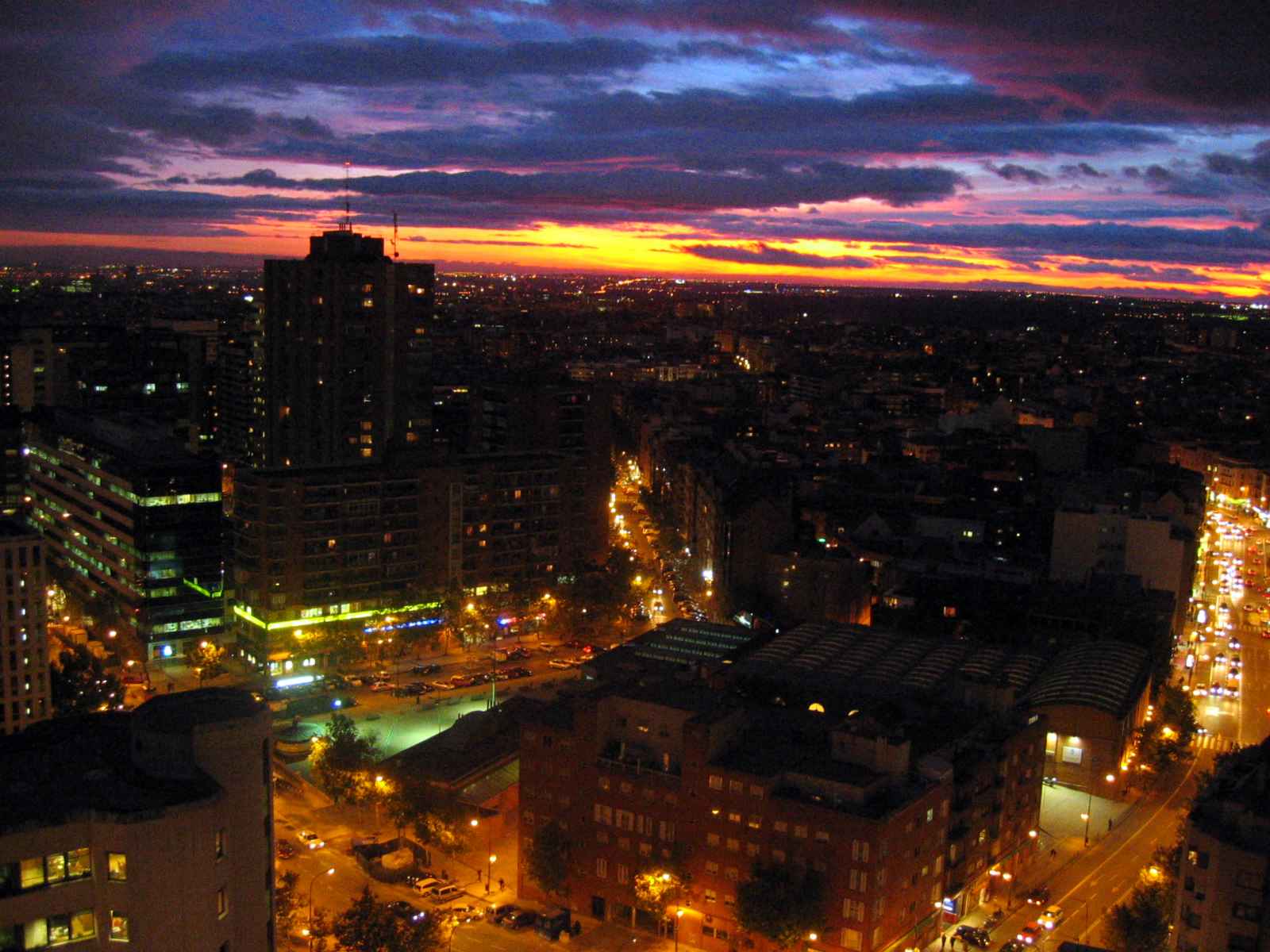
Spring (roughly March to May) and autumn (roughly September to November) are the two shoulder seasons, and they are the closest Madrid comes to mild, changeable weather. Daytime temperatures are comfortable, sun is still frequent, and the extremes of both summer heat and winter cold are largely absent — though a late cold snap in spring or an early one in autumn is entirely possible.
These months are also when Madrid’s outdoor city is most legible: the wide pavements and squares that feel exposed under a July sun, and cold and gusty under a January one, are easiest to read and walk in spring and autumn. The distances between major sights in the historic core are covered in detail in how walkable central Madrid actually is, and both shoulder seasons are when that walkability is most straightforwardly usable.
El Retiro and the city’s other major parks are at their most visited in these months, partly for the weather and partly because several recurring cultural events cluster around spring and autumn — patterns covered in more depth on the site’s guide to when to visit Madrid across the year.
Does Madrid get much rain?
Madrid is a relatively dry city by European capital standards. Rainfall is modest overall and concentrated in spring and autumn, with short, sometimes intense downpours rather than prolonged grey stretches. Summer is close to rain-free for weeks at a time, and winter, while cold, is also comparatively dry rather than wet.
This dryness is a defining feature of the local climate rather than an occasional condition, and it is one reason the city’s green spaces — El Retiro among them, with structures such as the Palacio de Cristal built as a glasshouse for plants that needed protection from the extremes rather than the wet — are managed with irrigation as a constant rather than a backup.
How does the climate affect when to visit?
The climate is one of the main reasons visitor patterns tilt toward spring and autumn rather than midsummer, and toward the mildness of certain winter days over the depth of summer heat. None of this is a judgement on any particular month — plenty of what the city offers, from its major museums to its indoor markets, functions regardless of the weather outside.
What the climate does affect directly is comfort while moving around outdoors, and this is where the seasonal pattern connects to practical planning. The dedicated guide on the best time of year to visit Madrid sets out how the calendar of weather intersects with the calendar of public holidays, school breaks, and recurring city events.
How does the seasonal climate shape daily life for residents?
For anyone living in Madrid rather than passing through, the climate shows up less as a travel consideration and more as an annual rhythm built into how the city functions. Air conditioning is standard in Madrid housing in a way it is not further north in Spain, because summer genuinely requires it. Heating runs hard through winter nights. Balconies and terrazas — pavement café seating — are used intensively from spring through autumn and largely abandoned in the coldest weeks.
The climate also interacts with how people move through the city. Extreme summer heat and winter cold both push more journeys underground onto the Metro or onto buses rather than on foot or by bike, a shift covered from the transport side in the Getting Around hub, which includes guides to the Metro, the EMT bus network, and BiciMAD, Madrid’s bike-share system. Outdoor cycling and walking both concentrate in the shoulder seasons for the same reason temperatures make outdoor sightseeing more comfortable then.
District character shifts with the seasons too. Streets in the dense historic core — the kind covered across the Neighbourhoods hub, from Malasaña to La Latina — offer more shade and shelter from wind than the open, planned avenues of newer districts, a difference that becomes more noticeable at the temperature extremes than in the mild months.
Where to check current and seasonal weather
Because forecasts and even long-term averages shift and get revised, the durable source is AEMET, Spain’s national meteorological agency, which publishes current forecasts and historical climate data for Madrid directly. Anyone planning around specific dates — a particular week’s heat, or the likelihood of rain on a given weekend — should check AEMET’s own figures rather than general seasonal description, including the summary in this article.
For how that seasonal pattern lines up with the practical side of a trip or a year living in the city — from what closes in August to how museum hours shift around public holidays — the Planning & Practicalities hub and the Landmarks & Sights hub both cover the ground this article does not.
Access Madrid is an independent guide written from published, checkable sources. We have not visited the places described here and we do not publish personal recommendations or invented ‘local favourites’ — where something is singled out as notable, we say who says so. Opening times, fares, closures and prices change at short notice, so treat everything here as a starting point and confirm with the museum, operator or venue directly before building a day around it. We give no advice on visas, insurance, health or safety; use your own government’s official guidance for those.