El Rastro is Madrid’s open-air Sunday market, spread through the streets of the La Latina district south of Plaza Mayor. Stalls run along Ribera de Curtidores and the surrounding grid from mid-morning until early afternoon, selling everything from antiques and secondhand clothing to tools, records and general bric-a-brac. It happens every Sunday and on some public holidays.
Where exactly does El Rastro take place?
The market’s spine is Calle Ribera de Curtidores, which runs downhill from Plaza de Cascorro toward Ronda de Toledo. Stalls also fill Plaza General Vara del Rey, Calle de Fray Ceferino González, Calle del Carnero and a network of side streets in between. The area sits within La Latina, one of the oldest and most tightly built districts in central Madrid, and the market has effectively become one of its defining features on a Sunday morning.
The nearest metro stations are La Latina and Puerta de Toledo, both on Line 5, with Tirso de Molina on Line 1 a reasonable walk from the northern end. The Puerta de Toledo gate marks one edge of the market’s usual footprint and is a useful fixed point for orientation, since the crowd itself makes street signs hard to read at busy times.
How old is El Rastro, and where does the name come from?
Historical accounts place organised trading on this site back to at least the 17th century, tied originally to the tanneries and leather workshops once concentrated in the area — Ribera de Curtidores translates roughly as “tanners’ bank”. The word rastro means “trail” or “trace”, commonly explained as a reference to the trails of blood or hide left by the trade in animal skins that once dominated the streets. The market has outlasted the industry that named it by several centuries.
What does El Rastro actually sell?
The stock is genuinely mixed rather than curated, which is part of what distinguishes it from a market hall. Typical categories include:
- Antiques, secondhand furniture and decorative objects
- Vintage and used clothing, alongside new clothing and accessories at the cheaper end
- Books, prints, postcards and records
- Tools, hardware and electronics, new and used
- Jewellery, costume and otherwise
- General bric-a-brac with no obvious category at all
Quality and authenticity vary enormously by stall, and nothing about a pitch’s location guarantees either. This is a street market built on turnover, not a vetted antiques fair, and it should be approached with that distinction in mind.
How does buying and paying actually work?
El Rastro runs almost entirely on cash. Card readers are the exception rather than the rule at individual stalls, so carrying enough cash for anything a reader might realistically buy is the sensible approach — a point covered more broadly in the guide to how payments work in Madrid. Prices are often negotiable, particularly for larger or secondhand items, though this varies by stallholder and by category; new clothing and low-cost goods tend to be sold at a marked price with less room to move.
There is no admission charge and no ticketing system. The market is simply a set of public streets given over to trading one day a week, and anyone can walk through without buying anything.
When does El Rastro run, and does the season change it?
The market operates every Sunday of the year, plus certain public holidays, typically from mid-morning into early afternoon. Exact opening and closing times are set by stallholders’ custom rather than a fixed city timetable, and can shift slightly with the season — starting a little later and finishing earlier in the depths of winter, running longer in warmer months. Anyone planning around a specific window should treat published times as approximate and confirm nother closer to the date.
August affects El Rastro the way it affects much of central Madrid: some regular stallholders close for the month, and the overall scale can thin out somewhat, a pattern discussed generally in the guide to what happens to Madrid in August. The market itself continues, but the mix of stalls on any given Sunday is not fixed.
How busy does it get, and what does that mean practically?
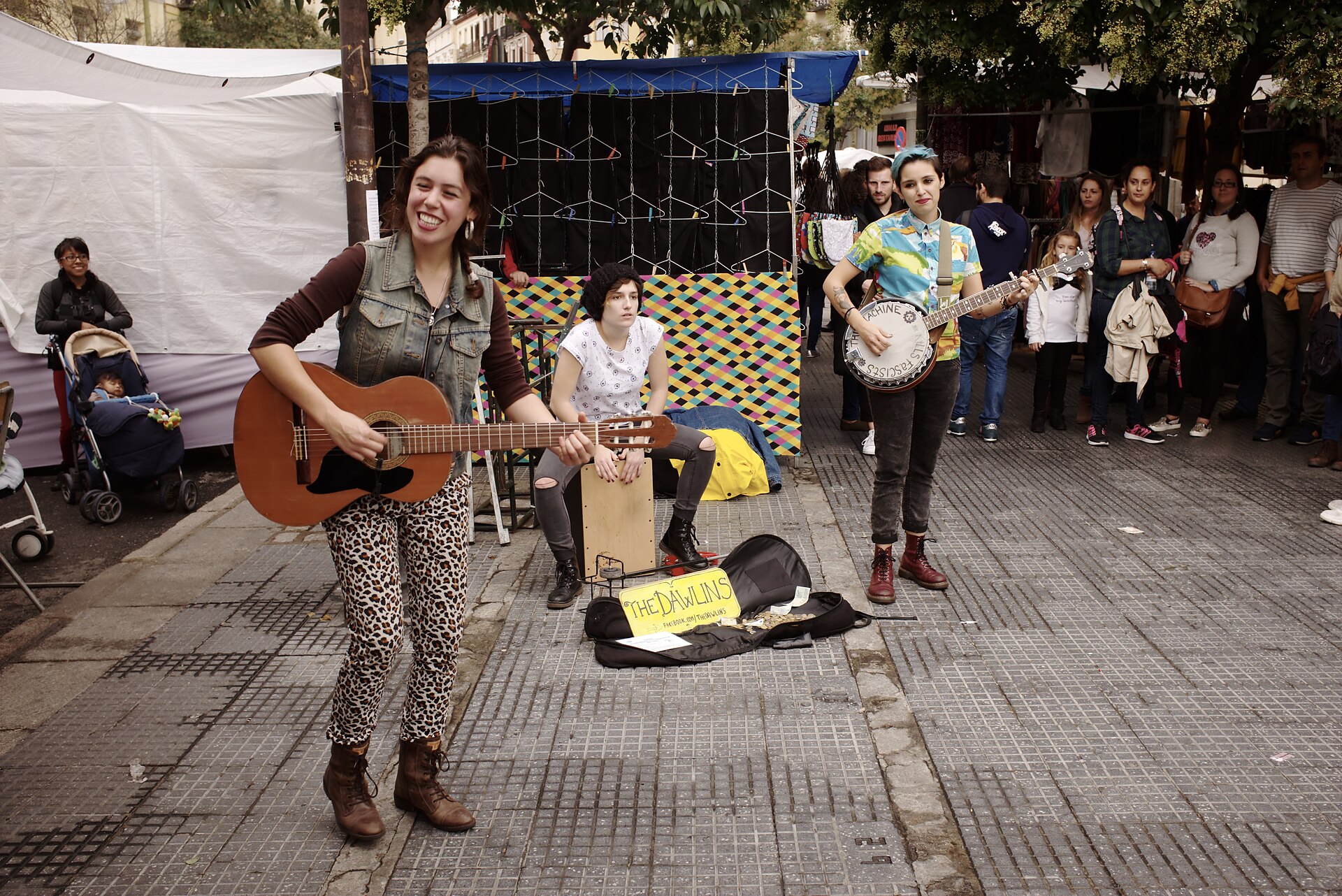
El Rastro draws large crowds by late morning, and the streets it occupies are narrow by central Madrid standards, so movement through the core stretch of Ribera de Curtidores can be genuinely slow at peak times. This is a market best absorbed at walking pace rather than treated as a route to be covered quickly. The general question of how compact central Madrid’s streets are, and how far things actually are from one another, is addressed in the guide to how walkable central Madrid is.
Because the market is entirely outdoors and street-based, weather affects it more directly than an indoor market hall. Wet weather thins the stalls and the crowd; serious heat does the same. Neither closes the market outright, but both change what a visit is actually like, which is a broader theme covered in the guide to planning a Madrid day when it rains.
How does El Rastro fit into a Madrid Sunday?
Sunday has its own rhythm in Madrid, shaped by shop closures, later meal times and a different pace than the working week — a pattern explained in the guide to planning around a Sunday in Madrid. El Rastro sits at the centre of that rhythm for La Latina specifically: the market draws to a close by mid-afternoon, at which point much of the crowd shifts toward the district’s bars for the standing, early-evening drinking and tapas culture the area is known for, though this site does not recommend specific venues within it.
El Rastro is also one entry point into the broader question of how Madrid’s markets differ from one another — a fixed-stall antiques and secondhand market is a different kind of institution from a covered food market or a modern market hall, a distinction set out in the guide to how Madrid’s market hall types differ. It has little in common, structurally, with a place like Mercado de San Miguel beyond both being called “markets” by visitors.
Is there anything to be cautious about?
Large, dense street markets are a known setting for pickpocketing in cities generally, and El Rastro’s combination of crowds and narrow streets is no exception. This site does not offer safety ratings or security advice; readers concerned about personal belongings in crowded settings should refer to their own government’s official travel guidance rather than informal tips. Beyond that, the practical caution worth repeating is about goods rather than personal safety: secondhand and antique items sold on the street carry no formal guarantee of authenticity or condition, and claims made by an individual stallholder are exactly that — a claim, not a verified fact.
How does El Rastro connect to the rest of the city?
La Latina borders the historic core covered in the walking route through Madrid de los Austrias, making it straightforward to combine a Rastro morning with a walk through the older Habsburg-era streets to the north. For a wider sense of how La Latina functions as a district beyond market day, and how it relates to the neighbourhoods around it, the guide to Madrid’s districts and barrios sets out the administrative shape of the city, while the neighbourhoods archive covers individual districts in more depth.
Anyone building a longer visit around a single Sunday, rather than treating El Rastro as an isolated stop, will find it sits naturally within the broader planning resources in the Food & Markets archive and the practical planning hub, both of which cover the seasonal and weekly patterns that shape what is actually open, busy or worth timing around on any given day.
Access Madrid is an independent guide written from published, checkable sources. We have not visited the places described here and we do not publish personal recommendations or invented ‘local favourites’ — where something is singled out as notable, we say who says so. Opening times, fares, closures and prices change at short notice, so treat everything here as a starting point and confirm with the museum, operator or venue directly before building a day around it. We give no advice on visas, insurance, health or safety; use your own government’s official guidance for those.