Mercado de San Miguel is a covered market hall from 1916, built in iron and glass a few steps from Plaza Mayor. It began as a neighbourhood food market and is now something different: a single-building food hall of standing bars and stalls selling tapas, wine, vermouth and seafood by the plate, aimed largely at eating and drinking rather than everyday grocery shopping.
Where is it, and what does the building actually look like?
The market stands on Plaza de San Miguel, in the old core of Madrid known as Madrid de los Austrias, a short walk from both Plaza Mayor and Puerta del Sol. The structure is a rectangular iron-framed hall with large glazed panels, a design typical of European market architecture from the late 19th and early 20th centuries. It is one of the few surviving examples of this cast-iron market style still standing in Madrid, and the building itself — independent of what is sold inside it — is protected for its architectural and historic value.
The iron components were reportedly manufactured off-site and assembled in place, a common method for this type of structure at the time, which is why the market has the light, glazed feel of a greenhouse rather than the solid masonry of Madrid’s older buildings. It sits within the wider fabric of Madrid de los Austrias, the district of narrow streets and Habsburg-era squares that also holds Plaza Mayor and the Descalzas Reales convent; a route through that area is covered in a walking route through Madrid de los Austrias.
What was it originally built to do?
It opened as a conventional municipal food market, one of several iron-and-glass market halls built across Madrid in the same period to give neighbourhoods a fixed, covered site for selling fresh produce, meat, fish and household goods, replacing more informal open-air stalls. For most of the 20th century it functioned exactly as its neighbourhood counterparts did: fixed stalls, individual vendors, and a customer base of local residents doing the week’s shopping.
Madrid still has a working network of these traditional market halls, and San Miguel’s original model — small independent stallholders under one municipal roof — is the same one used elsewhere in the city today. The differences between that traditional model and the kind of food hall San Miguel has become are explained in more detail in a guide to the types of Madrid market hall.
What happened to it, and when did it change?
By the later 20th century the market, like several others of its generation, saw declining footfall as shopping habits shifted toward supermarkets. The building underwent a substantial renovation and reopened in 2009 under a new commercial concept: rather than grocery stalls, the hall was reorganised around small standing-room booths, each specialising in a narrow category — cured ham, oysters, olives, cheese, wine by the glass, vermouth, pastries — sold by the plate or the glass rather than by the kilo.
That 2009 reopening is the version of the market most visitors and residents encounter today. The historic iron structure was retained; the retail model inside it was not.
What can you actually find there now?
The current market is built around dozens of individual stalls arranged inside the one glazed hall, each run as its own small business with its own specialism rather than a general grocer’s counter. Typical categories include:
- Cured meats and Spanish cheeses sold by the plate
- Fresh oysters, anchovies and other seafood served to eat standing up
- Wine, vermouth, sherry and cava by the glass
- Olives, croquettes and other small tapas
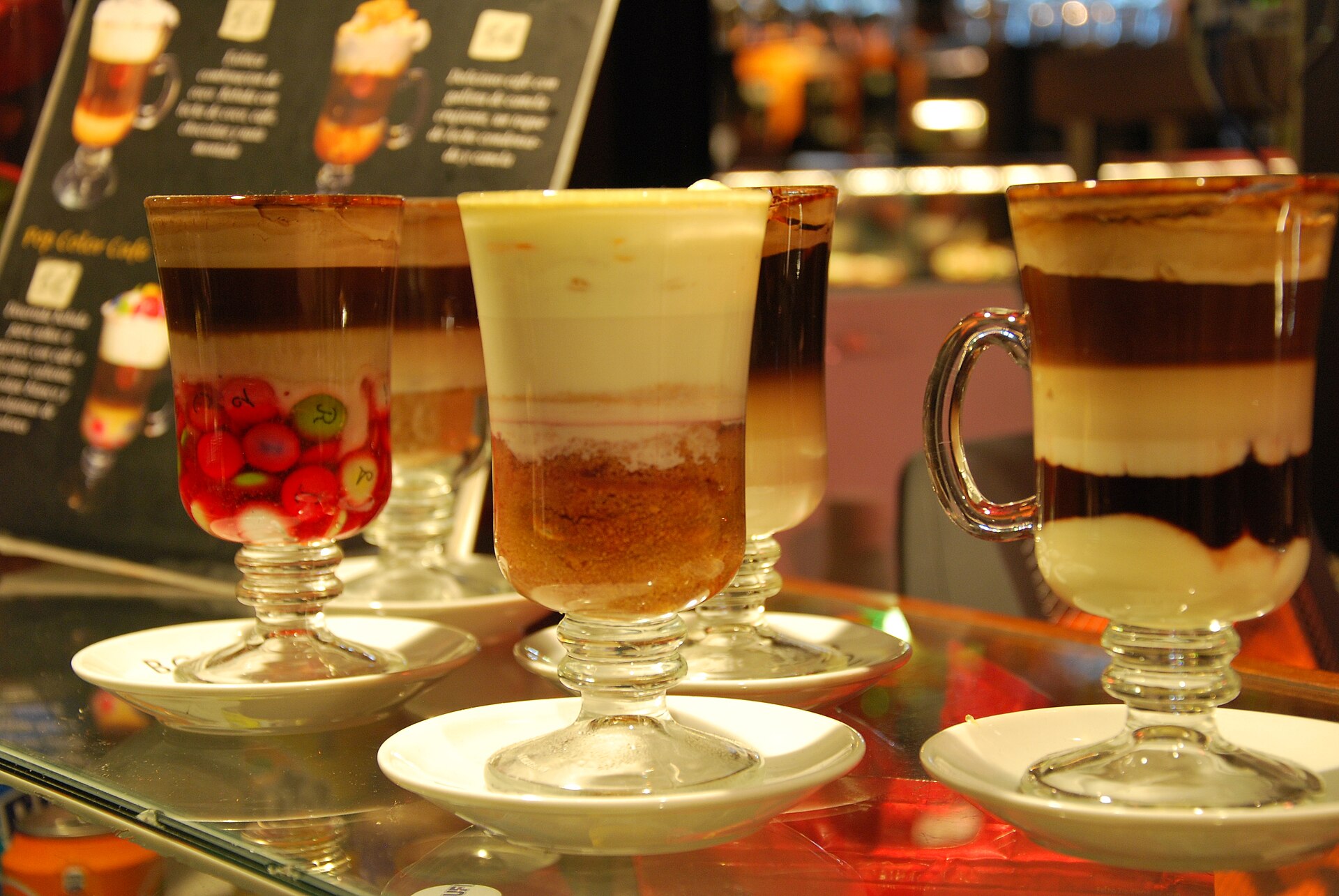
- Pastries, chocolate and sweet items
There is no seating in the traditional restaurant sense; the format is built around standing at counters or around the small central tables, moving between stalls rather than sitting down at one. This makes it closer in spirit to a tapas crawl compressed into a single covered building than to either a sit-down restaurant or a conventional grocery market.

Is it still used as a grocery market by local residents?
Not in the way it was for most of the 20th century. The current stalls are priced and organised for individual portions and drinks rather than household shopping, and the market’s own operator describes it as a space for tasting and socialising rather than provisioning a kitchen. Residents doing a weekly shop are more likely to use one of Madrid’s other historic market halls, several of which have kept, or partly kept, their original stall-based grocery function alongside newer food-stall additions — a distinction covered in the guide to how Madrid’s market hall types differ.
That said, the market functions as a genuine piece of the neighbourhood’s daily rhythm in another sense: it sits inside a district that residents pass through constantly, and it is often used as a stop for a drink or a small plate on the way to or from somewhere else, in the same way as any bar in the area — just with a different format.
How busy is it, and does that change through the day?
Its location by Plaza Mayor means footfall is consistently high, and the market draws both visitors and local diners at different points in the day. Spanish eating patterns still apply here: an early-evening lull between lunch and dinner service is normal across Madrid, not just in this market, and is explained further in the guide to how Spanish meal times reshape a Madrid day. What counts as a reasonable late-evening hour to be out eating or drinking in Madrid is a separate question with its own local logic, covered in what counts as late in Madrid.
Is it expensive compared to a normal Madrid bar?
Individual small plates and glasses are generally priced higher, portion for portion, than at a typical neighbourhood bar, reflecting both the format — many small specialist stalls rather than one kitchen — and its position as one of the most visited food sites in central Madrid. As with any market or venue in the city, current prices should be checked directly, since the site does not publish or hold a fixed tariff of its own. Payment across Madrid’s markets and bars generally works the same way, with cash and card both widely accepted; the mechanics of this are covered in how payments work in Madrid. Tipping at a stall or standing counter follows the same loose conventions as elsewhere in Spain, set out in how tipping works in Spain.
How does it fit into a visit to central Madrid?
Because of its position, the market sits naturally alongside other central sights rather than requiring a special trip. It is close enough to Plaza Mayor, Puerta del Sol and the wider Madrid de los Austrias district to be folded into a walk through that part of the city rather than treated as a separate destination, and its central location is part of why central Madrid is unusually walkable for a capital of its size. It appears naturally in itineraries built around the historic centre, including the sequencing suggested in a first visit to Madrid, in a sensible order.
For context on how this fits within the city’s food culture more broadly, and how it compares with Madrid’s other markets, the Food & Markets archive and the guide to how Madrid is divided into districts and barrios both give a wider picture of where a single covered market sits within the city’s structure as a whole.
Access Madrid is an independent guide written from published, checkable sources. We have not visited the places described here and we do not publish personal recommendations or invented ‘local favourites’ — where something is singled out as notable, we say who says so. Opening times, fares, closures and prices change at short notice, so treat everything here as a starting point and confirm with the museum, operator or venue directly before building a day around it. We give no advice on visas, insurance, health or safety; use your own government’s official guidance for those.
Featured image: Photo by Zorro2212, source, CC BY-SA 4.0
