The Paseo del Prado is a roughly 1.2-kilometre boulevard running north to south between Plaza de Cibeles and Plaza del Emperador Carlos V (Atocha), and a walk along it links three major art museums, a fountain-lined public space, and the Real Jardín Botánico in under an hour of flat, tree-shaded pavement.
What does the route actually cover?
The core walk runs between two roundabouts: Plaza de Cibeles at the north end and Plaza del Emperador Carlos V, more commonly called Atocha, at the south. In between sit the Museo del Prado, the Fuente de Neptuno, the CaixaForum cultural centre, the Real Jardín Botánico, and the southern approach to Estación de Atocha. A short detour east or west at either end reaches the Museo Thyssen-Bornemisza and the Museo Nacional Centro de Arte Reina Sofía, the two institutions that complete Madrid’s so-called Golden Triangle of art museums.
None of this requires a car, a bus, or a metro transfer between stops. It is a single, mostly straight walk with clear landmarks at each end, which is precisely why it is treated as one route rather than several separate visits.
Where does the walk start and end?
Most versions of this walk start at Plaza de Cibeles and finish at Atocha, or the reverse. Cibeles gives an immediate orientation point — the fountain, the Palacio de Cibeles, and the junction with Calle de Alcalá and the Gran Vía — while Atocha ends the route at one of the city’s two principal long-distance rail terminals, useful if the walk is being folded into a same-day trip elsewhere.
Starting at either end works equally well; the boulevard has no real gradient, so there is no “uphill” direction to favour.
What is at Plaza de Cibeles?
Plaza de Cibeles is a roundabout and public square built around the Fuente de Cibeles, an 18th-century fountain depicting the goddess Cybele in a chariot drawn by lions. It sits at the intersection of Paseo del Prado, Calle de Alcalá and Calle de Recoletos, and is bordered by the Palacio de Cibeles — the former post office headquarters, now Madrid’s city hall and a public cultural venue with a viewing deck — and the Bank of Spain’s headquarters building. Full detail on the square and its buildings is covered separately: see what Plaza de Cibeles actually is.
What museums line the route?
Three institutions sit within a few minutes’ walk of the boulevard, and together they hold one of the densest concentrations of pre-20th-century and modern European art anywhere in a single city stretch:
- Museo del Prado — Spain’s national gallery, holding the country’s principal collection of European painting from the 12th to the early 20th century, including the largest holdings anywhere of Velázquez and Goya. Its own catalogue and collection structure are set out at what the Prado’s collection actually contains, and the question of how much of it a single visit can realistically cover is addressed at how much of the Prado you can see in one visit.
- Museo Thyssen-Bornemisza, a short walk west of the Prado, built around the Thyssen-Bornemisza family collection acquired by the Spanish state in 1993, spanning Italian primitives through 20th-century avant-garde movements largely absent from the Prado’s own holdings. See what the Thyssen-Bornemisza collection contains.
- Museo Nacional Centro de Arte Reina Sofía, at the southern end near Atocha, Spain’s national museum of 20th- and 21st-century art, and home to Picasso’s Guernica. Its holdings around that single work are described at what the Reina Sofía’s Guernica collection covers.
A combined ticket, the Paseo del Arte pass, covers admission to all three; how it works and what it does and doesn’t include is explained at what the Paseo del Arte pass is. Each museum also runs its own free-entry windows on certain days and hours, set by the institution and subject to change — confirm current timings on each museum’s own site before planning around them, and see how national museum free-entry windows work for the general pattern. Most of Madrid’s major museums, including these three, close on Mondays; the reasoning behind that is covered at why Madrid’s museums close on Mondays.
What is the CaixaForum building, and why does it stand out?
CaixaForum Madrid is a cultural centre run by the Fundación “la Caixa”, built into a converted early-20th-century electrical power station on the west side of the boulevard, opposite the Real Jardín Botánico. The building is notable for its architecture as much as its programming: the original brick structure appears to float above ground level, and its south-facing wall carries a large vertical garden. It hosts temporary exhibitions rather than a fixed permanent collection. Full detail is at what the CaixaForum building is.

What is the Real Jardín Botánico?
The Real Jardín Botánico de Madrid is Spain’s royal botanical garden, founded in the 18th century and relocated to its current site next to the Prado under Carlos III. It is a walled, ticketed garden — distinct from the open, free Retiro park a short distance away — organised into terraces holding plant collections rather than open lawns. It sits directly beside the Prado’s southern facade, making it a natural pause on the walk rather than a detour. For context on how green space functions across the city more broadly, see the practical guide to getting around and enjoying Madrid’s green spaces.
How long does the walk take, and is it flat?
The boulevard itself is short and level — walking Cibeles to Atocha without stopping takes roughly 15 to 20 minutes. The real time cost is what sits either side of it: a serious visit to even one of the three major museums easily takes two to three hours, and the Thyssen and Reina Sofía both require a short detour off the direct line. Treating this as a single afternoon covering the boulevard plus one museum is realistic; covering all three museums properly in one day is not, and most guides to the area advise choosing rather than rushing. For a wider view of what a day in the centre can reasonably hold, see how walkable central Madrid actually is and what can reasonably be seen in one day.
What is the UNESCO status of the Paseo del Prado?
In 2021, UNESCO inscribed the “Paseo del Prado and Buen Retiro, a landscape of Arts and Sciences” on its World Heritage List, covering the boulevard, its museums, the Retiro park, and surrounding 18th- and 19th-century monuments as a single cultural landscape tied to the Spanish Enlightenment. The listing recognises the area’s planned layout — fountains, tree-lined avenues, and institutions built for scientific and artistic study — rather than any single building. Details on UNESCO’s own inscription can be checked on the World Heritage Centre’s site (whc.unesco.org).
How do you get there and back?
Both ends of the route sit on the metro network: Banco de España station serves Cibeles, and Atocha Renfe serves the southern end, which also connects to Cercanías regional trains and long-distance services. How the metro’s fare zones and rechargeable card work is explained at how the Madrid metro fare system works, and the distinction between metro and Cercanías is covered at what Cercanías is and when it beats the metro. Atocha’s role among Madrid’s stations, including its function for trains toward the south and east of Spain, is set out at what each of Madrid’s main railway stations serves.
When is the best time of year to walk it?
The boulevard has almost no shade cover in its central section, which matters in Madrid’s summer heat; guidance on planning around that is at how to plan a Madrid day in serious heat. Spring and autumn generally suit an outdoor walk of this length better than midsummer, and rain, while less frequent, is covered separately at how to plan a Madrid day when it rains — most of the museums along the route offer an obvious indoor fallback. Broader seasonal patterns are laid out at what Madrid’s climate is like through the year.
What should a resident know that a first-time visitor might not?
For anyone living in Madrid, the Paseo del Prado functions less as a single attraction and more as connective tissue between the Retiro, Atocha, and the Barrio de las Letras to its west — a route walked routinely rather than as an event. The free-entry windows at the three major museums are worth building into a regular rhythm rather than a one-off visit, particularly for anyone holding a resident’s card or student status; see what the Abono Joven covers if travel costs are also a factor. The boulevard closes to general traffic on some Sundays and public holidays for pedestrian and cycling use, a pattern worth checking against the current calendar rather than assuming; see which public holidays close things in Madrid for how the wider calendar affects opening hours nearby.
For those building this walk into a longer stay, it sits naturally alongside other central routes covered in the guide to Madrid’s museums, landmarks and neighbourhoods, and against the broader question of how a first visit to the city is usually sequenced, addressed at a first visit to Madrid, in a sensible order.
Access Madrid is an independent guide written from published, checkable sources. We have not visited the places described here and we do not publish personal recommendations or invented ‘local favourites’ — where something is singled out as notable, we say who says so. Opening times, fares, closures and prices change at short notice, so treat everything here as a starting point and confirm with the museum, operator or venue directly before building a day around it. We give no advice on visas, insurance, health or safety; use your own government’s official guidance for those.
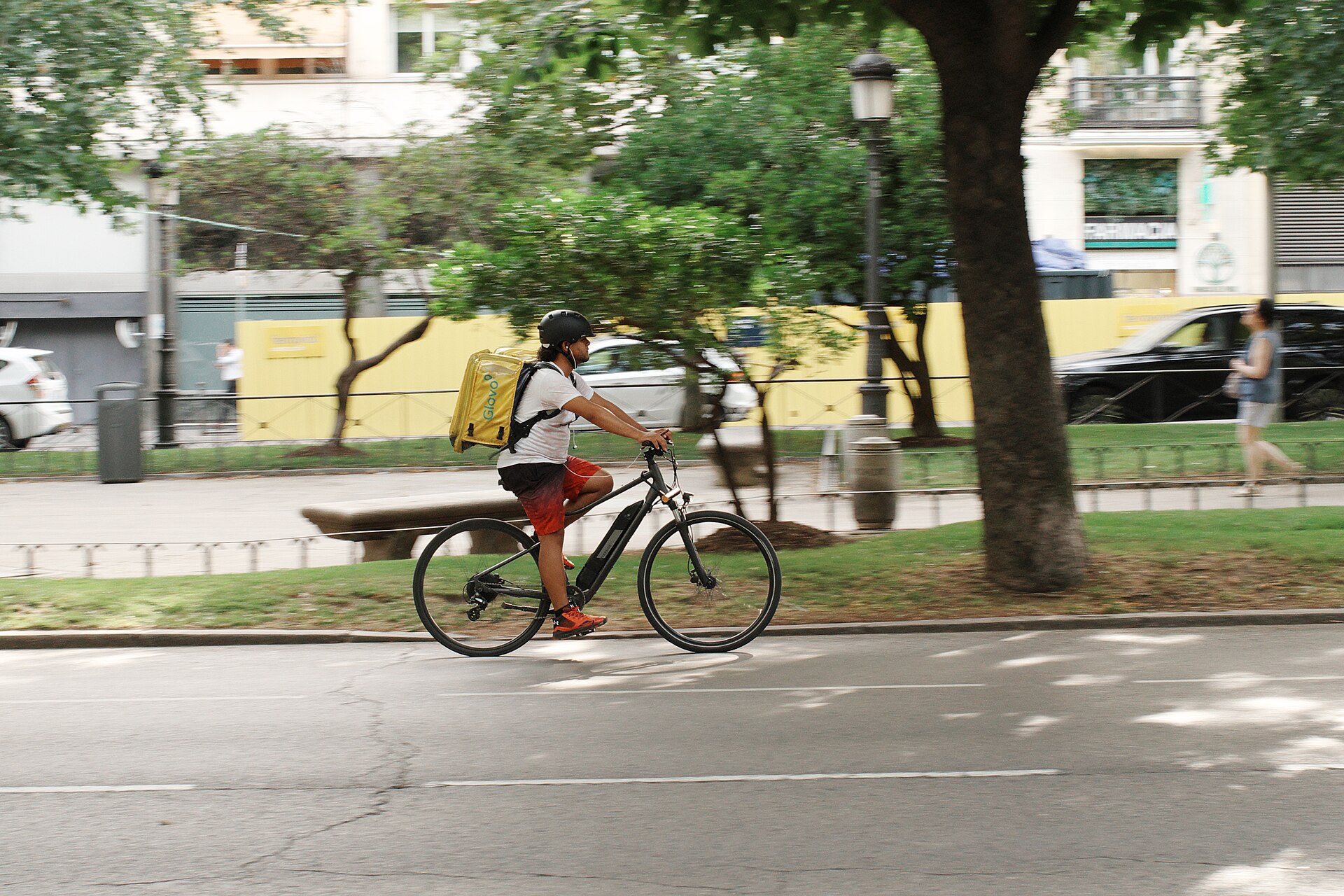
Featured image: Photo by Javier Perez Montes, source, CC BY-SA 4.0
