The Madrid Metro fare system charges by zone, not by line or number of stops. Almost all journeys within the city fall into Zone A, covered by a single flat fare. Tickets are loaded onto a rechargeable card called the Tarjeta Multi, and travellers choose between single trips, a 10-journey bundle, or a season pass depending on how often they ride.
The system is run by the Consorcio Regional de Transportes de Madrid (CRTM), the regional authority that also manages buses and the Cercanías commuter rail network. That matters because fares, cards and passes are shared across all three — a season pass bought for the metro also works on urban buses and most commuter trains within the same zone.
What is the Tarjeta Multi, and do you need one?
The Tarjeta Multi is a plastic, rechargeable card that holds tickets or a season pass. It is required for almost every fare option except single paper tickets bought for immediate use, which most stations no longer sell as the default option.
The card itself carries a small one-off issuing cost, separate from whatever ticket or pass is loaded onto it. It can be bought and topped up at ticket machines in any metro station, using cash or card. Machines offer menus in several languages, and CRTM’s own site lists current issuing fees and top-up options.
How do the fare zones work?
Madrid’s transport network is divided into concentric zones radiating out from the centre, labelled A, B1, B2, B3 and further out still, corresponding roughly to the city itself and the wider region of Madrid. Zone A covers the entire municipality of Madrid, including outlying districts such as Carabanchel, Vallecas and Moncloa-Aravaca. A single Zone A fare covers any metro journey that starts and ends within the city, regardless of how many lines or transfers it involves.
Zones B1 through B3 and beyond apply to towns in the surrounding Comunidad de Madrid — places like Alcalá de Henares, Getafe or the airport corridor extend into these outer bands. A journey that crosses from Zone A into an outer zone costs more than a Zone A-only trip, and the fare is calculated by which zones the journey touches, not by distance travelled within them.
For a visitor whose stay is confined to the city itself, this means almost every metro trip — from Puerta del Sol to Plaza de España, or out to Santiago Bernabéu — falls under the same flat Zone A rate. The one common exception is the airport, where Madrid-Barajas stations carry a fixed supplement on top of the standard fare, added specifically to fund airport line infrastructure. CRTM’s fare pages set out the current supplement amount.
What ticket options actually exist?
CRTM offers a small number of standard products rather than a long list of special tickets. The main choices are:
- Single ticket — one Zone A journey, valid for a set time window that allows transfers between metro lines but not a return trip.
- 10-journey ticket (Metrobús or “diez viajes”) — a bundle of ten trips loaded onto the Tarjeta Multi, shareable between people travelling together and generally cheaper per trip than buying singles.
- Tourist travel pass (Abono Turístico) — unlimited travel for a fixed number of consecutive days, sold in versions covering Zone A only or the wider region, aimed specifically at short visits rather than residence.
- Monthly and annual season passes (Abono Transportes) — unlimited travel across metro, bus and Cercanías within a chosen zone, priced by age band and typically requiring proof of address or age for reduced rates.
Each of these is described, with current prices, on CRTM’s own fare pages — a detail this site will not reproduce here, since fares are revised periodically and a wrong number is worse than no number.

Is the tourist pass worth it compared with paying per trip?
Whether a multi-day pass is cheaper than single tickets depends entirely on how many journeys are planned, and that arithmetic changes whenever fares are revised — so it is not something to answer with a fixed figure. As a rule of thumb, a visitor combining several sights in one day, such as moving between the Royal Palace, the Almudena Cathedral and a museum visit, will use enough single trips that a pass tends to work out cheaper — but the actual break-even point is a calculation the reader should make against CRTM’s current published fares, not a number this site should invent.
Residents making the same trip daily for work or study generally default to the monthly Abono Transportes rather than paying per journey, since it is designed for exactly that pattern of use and also covers bus and Cercanías travel on the same card.
Does the fare change for children, students or older residents?
Yes — CRTM applies reduced or free fares for several groups, including young children, people over a certain age, and registered students, though the exact age thresholds and discount levels are set by CRTM and the regional government and are subject to change. Reduced fares generally require proof of eligibility (an ID document or a specific youth or senior transport card) rather than being automatically applied at the machine.
Because these categories and their conditions shift with regional policy, the reliable approach is to check CRTM’s own fares page for the current eligibility rules rather than assume a rate carries over from a previous year.
How does the metro fare interact with buses and Cercanías?
A season pass bought through CRTM is a single physical product that works across metro, the EMT city bus network and Cercanías commuter trains within its zone — it is not metro-specific. A traveller with a monthly Zone A pass can use the same card to board a bus or a Cercanías train inside the city without buying anything separate.
Single tickets and the 10-journey Metrobús card, by contrast, are largely mode-specific: a metro ticket does not automatically cover a bus ride, and vice versa, though transfer allowances exist within a single mode. This distinction is worth knowing before assuming a bundle of ten metro trips can double as bus fare.
Where do fares actually get checked, and what happens without a valid ticket?
Metro stations use turnstile gates at entry, so a valid card or ticket is required to physically get onto the platform — there is no honesty-system equivalent to some European networks. Ticket inspectors also carry out spot checks on trains and at gates in some stations. CRTM sets out the applicable penalty structure for travelling without a valid fare on its own site, and this is not something to approximate here.
Does the fare system relate to Madrid’s districts?
Zone A corresponds to the municipal boundary of Madrid, which is itself divided into 21 districts and, within those, smaller barrios — the administrative units explained in more detail in this guide to how Madrid is divided into districts and barrios. Metro zones do not track district lines exactly, but because Zone A covers the whole municipality, a rider moving between any two districts inside the city — say, from Tetuán to Usera, or from Salamanca to Arganzuela — pays the same flat fare regardless of distance.
This is one reason the metro fare structure is simpler in practice than it looks on a map: the zone boundaries that matter for cost are regional, not neighbourhood-level, and readers exploring Madrid’s neighbourhoods or its landmarks and museums across several districts in one day are, fare-wise, making a series of identical Zone A trips.
Where to check current fares and rules
Because prices, supplements and discount eligibility change periodically, the only reliable source for current figures is the Consorcio Regional de Transportes de Madrid itself, at crtm.es. Its fares section sets out zone maps, current ticket and pass prices, discount categories and the airport supplement in detail, and should be checked directly before a trip rather than relied on from any secondary source, including this one.
Access Madrid is an independent guide written from published, checkable sources. We have not visited the places described here and we do not publish personal recommendations or invented ‘local favourites’ — where something is singled out as notable, we say who says so. Opening times, fares, closures and prices change at short notice, so treat everything here as a starting point and confirm with the museum, operator or venue directly before building a day around it. We give no advice on visas, insurance, health or safety; use your own government’s official guidance for those.
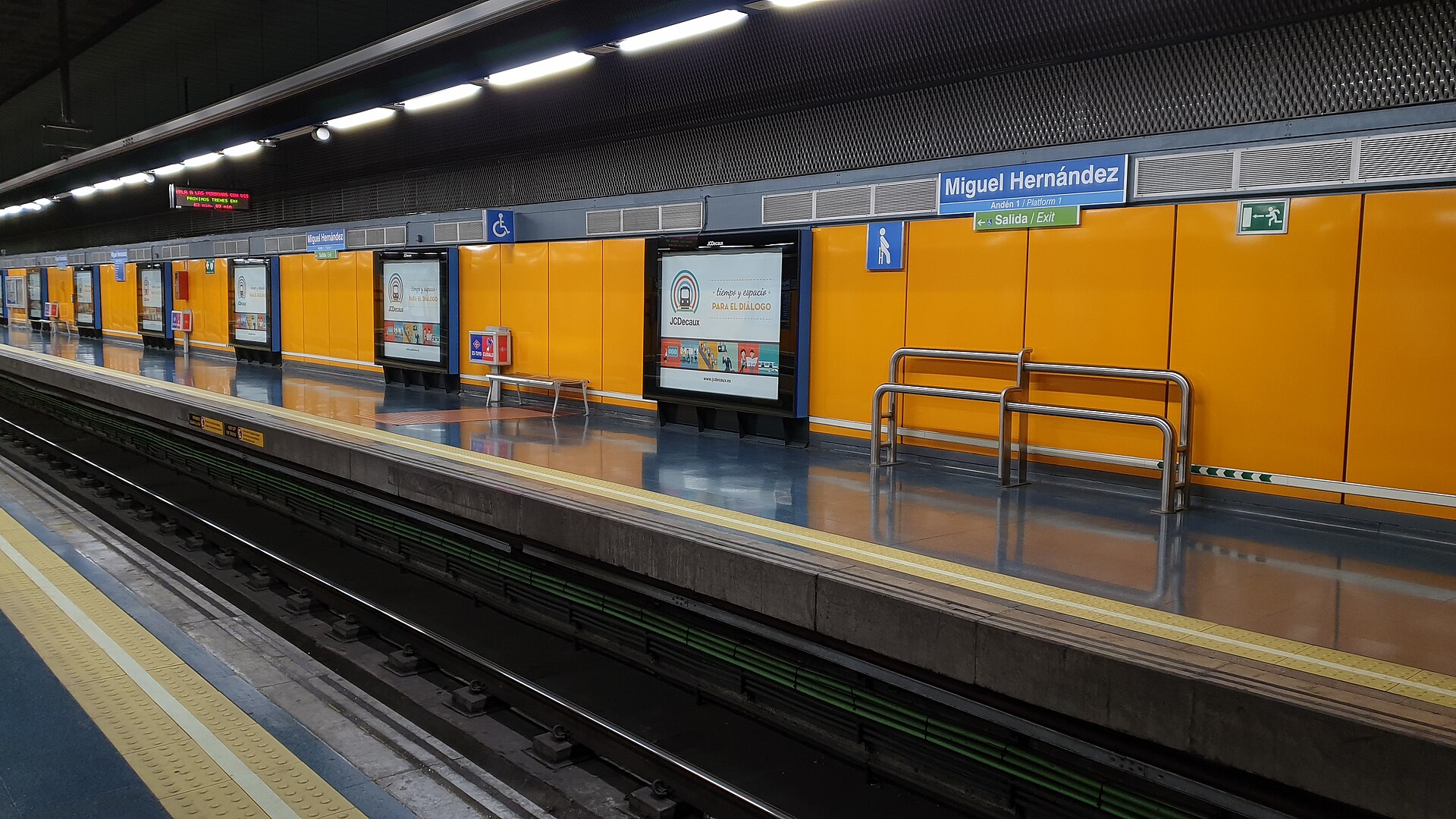
Featured image: Photo by Panhard, source, CC BY 2.5

Related reading
Madrid Airport to the City Centre: What Each Option Really Costs.