Madrid has two large terminal stations — Atocha and Chamartín — that handle long-distance and high-speed trains, plus a chain of smaller stations that exist mainly for Cercanías, the regional commuter network. Atocha serves the south and east of Spain; Chamartín serves the north and northwest. Several central stops connect the two without either terminal function.
What are Madrid’s main railway stations?
The system has two hierarchies stacked on top of each other. At the top are the two terminals where long-distance and high-speed (AVE) services begin or end: Madrid Puerta de Atocha and Madrid-Chamartín. Below that is Cercanías, the commuter rail network run by Renfe, which threads through both terminals and also stops at smaller stations that have no long-distance trains at all — Príncipe Pío, Nuevos Ministerios, Recoletos, and the underground Cercanías platforms at Sol. Infrastructure across the whole network is managed by Adif, the state rail infrastructure operator; train services themselves are run by Renfe, and on some routes by private operators that entered the Spanish high-speed market from 2021 onward.
What does Atocha serve?
Atocha is Madrid’s largest station and the hub for trains heading south, southeast and east — Toledo, Córdoba, Seville, Málaga, Alicante, Valencia and Barcelona among them. Its full name since 2021 has been Madrid Puerta de Atocha – Almudena Grandes, after Adif renamed the station in honour of the Madrid-born novelist. The building sits in the Arganzuela district, at the southern edge of the area covered by Madrid Río, and is really two stations joined together: the original 19th-century train shed, its wrought-iron and glass roof now enclosing a tropical garden rather than tracks, and the modern terminal built alongside it for AVE and Cercanías services. Atocha is also a Cercanías and Metro interchange, and it is the terminus most travellers arriving on high-speed trains from the south will use.
What does Chamartín serve?
Chamartín is Madrid’s other long-distance terminal, handling trains to the north and northwest — Valladolid, León, Galicia, the Basque Country and Cantabria — plus the historic overnight and international connections toward France and, in the past, Portugal. Since 2020 its official name has been Madrid-Chamartín Clara Campoamor, honouring the lawyer and suffragist who campaigned for women’s right to vote under the Second Republic. Chamartín sits in the north of the city, well outside the historic centre, and functions as a full interchange with the Metro and with Cercanías lines running further out into the region.
How do Atocha and Chamartín connect underground?
A dedicated tunnel runs beneath the centre of Madrid linking the two terminals, carrying Cercanías trains rather than long-distance services. This is what makes stations like Sol, Recoletos and Nuevos Ministerios possible: they are stops on that tunnel, not separate terminals. A passenger travelling by Cercanías from Chamartín to Atocha passes underneath Paseo de la Castellana and the historic core without ever surfacing, in a route that predates and underlies much of what is now central Madrid’s street life above ground.
What does Nuevos Ministerios handle?
Nuevos Ministerios is a Cercanías and Metro station on that north-south tunnel, in the area between Tetuán and the Chamberí and Chamartín districts, close to the government ministry buildings that give it its name. It has no long-distance trains of its own, but it is a significant interchange point precisely because it links Cercanías with several Metro lines in one building, making it a common transfer stop for people crossing the city rather than a destination station.
What does Príncipe Pío serve?
Príncipe Pío is a Cercanías and Metro station on the western edge of the centre, in the Moncloa-Aravaca district near the Río Manzanares and the Parque del Oeste. Its 19th-century train shed originally served as a full terminal for lines heading northwest; today the historic building has been repurposed to include retail space above the still-functioning Cercanías and Metro platforms below. It has no AVE or long-distance service — its role is purely regional and urban.
What about Sol and Recoletos?
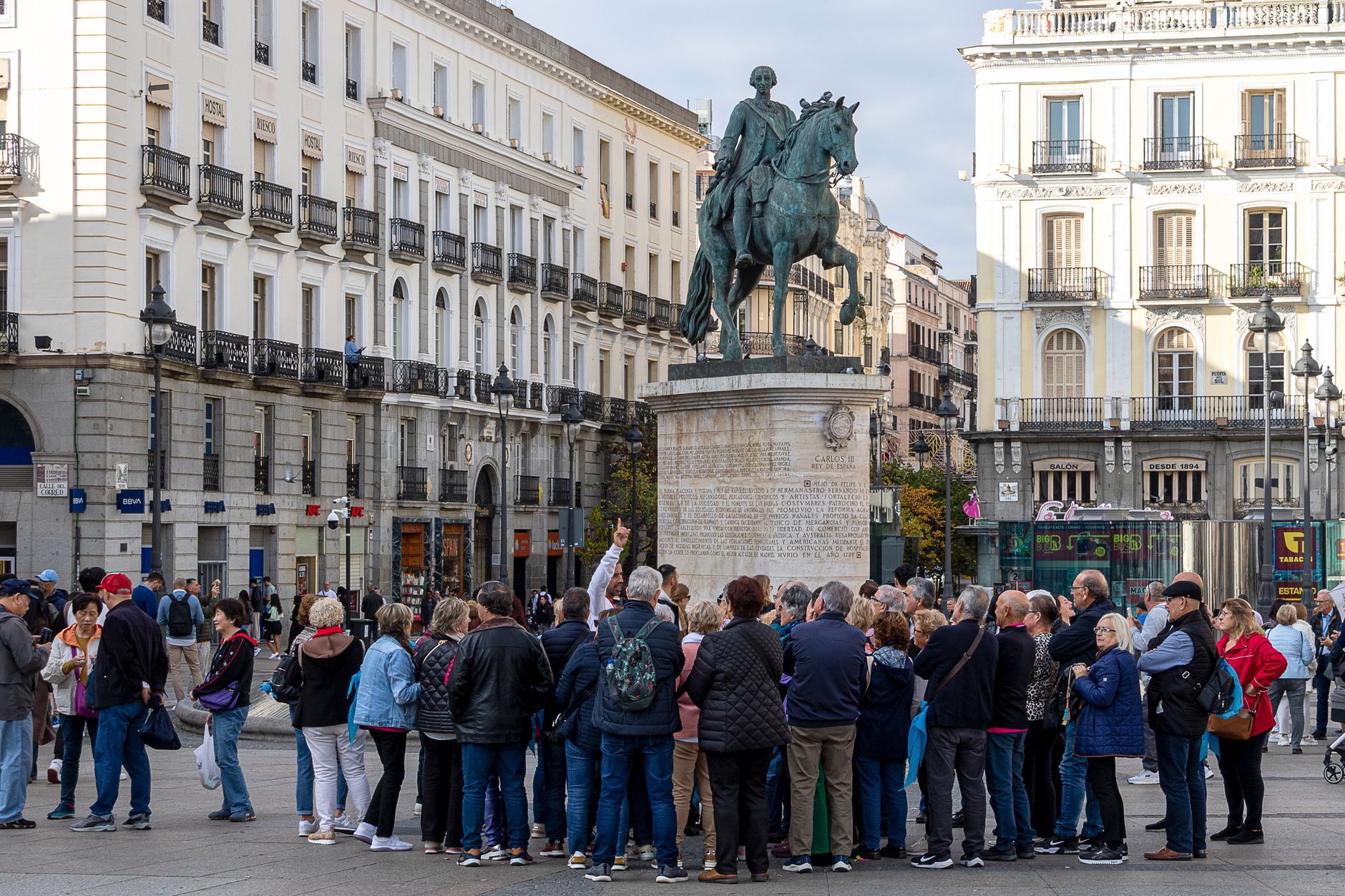
Sol has an underground Cercanías station beneath Puerta del Sol, feeding directly into the Metro interchange there and into the pedestrian core described on this site’s guide to how walkable central Madrid actually is — though note this is a Cercanías stop only, with no long-distance trains. Recoletos, further north along the same tunnel near Paseo de Recoletos, functions similarly: a commuter-rail stop with no terminal function of its own, useful mainly for reaching the museums and institutions along the Paseo del Prado corridor without surfacing near traffic.
Is there a station for historic or retired trains?
Madrid’s former Estación de Delicias, one of the city’s oldest railway buildings, no longer operates as a working station. It now houses the Museo del Ferrocarril, Spain’s national railway museum, with locomotives, rolling stock and railway memorabilia on permanent display. It is a museum rather than a transport hub, but it explains where Madrid’s rail network came from before Atocha and Chamartín took over long-distance traffic.
How do the stations connect to the rest of the transport network?
Every major station is also a Metro stop, and most are Cercanías stops as well, which means the practical question for a traveller is rarely “which station” but “which fare and which card”. Cercanías, Metro and EMT buses run on related but distinct fare structures, covered in detail in the guide to when Cercanías is a better option than the Metro. Anyone travelling in from Adolfo Suárez Madrid–Barajas Airport should also check the separate rules that apply there, set out in the explainer on getting from Barajas into central Madrid and the note on the Metro’s airport supplement, since it applies regardless of which onward line a traveller takes from Nuevos Ministerios or Sol.
What should a resident know that a visitor might not?
For someone living in Madrid, the two-terminal structure matters most when booking long-distance travel: Atocha and Chamartín serve genuinely different halves of the country, and turning up at the wrong one is a real and recoverable but avoidable error, since a same-day transfer between them means either the Cercanías tunnel or a Metro ride across the centre. For day-to-day travel within the city, Cercanías is often faster than the Metro over longer north-south distances precisely because of that direct tunnel, a comparison covered properly in the Cercanías versus Metro guide. Fare integration between Cercanías, Metro and bus depends on which travel card is held, an area explained in the pieces on how the Metro fare system is structured and how the Multi card differs from the annual Abono.
Where do the stations sit in relation to the city’s districts?
Atocha anchors the southern end of the Paseo del Prado corridor in Arganzuela; Chamartín sits well north in its own district beyond Chamberí; Príncipe Pío marks the western edge of Moncloa-Aravaca; Nuevos Ministerios sits on the boundary with Tetuán. None of the four sits inside what is generally understood as the historic centre, which is one reason the Cercanías tunnel through Sol and Recoletos matters — it is what makes both terminals feel close to the centre despite being physically outside it. A fuller picture of how the city’s districts and neighbourhoods relate to each other is set out in the guide to how Madrid is divided into districts and barrios, and the wider transport picture — Metro, buses, night buses and bike share — is covered across the Getting Around section.
Where to check current details
Timetables, platform assignments and fares change and should not be relied on from a secondary source. Renfe’s own site (renfe.com) is the authority on train services and tickets; Adif’s site (adif.es) covers station infrastructure and access. Both should be checked directly before travel rather than relying on any figure printed elsewhere, including here.
Access Madrid is an independent guide written from published, checkable sources. We have not visited the places described here and we do not publish personal recommendations or invented ‘local favourites’ — where something is singled out as notable, we say who says so. Opening times, fares, closures and prices change at short notice, so treat everything here as a starting point and confirm with the museum, operator or venue directly before building a day around it. We give no advice on visas, insurance, health or safety; use your own government’s official guidance for those.