The Madrid Metro airport supplement is a fixed extra charge added to any journey that begins or ends at one of the two airport stations on Line 8 — Aeropuerto T1-T2-T3 or Aeropuerto T4. It sits on top of the standard fare, is charged once per journey regardless of how many zones are crossed, and is set by the regional transport authority rather than by the airport operator.
Which stations trigger the supplement?
It applies only to trips that touch Aeropuerto T1-T2-T3 or Aeropuerto T4, the two stops at the end of Line 8, the pink line on the Metro map. Any other journey on the network, including a change of trains at Nuevos Ministerios, is unaffected.
Line 8 runs from Nuevos Ministerios — a major interchange also served by Lines 6 and 10, and by Cercanías — out to Adolfo Suárez Madrid-Barajas Airport, where it splits into two stops: one serving Terminals 1, 2 and 3, and a separate station serving Terminal 4, which sits apart from the others. Both count as airport stations for fare purposes.
How much is the supplement, and who sets it?
The amount is fixed by the Consorcio Regional de Transportes de Madrid (CRTM), the body that sets fares across the region’s bus, Metro and Cercanías network. Because the figure is reviewed periodically, the current amount should be confirmed on CRTM’s own site or Metro de Madrid’s site rather than assumed from an older source. This is one of the few fixed charges in the Madrid fare system that does not scale with the number of zones travelled — it is a flat add-on, not a distance charge.
Does it apply to every kind of ticket?
Not uniformly. According to CRTM’s published fare structure, the supplement is charged on single tickets (billete sencillo) and on the 10-trip Metrobús/Multi card, added automatically at the point the journey touches an airport station. Holders of a period travel pass — an Abono Transportes — are generally not charged it again, since those passes already cover unlimited travel within the zone that includes the airport stations. Given how often fare rules get adjusted, this distinction is worth confirming directly with CRTM before travelling, particularly for anyone combining several ticket types across a longer stay. The general shape of the fare system, including how zones and cards interact, is covered in more detail in how the Madrid Metro fare system works, and the practical difference between the two main card types is set out in what the Multi card is, and how it differs from the Abono.
- Applies: any Metro journey that starts or ends at Aeropuerto T1-T2-T3 or Aeropuerto T4.
- Applies: both to single tickets and to the 10-trip Multi card.
- Does not apply: journeys elsewhere on the network, including transfers at Nuevos Ministerios.
- Does not apply, per CRTM’s fare rules: to holders of a period travel pass — confirm current terms on CRTM’s own site.
- Does not apply: to Cercanías services to the airport, which run under a separate fare system.
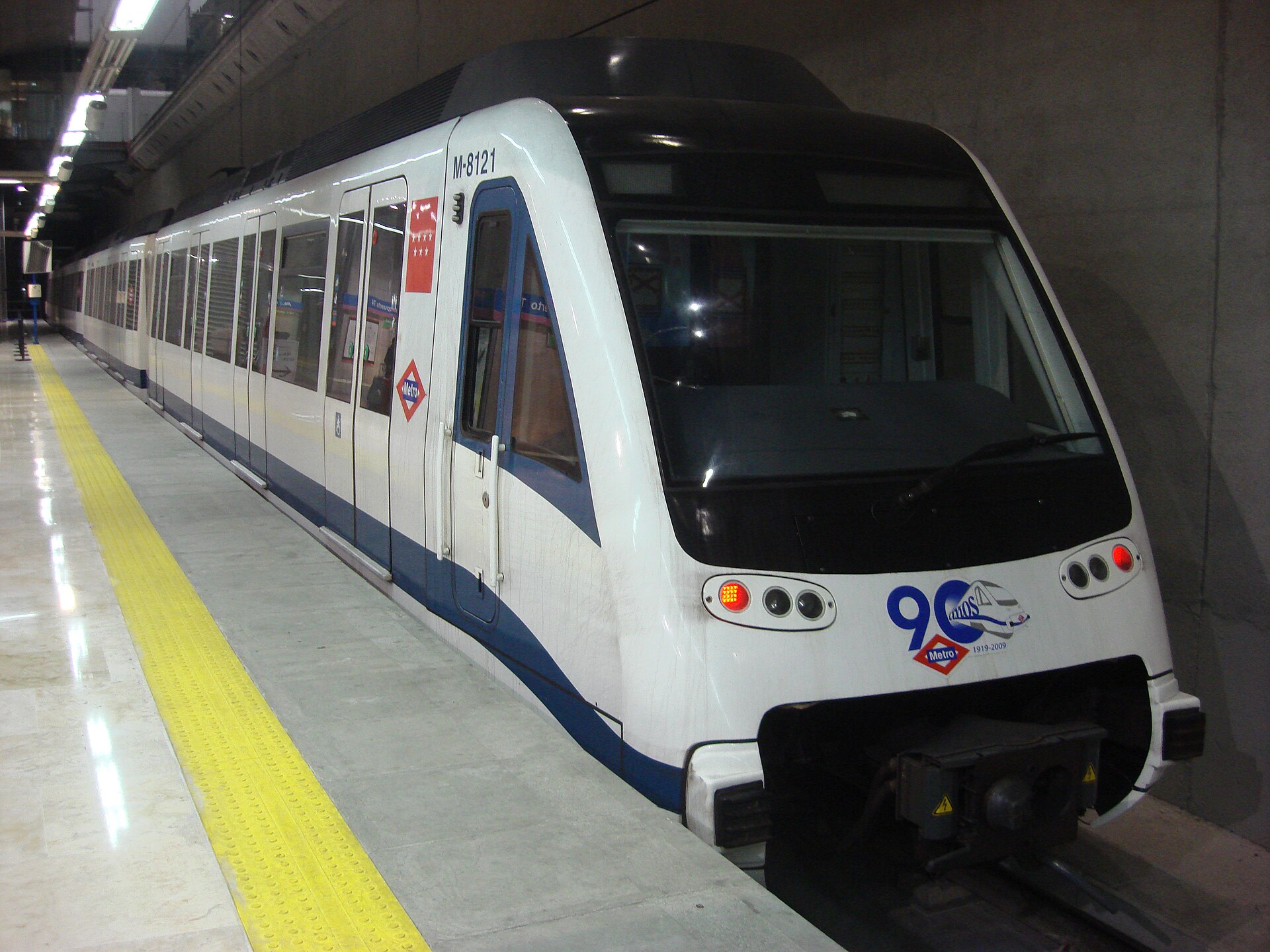

Does it matter whether you’re entering or leaving the airport?
No. The supplement is charged in either direction — travelling out to Aeropuerto T1-T2-T3 or T4, and travelling back into the city from either station, are each treated as a separate journey and each carries the charge. It is not a one-off fee for the day; it applies every time the barrier at an airport station is crossed.
Why does the Metro charge extra for the airport line?
CRTM and Metro de Madrid describe the charge as covering the cost of building and maintaining the extension of Line 8 out to the airport, a stretch of line that runs beyond the core network and serves a smaller, more specialised set of journeys than the rest of the system. It functions as a targeted charge on airport travellers rather than a cost spread across all Metro users through the standard zone fare.
How does this compare with taking Cercanías instead?
Cercanías line C-1 also connects Terminal 4 with the centre of Madrid, including Atocha and Chamartín, and runs under a wholly separate fare system with its own ticketing, not the Line 8 supplement described here. It is often faster for journeys toward the Atocha area specifically, though the two services suit different starting and ending points in the city. The distinction between the two systems, including how their fares are structured differently, is covered in what Cercanías is, and when it beats the Metro. For a fuller comparison of every route from the airport into the centre — Metro, Cercanías, bus and taxi — see how to get from Barajas Airport into central Madrid.
Does the fare zone matter here too?
Madrid’s regional fare map is built around zones radiating out from the centre, and the airport stations sit within that structure rather than outside it — the supplement is a separate, additional charge layered on top of whichever zone fare already applies to the rest of the journey. Anyone unfamiliar with how the zone system works more broadly, including how it affects tickets bought for trips into the wider region beyond the airport, can find the underlying structure explained in the fare-system article linked above, and in the general orientation to getting around Madrid.
What does this mean in practice at the airport itself?
Someone landing at Barajas and buying a ticket from a machine at Aeropuerto T1-T2-T3 or Aeropuerto T4 will typically see the supplement already included in the price shown before purchase, since the machine recognises the station. The same applies buying a 10-trip Multi card there for the first time. The point to check is not whether the charge exists — it does, for Metro journeys to and from those two stations — but what the current figure is, since CRTM reviews fares periodically and the operator’s own published tables are the only reliable source for an exact number on any given date.
Does this affect residents differently from visitors?
The mechanics are the same for everyone, but the practical effect differs. A visitor buying a single ticket or a 10-trip card for a short stay pays the supplement as a fixed, occasional cost tied to arrival and departure days. A resident who flies regularly and holds a period Abono is, per CRTM’s fare rules, generally exempt from paying it again on top of a pass that already covers travel within the relevant zone — which makes the choice of card, not just the choice of route, the more relevant question for anyone living in the city and using the airport line more than once or twice a year. That choice is covered in more detail in the Multi card versus Abono comparison linked above.
Where the airport line fits into the wider network
Line 8’s other end, Nuevos Ministerios, sits in the Chamberí area and functions as one of the busiest interchanges in the city, connecting onward to lines serving the centre
Access Madrid is an independent guide written from published, checkable sources. We have not visited the places described here and we do not publish personal recommendations or invented ‘local favourites’ — where something is singled out as notable, we say who says so. Opening times, fares, closures and prices change at short notice, so treat everything here as a starting point and confirm with the museum, operator or venue directly before building a day around it. We give no advice on visas, insurance, health or safety; use your own government’s official guidance for those.
Related reading
Living in Madrid, Madrid, Practically.
Featured image: Photo by Tim Adams, source, CC BY 3.0
