EMT (Empresa Municipal de Transportes) is Madrid’s municipal bus operator, running daytime, night and airport-adjacent routes across the city on numbered lines shown on stop-mounted maps. It uses the same rechargeable card and zone-based fare system as the metro, coordinated by the regional transport authority, CRTM.
What is EMT, and what does it run?
EMT Madrid is a company owned by Madrid’s city council, and it is the sole operator of the city’s urban bus network — distinct from the regional interurban buses that run out to towns beyond the M-30 and M-40 ring roads. EMT’s own network covers well over a hundred daytime lines, plus a separate set of night lines, and its buses are the low-floor, mostly hybrid or electric vehicles seen on almost every major avenue in the city.
The network is organised around the city’s radial structure: many lines converge on central hubs such as Puerta del Sol, Cibeles, Atocha and Moncloa, then fan out toward outer districts. Others run circular or tangential routes connecting outer neighbourhoods to each other without passing through the centre at all — useful for journeys between, say, Carabanchel and Usera, which the metro does not always serve directly.
How is the fare system structured?
EMT bus fares sit inside the same zonal system used by the Madrid Metro and Cercanías, administered by the Consorcio Regional de Transportes de Madrid (CRTM). A single fare, a rechargeable card, and a set of multi-trip and unlimited-travel products all apply across bus, metro and Cercanías rather than being sold separately per operator.
Two card types matter here. The Tarjeta Multi is the anonymous, pay-as-you-go or single-ticket card most visitors use; the Abono is the personalised monthly or annual travel pass, usually associated with residents and typically requiring proof of address. The distinction between them — and which one suits a short stay versus a longer one — is covered in detail in this site’s explainer on the Multi card versus the Abono. The underlying zone logic (how far a single fare or pass takes you before you cross into Zone B or beyond) is the same logic explained in how the Madrid Metro fare system works, since EMT buses use the identical zones.
Fares themselves — the exact euro amount for a single ride, a ten-trip bundle, or a monthly pass — change periodically by council and CRTM decision. This site does not publish those figures as fixed facts; EMT’s own website and the CRTM’s fare pages are the sources to check before travelling.
How do you actually pay on board?
Passengers board through the front doors and either tap a rechargeable card on the validator beside the driver or, on many lines, pay a single cash fare directly to the driver, which is usually more expensive than a card-based fare and does not carry transfer discounts. Contactless bank card payment has been rolled out on much of the fleet in recent years, though its exact coverage should be confirmed on EMT’s site rather than assumed. There is no barrier to pass through, unlike the metro — the validator is the only checkpoint, and inspectors do carry out spot checks.
How does the numbering and route system work?
EMT lines are identified by number, and the numbering broadly reflects geography rather than being arbitrary. Single- and double-digit lines tend to be older, more central routes; three-digit numbers generally serve outer districts and interurban-adjacent connections; and certain prefixes mark specific categories of service, such as the N-prefixed night buses. Every stop displays a physical panel listing the lines that call there, their route diagram, and approximate frequency — the practical way to check a specific route remains the stop signage or EMT’s own journey planner, since printed route numbers can be reassigned when services are restructured.
Some lines are worth understanding by function rather than number:
- Radial lines connecting outer districts to the centre, often paralleling a metro line as backup or extension where the metro does not reach.
- Orbital or tangential lines linking districts of similar distance from the centre — for example, connecting parts of Tetuán to Moncloa-Aravaca without a change of transport mode.
- Express or limited-stop variants on some corridors, marked with an additional letter or distinct livery.

What are the night buses (búhos)?
Once the metro stops running in the small hours, EMT’s night network — informally called búhos (“owls”) — takes over, with lines numbered in the N-series (typically N1 upward) departing from Puerta del Sol on a hub-and-spoke pattern toward the outer districts through the night. Frequency on these lines is lower than daytime service, and the operating window is fixed by EMT’s own night timetable rather than running continuously — a detail to confirm on EMT’s site rather than assume, particularly around New Year and other nights when supplementary services are sometimes added.
How does EMT connect with the metro and Cercanías?
Because EMT, Metro de Madrid and Cercanías all sit inside the same CRTM fare structure, a single travel product — the Abono, in particular — typically covers unlimited transfers between all three within its zone and time validity, without a separate ticket purchase at each change. This matters for journeys that combine modes: reaching the airport, for instance, may combine Cercanías or the metro with a connecting bus, a combination explained in how to get from Barajas Airport into central Madrid and, where the metro’s own airport charge applies, in the explainer on the Madrid Metro airport supplement. Where Cercanías rather than the metro is the faster option for a given route, that comparison is set out in Cercanías versus the metro.
EMT buses also do work the metro cannot: reaching streets and squares in dense historic districts where no metro line runs, serving new residential areas built after a metro extension was planned, and providing surface-level routes through areas like the Arganzuela district along Madrid Río, where bus routes trace the riverside redevelopment more directly than the metro grid does.
Are there special EMT routes for visitors?
EMT does not run a dedicated sightseeing service in the way some private operators run open-top tourist buses; those are separate commercial products and not part of the municipal network. What EMT’s ordinary lines do offer is direct, cheap surface access to landmark areas as a byproduct of ordinary city routes — lines passing near Gran Vía, Plaza de Cibeles and the Puerta de Alcalá exist because those are major traffic arteries and transit hubs, not because the routes were designed for visitors.
For orientation on where a given bus route actually sits within the city’s administrative geography — which district a stop is in, and what borders it — this site’s overview of how Madrid is divided into districts and barrios is the starting reference point.
Does the network change on Sundays, holidays or in August?
Frequency drops on Sundays and public holidays across almost all daytime lines, following the same pattern as most Spanish urban transit systems, and a reduced summer timetable is common in August on some routes, reflecting lower demand as much of the resident population is away. Night bus frequency and coverage can also shift around major public holidays and city-wide events. None of these adjustments follow a single fixed rule from year to year, so EMT’s own service-alerts page is the reliable source immediately before travel, rather than a general assumption carried over from a previous visit.
Where to check current detail
Route maps, live arrival times, fare tables and service disruptions are maintained directly by EMT Madrid on its own website, and zone maps and combined-fare products are maintained by the CRTM. Because both fares and specific route numbers are revised periodically, this site treats the shape of the system — zones, card types, route logic, night service — as the durable part, and points to the operators themselves for the numbers.
Access Madrid is an independent guide written from published, checkable sources. We have not visited the places described here and we do not publish personal recommendations or invented ‘local favourites’ — where something is singled out as notable, we say who says so. Opening times, fares, closures and prices change at short notice, so treat everything here as a starting point and confirm with the museum, operator or venue directly before building a day around it. We give no advice on visas, insurance, health or safety; use your own government’s official guidance for those.
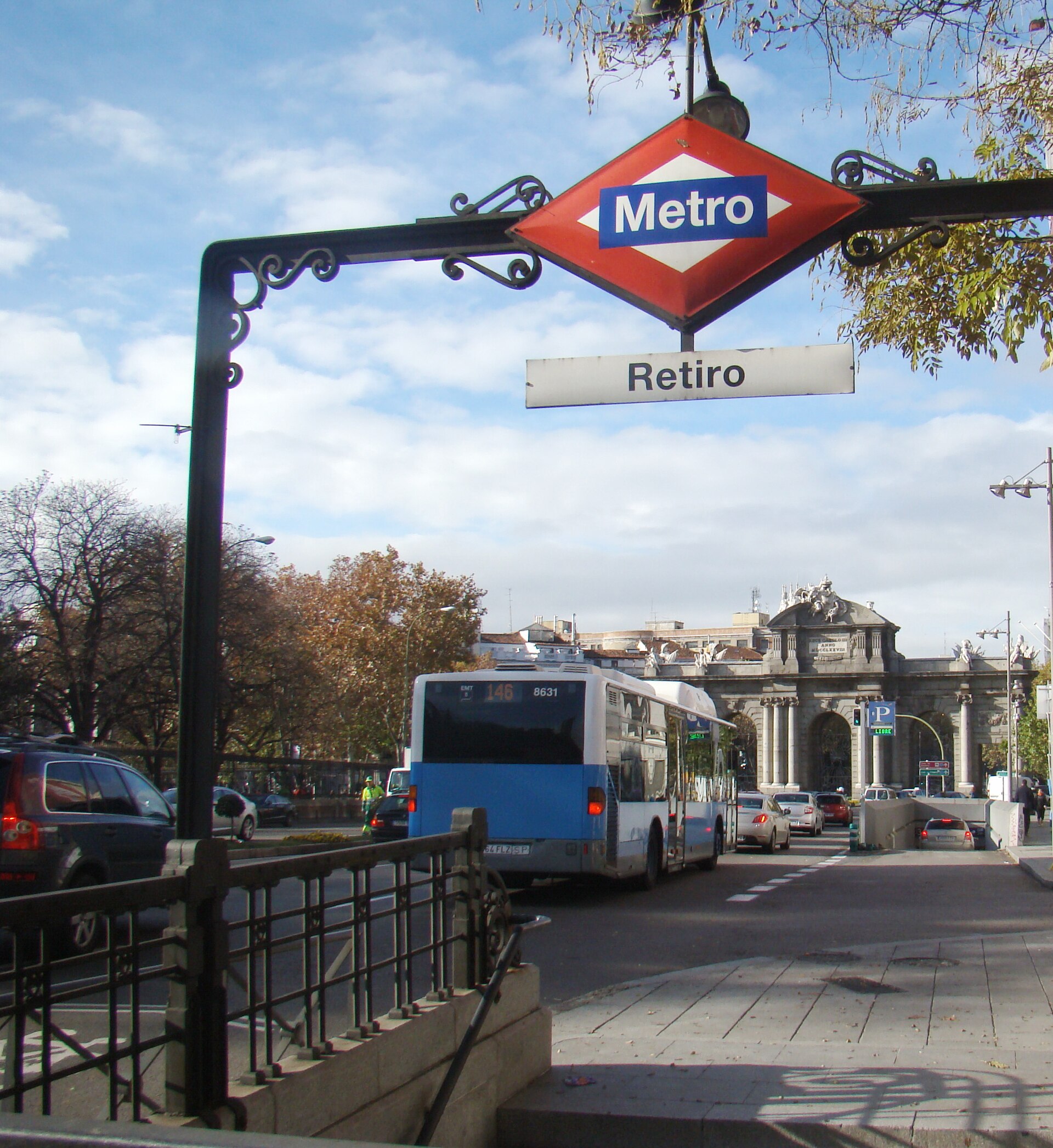
Featured image: Photo by Lourdes Cardenal, source, CC BY-SA 4.0
