The bocadillo de calamares — battered squid rings packed into a baguette roll, usually with nothing else added — is a Madrid thing because two separate local habits collided: a landlocked capital that developed an appetite for fresh seafood earlier than its geography would suggest, and a specific ritual of eating it standing at a bar around Plaza Mayor, particularly on Sundays. It never spread as a national dish in the same way.
What exactly is a bocadillo de calamares?
It is squid rings, battered and deep-fried, placed inside a plain white baguette roll with no sauce, no lettuce, no cheese — just squid and bread, sometimes with a squeeze of lemon on the side. It is eaten hot, usually within minutes of being fried, and it is sold both as a stand-up bar snack and as a market-stall item.
Why does an inland city have a squid sandwich at all?
Madrid sits roughly 300 kilometres from the nearest coast, which makes a fried-seafood sandwich an odd thing to find as a civic staple. Food historians and Spanish food writers have traced the habit to the 19th and 20th centuries, when improved rail links and later refrigerated road transport began moving fish and shellfish from the Cantabrian and Mediterranean coasts into the capital overnight, feeding the historic wholesale fish markets that supplied the city’s restaurants and bars. Madrid built a genuine seafood culture on the back of that supply chain, well before refrigeration was reliable elsewhere in inland Spain, and squid — cheap, easy to batter, and forgiving of the fry — became one of the dishes that stuck.
What do San Isidro and Plaza Mayor have to do with it?
The strongest local association is with the area around Plaza Mayor, where bars serving bocadillo de calamares cluster along the streets just off the square, particularly toward Calle de Toledo and Calle Cava Baja. Accounts of the tradition commonly link it to two older habits rather than one: eating fried squid before or after Mass, since it did not count as meat under Catholic dietary rules that once applied to Fridays, and the specific crowds that gather in this part of the old city around San Isidro, Madrid’s patron-saint festival each May, when standing rooms near the square fill with people eating exactly this. Neither claim comes from an official record — they are the kind of oral food history repeated by Spanish outlets and local chroniclers — but the geography of where the sandwich is sold today lines up with both stories.

Where in Madrid is it most associated with?
Beyond Plaza Mayor itself, the sandwich is closely tied to the streets of Madrid de los Austrias, the oldest core of the city, and to neighbouring La Latina, where Sunday crowds from El Rastro, the city’s long-running flea market, spill into bars around midday looking for exactly this kind of stand-up food. The pattern — market or Mass crowd, then a squid sandwich eaten on foot or leaning against a bar counter — is consistent enough across written accounts of the area that it counts as a genuine local custom rather than a marketing story.
Is it a tapa, or a full dish?
It sits somewhere between the two. A full bocadillo is normally ordered and paid for as a dish in its own right, not handed over free with a drink the way a small tapa might be. For how that distinction actually works across Madrid’s bars, see what counts as a tapa in Madrid, and whether it’s ever free. Some bars also sell a smaller version, closer to a montadito, which does sometimes appear as a bar snack alongside a drink rather than a separate order.
How does it fit into Madrid’s wider food identity?
Madrid’s most-cited dishes tend to be built around the same logic: cheap, robust food designed to be eaten quickly and often standing up, shaped by what the city could reliably supply rather than by coastal or agricultural abundance. The bocadillo de calamares sits alongside dishes covered on this site’s own overview of which dishes are actually associated with Madrid, and it shares its logic — inland improvisation, bar-counter eating, no particular ceremony — with the city’s other signature dish, cocido madrileño, even though the two could hardly be more different on the plate.
Does it ever show up in more serious kitchens?
The Michelin Guide’s Bib Gourmand category exists specifically to recognise good food at moderate prices in bars and casual restaurants, and its own description of the distinction is built around exactly this kind of dish — simple, traditional, well executed rather than reinvented. Several Madrid addresses carry that distinction; the guide’s current Madrid listings are the only reliable way to check which ones, and this site’s own explainer on how Michelin’s stars and Bib Gourmand work in Madrid covers how the categories differ. A bocadillo de calamares is unlikely to appear on a starred tasting menu, but it is precisely the sort of dish the Bib Gourmand was designed to flag.
When is it usually eaten?
Timing follows the city’s own eating rhythm rather than any fixed rule. It turns up around midday and into the early afternoon, often bracketing what Madrid treats as vermouth hour, the late-morning-to-lunchtime slot when bars fill for a drink and something to eat before the main midday meal. For how that slot fits into the day more broadly, see this site’s guide to Spanish meal times in Madrid, which explains why lunch runs later than visitors often expect and why a squid sandwich at noon is not treated as an odd hour to eat.
What should a visitor or a resident actually expect?
A few practical points are worth knowing rather than guessing at:
- Bars near Plaza Mayor selling this dish are aimed at heavy foot traffic, so ordering and paying tends to be quick and standing-room only rather than a seated, lingered-over meal.
- Cash is still common at small counter bars, though card acceptance has grown; this site’s guide to how payments work in Madrid covers what to expect at smaller establishments generally.
- Prices, portion sizes and exact opening hours vary bar to bar and change over time, so treat any figure quoted elsewhere as a starting point rather than a fixed fact, and check current opening patterns against this site’s general guide to typical opening hours in Madrid.
- The dish is sold year-round, not as a seasonal item, though it is more visibly tied to crowds during San Isidro in May and on Rastro Sundays than at quieter times of year.
Why has this stayed a Madrid thing rather than a Spain-wide one?
Other Spanish cities have their own fried-seafood traditions, particularly along the Andalusian coast, where pescaíto frito is the dominant form. Madrid’s version is distinct because it was never really about proximity to the sea — it was about an inland capital’s specific 19th- and 20th-century supply routes, a specific square, and a specific crowd pattern that formed around Mass, market days and a festival calendar. That combination of geography and habit doesn’t transplant cleanly, which is a large part of why the bocadillo de calamares reads as a Madrid dish rather than a generic Spanish one, in the same way this site treats other neighbourhood-specific habits across its neighbourhoods coverage and its broader food and markets archive.
Access Madrid is an independent guide written from published, checkable sources. We have not visited the places described here and we do not publish personal recommendations or invented ‘local favourites’ — where something is singled out as notable, we say who says so. Opening times, fares, closures and prices change at short notice, so treat everything here as a starting point and confirm with the museum, operator or venue directly before building a day around it. We give no advice on visas, insurance, health or safety; use your own government’s official guidance for those.
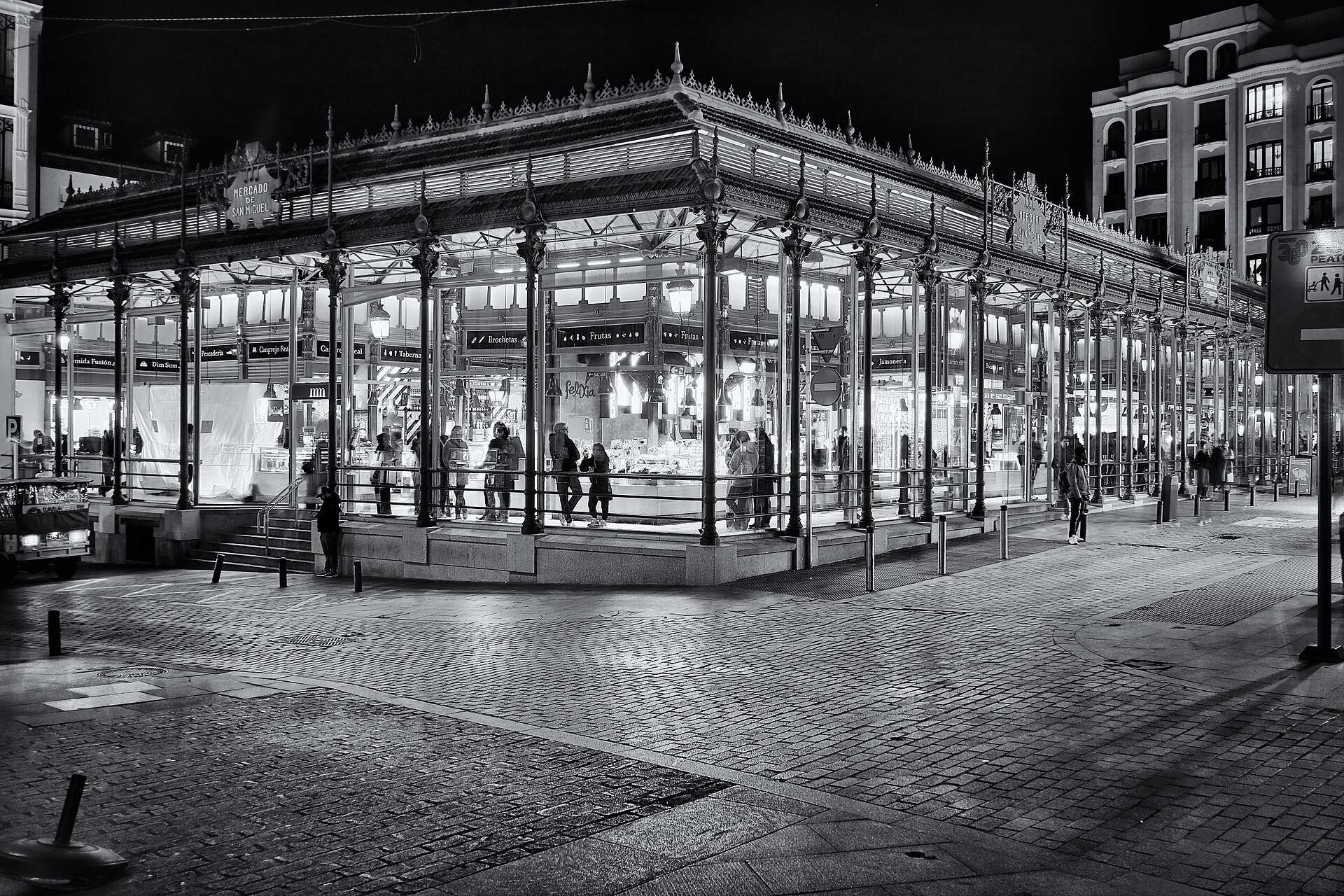
Featured image: Photo by Pablo Sanz Almoguera from Spain, source, CC BY-SA 2.0
_05.jpg)