Madrid holds a substantial number of Michelin-starred restaurants, several Bib Gourmand listings for good food at moderate prices, and at least one Michelin Green Star for sustainable practice. The exact count moves every year when the guide publishes its update — the structure below explains what each category means and where to check the current figures.
What is the Michelin Guide actually rating?
The Michelin Guide is a restaurant inspection system published by the tyre company Michelin, run today as Guide Michelin under Michelin’s own editorial team. Inspectors — anonymous, and paid by Michelin rather than by restaurants — visit and rate establishments against Michelin’s own published criteria, which the company describes as centred on the quality of the food itself: product, technique, personality, consistency and value within the chosen style of cooking.
It is not a ranking of a city’s best meals in any absolute sense. It is one organisation’s assessment, made under one method, and it says so itself. Anything this article states about a category or a pattern is Michelin’s own classification, not an Access Madrid judgement.
What do the star levels mean?
Michelin awards up to three stars, and each level has its own published definition:
- One star — a very good restaurant in its category, according to Michelin’s own wording.
- Two stars — excellent cooking, worth a detour.
- Three stars — exceptional cuisine, worth a special journey.
Madrid holds restaurants across all three tiers, including at least one three-star restaurant — a distinction Michelin reserves for a very small number of establishments across the whole of Spain. The precise roster shifts at each annual ceremony, when stars are added, held or removed. Michelin Guide Spain has in recent years staged that ceremony in Madrid itself, though the host city for any given year is Michelin’s own decision to confirm, not a fixed fact to assume.
What is a Bib Gourmand, and does Madrid have many?
The Bib Gourmand is Michelin’s separate category for what it calls good cooking at a moderate price, judged by its own set-price threshold that Michelin updates from time to time. It sits below the starred tier and covers a much larger number of restaurants than the stars do.
Madrid’s Bib Gourmand list is longer than its starred list, and it changes composition more often, since restaurants move in and out of the price band Michelin uses to define the category. This is the tier most likely to include the kind of neighbourhood restaurant a resident might actually use on a regular week — closer in spirit to the menú del día culture that shapes weekday lunch across the city than to special-occasion dining.
What is the Michelin Green Star?
The Green Star is a newer category, introduced across the guide’s editions to recognise restaurants Michelin judges to have strong sustainable practice — sourcing, waste management, and broader environmental commitment — independent of the food-quality stars. A restaurant can hold a Green Star alongside a conventional star, or on its own. Madrid’s guide includes at least one Green Star listing, and the number is one of the categories most likely to expand in future editions as Michelin extends the criteria.
Where is Madrid’s Michelin representation concentrated?
Michelin-starred and Bib Gourmand restaurants in Madrid are not evenly spread across the city. Based on the pattern the guide’s own listings show over successive years, concentration tends to sit in a few areas:
- The Barrio de Salamanca, a district built around formal retail and dining since the 19th century, which carries a disproportionate share of higher-end listings.
- The central axis around Chamberí and the areas bordering the city’s historic core, where a mix of long-established dining rooms and newer chef-led projects sit close together.
- A smaller but growing number of listings further out, reflecting how Madrid’s food scene has widened beyond the traditional centre in the past decade.
This distribution says something real about how the city’s formal dining economy is organised, independent of any single restaurant’s fortunes in a given year.
How does the Michelin list relate to Madrid’s everyday food culture?
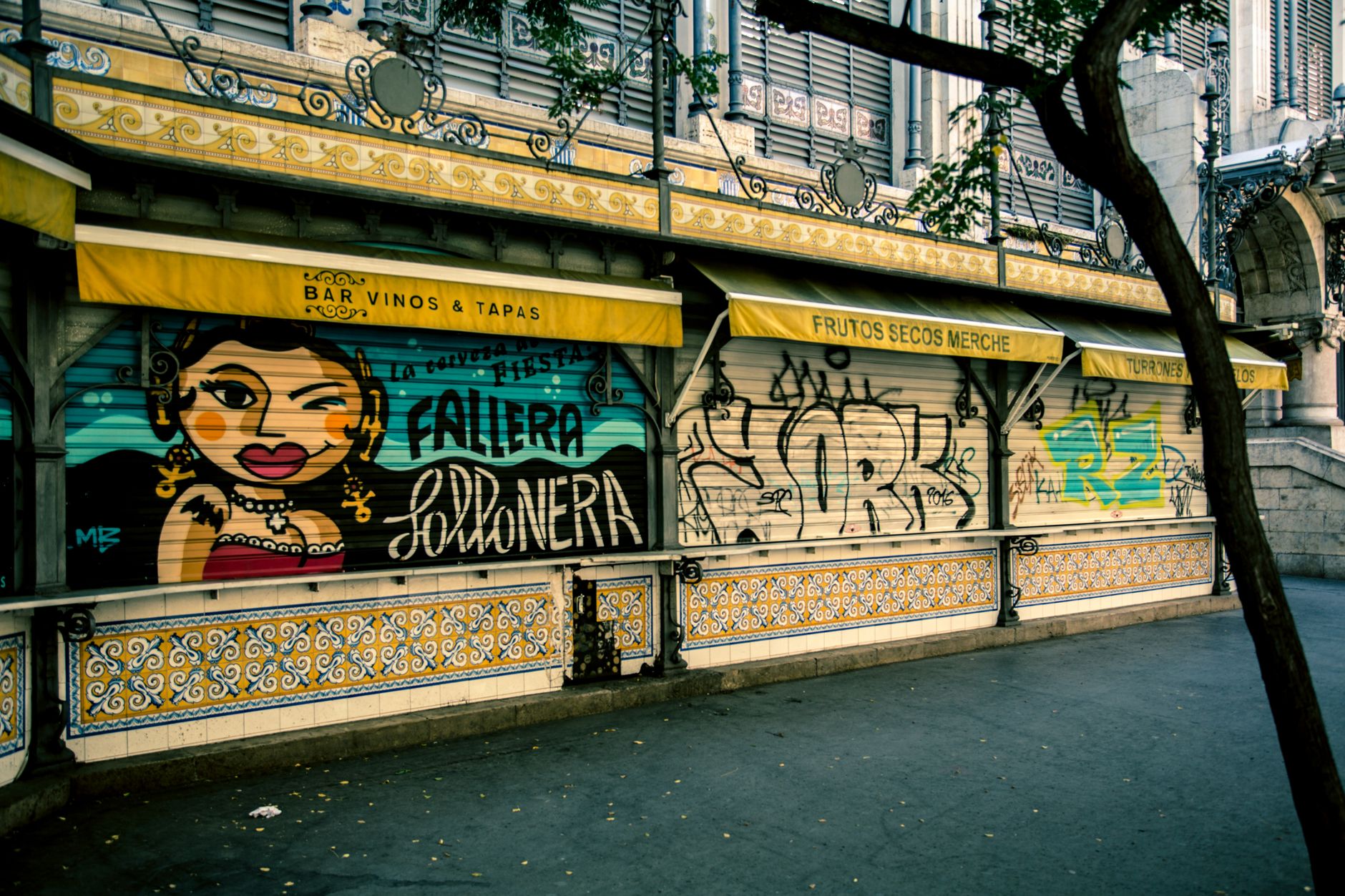
Directly, but only partially. Michelin’s own categories are built around a restaurant meal — a booked table, a set format, a bill. Madrid’s food identity runs wider than that, and a large part of it sits entirely outside what Michelin assesses: the taberna as a category of establishment, the standing bar order of a tapa, the market hall as a place to eat rather than only shop, and dishes like cocido madrileño that are defined by tradition rather than by any inspection body. None of this competes with the Michelin list; it simply operates on a different logic, and readers interested in that wider picture are better served by the Food & Markets archive than by the guide alone.
Where the two do overlap is at the level of chef-led restaurants working within a recognisably Madrid idiom — often reinterpreting dishes like cocido or classic seafood cookery in a tasting-menu format. Michelin’s inspectors judge that cooking on its own stated terms, not on how traditional or otherwise it reads.
Does the list change much year to year?
Yes, and by design. Michelin revises its Spain and Portugal edition annually, adding new stars, occasionally removing them, and reshuffling the Bib Gourmand list more freely than the starred tier. A restaurant named in a given year’s guide is not guaranteed to hold the same distinction the following year. This is precisely the kind of detail this site treats as perishable rather than fixed: durable enough to describe as a system, not durable enough to print as a numbered list of names and expect it to still be accurate in twelve months.
Where can you check the current list?
The only reliable source for which specific Madrid restaurants currently hold a star, a Bib Gourmand or a Green Star is the Michelin Guide’s own Madrid page, which the company updates directly at each annual revision. Anything printed elsewhere, including here, should be read as a description of how the system works rather than a current roster.
For planning around a meal at that level, practical questions — how a bill is typically handled, whether a service charge is expected — are covered separately in how tipping works in Spain. For the wider question of what and where Madrid eats day to day, rather than what one guide singles out, the dishes actually associated with Madrid and the Food & Markets archive are the better starting points.
Access Madrid is an independent guide written from published, checkable sources. We have not visited the places described here and we do not publish personal recommendations or invented ‘local favourites’ — where something is singled out as notable, we say who says so. Opening times, fares, closures and prices change at short notice, so treat everything here as a starting point and confirm with the museum, operator or venue directly before building a day around it. We give no advice on visas, insurance, health or safety; use your own government’s official guidance for those.
Related reading
Why Is the Bocadillo de Calamares a Madrid Thing?.
Featured image: Photo by Daniel Dionne, source, CC BY-SA 2.0
_06.jpg)