What Is Quinta de los Molinos?
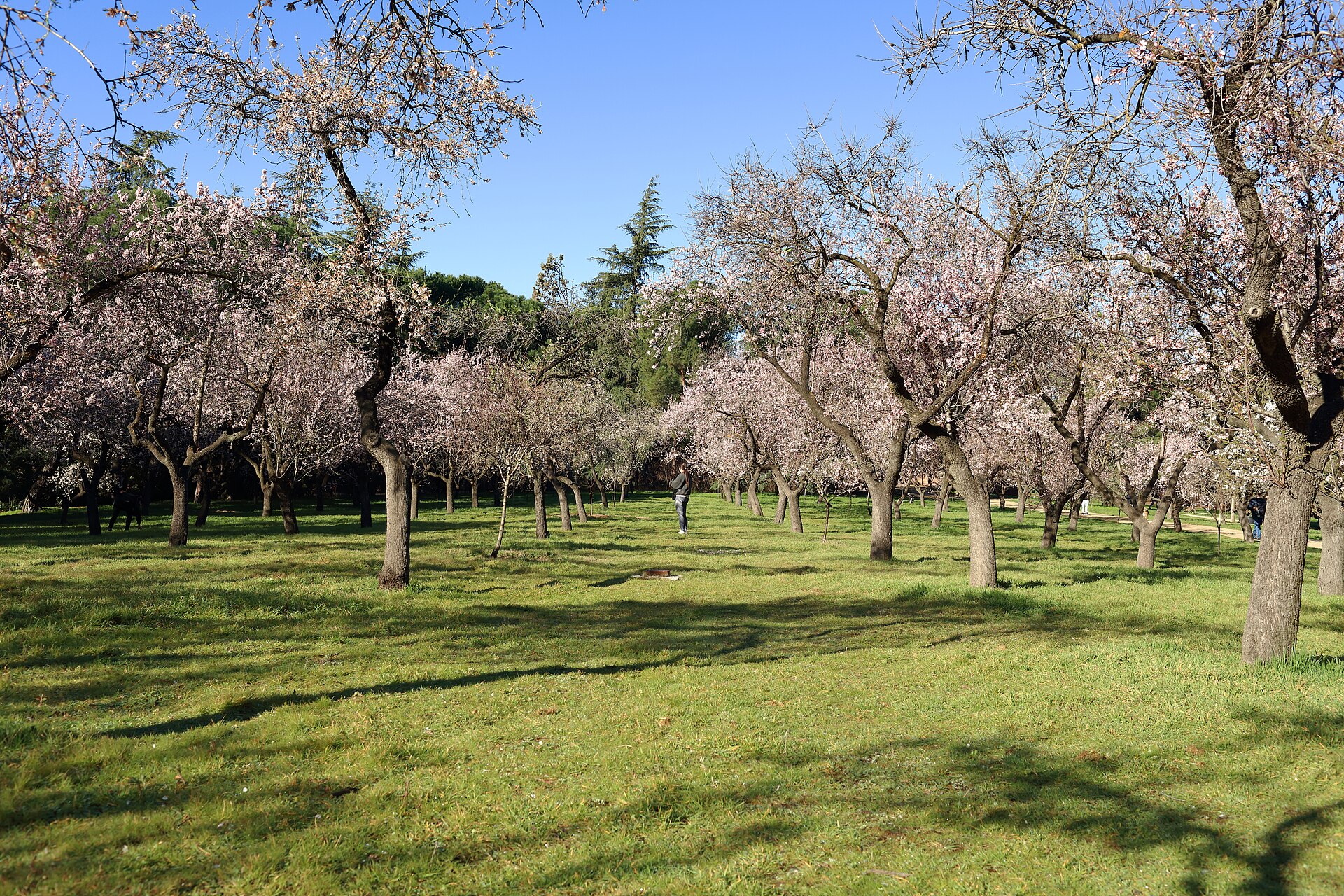
Quinta de los Molinos is a public park in eastern Madrid, built on the grounds of a private agricultural and leisure estate developed in the early twentieth century. Madrid City Council has run it as a municipal park since it opened to the public in 2011. It is best known for a long avenue of almond trees that blossoms for a few weeks in late January or February, an event that draws large numbers of visitors each year.
Where in Madrid is it, and how do you get there?
The park sits in the district of Ciudad Lineal, in the neighbourhood generally described as Concepción, close to Calle de Alcalá and not far from the Suanzes and Ciudad Lineal Metro stations on Line 5. It is well outside the historic centre, in a residential part of the city rather than a tourist corridor, which is one reason it functions differently from central green spaces such as the Parque del Retiro.
Because it lies away from the main sightseeing routes, reaching it is a genuine Metro or bus trip rather than a short walk from another attraction. Anyone planning the visit around public transport should check the current fare structure, covered in general terms on the site’s Getting Around pages, before setting out.
What is actually inside the park?
The estate’s structure survives largely intact, and several elements are worth knowing before visiting:
- An avenue of almond trees (the “paseo de los almendros”), the feature the park is now most associated with.
- Groves of pine and eucalyptus, laid out as part of the original estate’s landscaping.
- A historic main house, built for the estate’s owners, now used for occasional exhibitions rather than as a standing museum.
- Wells and water infrastructure, including a water tower, connected to the estate’s original irrigation system.
- An area still used for cultivation, including orchard and allotment-style plots tied to educational programmes run by the council.
Where does the name “Molinos” come from?
The name refers to water, not grain. The estate depended on wells fitted with wheel-driven mechanisms used to raise groundwater for irrigation, a system sometimes described locally as “molinos” even though it has little to do with windmills in the usual sense. Madrid City Council’s own material on the park explains the estate’s water infrastructure in these terms, and the surviving wellheads and tower are part of what gives the site its particular character, distinct from the formal, imported garden styles found in the Campo del Moro or the Real Jardín Botánico.

Why is the almond blossom such an event?
For most of the year, Quinta de los Molinos functions as a quiet neighbourhood park. For a short window in late winter, that changes. The almond trees along the main avenue flower together, and the sight has become widely reported in local and national press, often compared to cherry-blossom viewing in Japan, though the comparison is a media framing rather than an official one.
The exact bloom dates shift year to year with the weather, in line with the broader patterns described on this site’s page on Madrid’s climate through the year. In recent seasons, the volume of visitors during peak bloom has led the council to introduce measures such as restricted access windows or capacity limits at busy times. These arrangements change, so anyone planning a visit around the blossom should confirm current conditions directly with Madrid City Council rather than relying on a fixed schedule.
Who owned the estate, and how did it become a park?
Sources describing the park’s history, including material published by the city council, trace its layout to the early twentieth century, when it functioned as a private estate combining agricultural experimentation with landscaped grounds. Its design and irrigation approach reflect influences drawn from North African garden and water-management traditions, a detail the council’s own descriptions of the site point to directly.
The estate passed out of private hands and into municipal ownership over the following decades. After a period of restoration, Madrid City Council opened it to the public as Quinta de los Molinos in 2011, keeping the historic house, the wells, the tree plantings and the estate’s basic layout rather than redeveloping the land.
What are the practical details for visiting?
Entry to the park is free, in line with the general pattern for Madrid’s municipal parks. Opening hours vary by season and are extended or restricted around the almond bloom depending on visitor numbers, so they should be confirmed on Madrid City Council’s own listings before a visit rather than assumed. The park is not a ticketed museum and does not follow the closing-day patterns typical of the city’s gallery spaces, covered more generally in the guide to typical opening hours in Madrid.
Outside the blossom weeks, the park is considerably quieter, and this is arguably when its structure — the water tower, the pine groves, the working orchard plots — is easiest to take in without crowds.
How does it compare with Madrid’s other parks?
Quinta de los Molinos is smaller and more specialised than Madrid’s largest green spaces. It has nothing like the scale of Casa de Campo, and it does not carry the monuments and formal gardens packed into the Parque del Retiro. Its interest is narrower and more specific: a former private estate with a working water history and a single, spectacular seasonal event. For a broader sense of how the city’s parks differ from one another, the Parks & Outdoors archive sets out the main options by type and location.
Understanding a park like this also says something about how Madrid’s residential districts work away from the centre. Ciudad Lineal, like many outer districts, is covered in more detail on the site’s overview of Madrid’s districts and barrios, and the wider question of what daily life looks like beyond the tourist core is addressed on the Living in Madrid hub.
Is it worth building a visit around?
Outside the almond bloom, Quinta de los Molinos is a genuinely local park rather than a sight in the conventional sense, and it will not suit a itinerary built around the historic centre. During the bloom weeks, it draws a different kind of attention entirely, and visitors coming specifically for that reason should treat the dates as a moving target tied to the weather, not a fixed calendar entry. Those planning wider seasonal trips to Madrid can cross-reference the general patterns on when to visit Madrid before fixing travel dates around the blossom.
Access Madrid is an independent guide written from published, checkable sources. We have not visited the places described here and we do not publish personal recommendations or invented ‘local favourites’ — where something is singled out as notable, we say who says so. Opening times, fares, closures and prices change at short notice, so treat everything here as a starting point and confirm with the museum, operator or venue directly before building a day around it. We give no advice on visas, insurance, health or safety; use your own government’s official guidance for those.
Featured image: Photo by Javier Perez Montes, source, CC BY-SA 4.0
