Lavapiés is a barrio (neighbourhood) in the Centro district of Madrid, just south of Sol and east of La Latina. It grew up outside the city’s old walls as a working-class quarter with roots in a medieval Jewish community, later filled with dense 19th-century tenement housing, and has been Madrid’s principal immigrant-receiving district since the late twentieth century.
Where exactly is Lavapiés?
Lavapiés sits within the administrative barrio of Embajadores, one of the six barrios that make up Madrid’s Centro district. Its rough boundaries run from Calle de Atocha in the north down to the Ronda de Atocha and Ronda de Toledo in the south, with Calle de Toledo and the Puerta de Toledo marking its western edge toward La Latina. The Museo Reina Sofía, one corner of the city’s so-called Golden Triangle of Art, anchors its northern boundary; the neighbourhood’s own main square, Plaza de Lavapiés, sits close to the geographic centre of the barrio.
Because it borders La Latina, the two are often discussed together as Madrid’s old southern quarter, though they developed along different lines — La Latina around its own parish and market history, Lavapiés around trades, tenement housing, and successive waves of migration. A companion piece on this site sets out what La Latina is and how it took shape as a useful point of comparison.
Where does the name “Lavapiés” come from?
The name translates literally as “wash feet,” and local tradition ties it to a fountain or well that stood in the area, associated with the ritual washing practised by the Jewish community (the aljama) that lived here before the expulsion of 1492. This is a long-standing local etymology rather than a documented certainty, and historians of the city generally present it as tradition rather than settled fact.
What is better documented is that the district lay just outside the Cerca de Felipe IV, the 17th-century wall that once ringed Madrid, in an area associated with artisans, small traders, and — before 1492 — a Jewish quarter. The street pattern in parts of Lavapiés still follows narrow, irregular medieval lines rather than the grid imposed on newer parts of the city, which is one of the clearer physical traces of that early settlement.
What is a corrala, and why does Lavapiés have so many?
A corrala is a type of 19th-century tenement building built around an open central courtyard, with shared galleries running along each floor giving access to individual dwellings. They were a cheap, dense form of working-class housing, and Lavapiés — which absorbed much of Madrid’s population growth during the 19th century as the city industrialised — has one of the highest concentrations of surviving examples in the city.
The best-known is the Corrala on Calle de Sombrerete, a listed building recognised by Spain’s heritage protection system as a Bien de Interés Cultural. Its open-gallery design, with laundry lines and shared stairs facing onto a central patio, is the clearest surviving illustration of how working-class Madrid actually lived through the 19th and much of the 20th century — a sharp contrast to the aristocratic townhouses and grand institutional buildings covered elsewhere on this site’s landmarks and sights archive.
How did Lavapiés become associated with “castizo” Madrid?
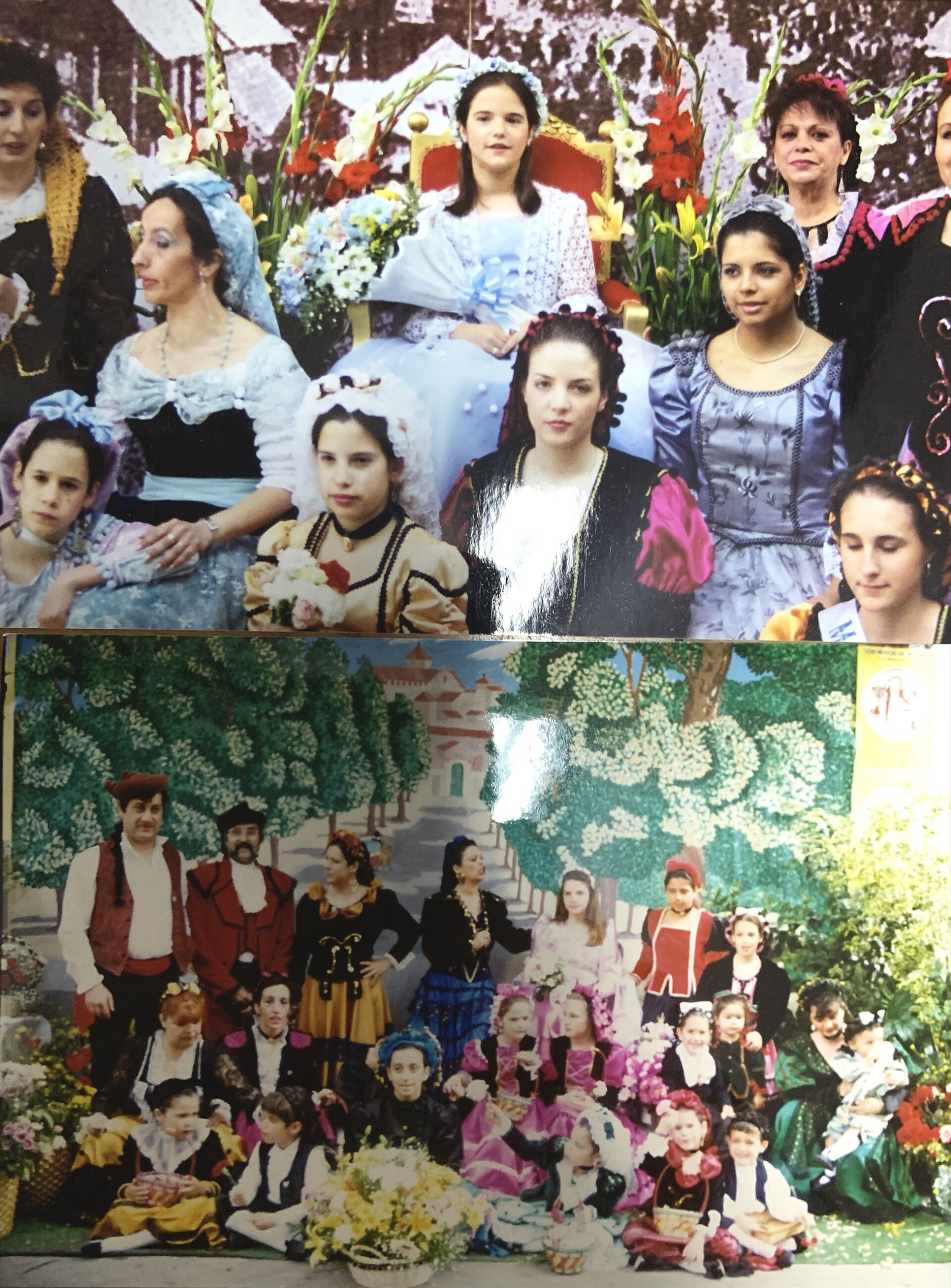
Castizo is the term used for a particular strand of traditional, working-class Madrid identity — its dress, slang, festivals and popular theatre — and Lavapiés, along with neighbouring barrios like La Latina and Malasaña, is one of the districts most closely associated with it. The connection runs through the zarzuela, Spain’s form of light opera with spoken dialogue, several of which are set among the tenements and street life of this part of the city.
That castizo identity was built on the same conditions that produced the corralas: crowded housing, a strong street and market culture, and a population largely excluded from the wealthier, more formal Madrid being built to the north along streets like Gran Vía. A separate article on this site covers when and why Gran Vía was cut through the older city, a project that reshaped central Madrid while barrios like Lavapiés were largely left to develop on their own terms.

When did Lavapiés become Madrid’s immigrant district?
Lavapiés’s role as an immigrant-receiving neighbourhood dates mainly from the 1980s and 1990s onward, when cheap rents in old tenement housing drew successive communities to the district, including migrants from Bangladesh, Senegal, Morocco, China, and Latin America, alongside longer-established Roma communities. This pattern is documented in Spanish census and municipal demographic data for the Embajadores barrio, which consistently shows one of the highest shares of foreign-born residents of any district in the city.
That layering of communities on top of an already dense, low-rise tenement fabric is what gives Lavapiés its current character: shopfronts and small businesses run by successive immigrant groups sit alongside surviving corralas and older Madrid institutions, without the large-scale demolition and rebuilding that reshaped other parts of the city centre.
What role has the Reina Sofía played in the area?
The Museo Nacional Centro de Arte Reina Sofía sits on the northern edge of Lavapiés, in a building that began life as the Hospital General de San Carlos, an 18th-century general hospital. Its conversion into a national museum of modern and contemporary art — now home to Picasso’s Guernica — brought a major cultural institution directly onto the district’s boundary from the 1990s, a chapter covered in detail in this site’s guide to what the Reina Sofía holds and how Guernica arrived. The museum is also one leg of the trio examined in Madrid’s Golden Triangle of Art, alongside the Prado and the Thyssen-Bornemisza.
The museum’s presence has not erased the surrounding tenement fabric; Lavapiés proper remains largely low-rise and residential, with the Reina Sofía functioning as a boundary landmark rather than the centre of the neighbourhood’s own identity.
What other historic sites sit near Lavapiés?
The Puerta de Toledo, a neoclassical gate completed in the early 19th century, stands at the western edge of the barrio and marks one of the historic entry points into old Madrid; this site’s separate article explains what the Puerta de Toledo is and why it was built. Further east, near the Atocha area, the Real Fábrica de Tapices — the Royal Tapestry Factory, still an operating workshop — is covered in a dedicated piece on what the Real Fábrica de Tapices is and what it produces. Both sit close enough to Lavapiés to be reached on foot from the barrio, and both predate its current identity by well over a century.
Readers building a wider picture of how Madrid’s districts relate to one another can find further context in this site’s neighbourhoods archive and in the broader museums and galleries archive, which covers the institutions clustered along Lavapiés’s own northern edge.
What does Lavapiés look like today?
Lavapiés remains one of the most densely populated barrios in central Madrid, built almost entirely from low- and mid-rise 19th- and early 20th-century housing rather than modern construction. Its main public space, Plaza de Lavapiés, functions as a meeting point and market for a genuinely mixed population, and the surrounding streets carry the signage and shopfronts of the communities that have settled there over four decades.
For residents, this makes Lavapiés function differently from the more curated central barrios: rents, shop turnover, and street life are shaped directly by ongoing migration patterns and by the barrio’s protected historic housing stock, which limits large-scale redevelopment. For visitors trying to understand the district rather than simply pass through it, that combination — medieval street pattern, 19th-century tenement architecture, and a genuinely international population — is the fact to hold onto, more than any single monument or square.
Anyone planning travel to Madrid, including a visit to Lavapiés, should check their own government’s current travel guidance before departure, as this site does not provide safety or entry-requirement advice.
Access Madrid is an independent guide written from published, checkable sources. We have not visited the places described here and we do not publish personal recommendations or invented ‘local favourites’ — where something is singled out as notable, we say who says so. Opening times, fares, closures and prices change at short notice, so treat everything here as a starting point and confirm with the museum, operator or venue directly before building a day around it. We give no advice on visas, insurance, health or safety; use your own government’s official guidance for those.
Featured image: Photo by Krlotabravo, source, CC BY-SA 4.0
