In one day, a realistic target is one major museum, the historic core around Puerta del Sol and Plaza Mayor, and one landmark square or building further out — reached on foot or by a single metro ride. Trying to add a second museum or a district visit usually breaks the day rather than enriching it.
Madrid rewards a narrow plan more than a packed one. The center is compact, but its major sights are grouped in two clusters that are not next to each other, and the connective tissue — meals, museum queues, closing days — takes longer than people expect. This piece sets out what fits, and what has to be cut.
How much of Madrid can actually fit into a single day?
One cluster of sights, properly. Madrid’s core attractions sit in two zones: the Habsburg-era center (Sol, Plaza Mayor, the Royal Palace) and the museum axis along Paseo del Prado about a 20-minute walk east. Covering both in depth in one day is not realistic; covering one well and sampling the other is.
The city’s own geography helps explain why. Central Madrid is unusually walkable by European capital standards — flat, gridded in parts, and small enough that most first-time destinations are within 25 minutes of each other on foot. A closer look at those distances is covered in the guide to how walkable central Madrid actually is. But walkable does not mean fast: cobbled squares, crowds, and the sheer size of a single museum floor all slow a day down more than the map suggests.
Should the day be built around a museum?
Most one-day itineraries built by visitors center on the Prado, the Reina Sofía, or the Thyssen-Bornemisza — the three institutions that make up what is often called Madrid’s “golden triangle” of art. Picking one, rather than attempting all three, is the single biggest decision in planning the day.
The Museo del Prado holds one of the largest collections of European painting from the 12th to early 20th centuries, built substantially on the Spanish royal collection; its own materials describe holdings in the tens of thousands, with only a fraction on display at any time. The Reina Sofía is Spain’s national museum of 20th-century and contemporary art and holds Picasso’s Guernica. The Thyssen-Bornemisza holds a private collection assembled over the 20th century that spans Italian primitives to 20th-century avant-garde work, filling a chronological gap between the other two.
Whichever is chosen, expect to spend two to three hours there and no more — not because the collection is thin, but because covering a fraction of it properly already fills a morning. The site’s own breakdown of how much of the Prado can realistically be seen in one visit goes into this in detail, as does the explanation of the golden triangle of Madrid’s three major art museums and how they relate to one another.
Two practical points matter here. First, all three museums observe a weekly closing day, and Madrid’s national museums generally close on Mondays — a pattern explained in why Madrid’s museums close on Mondays. A one-day visit that happens to fall on a Monday needs a different anchor entirely. Second, several major sites now use timed-entry ticketing, which is covered in how timed entry works at Madrid’s major sites — arriving without a slot booked can mean not getting in at all, regardless of queue tolerance.
What does the historic center actually contain?
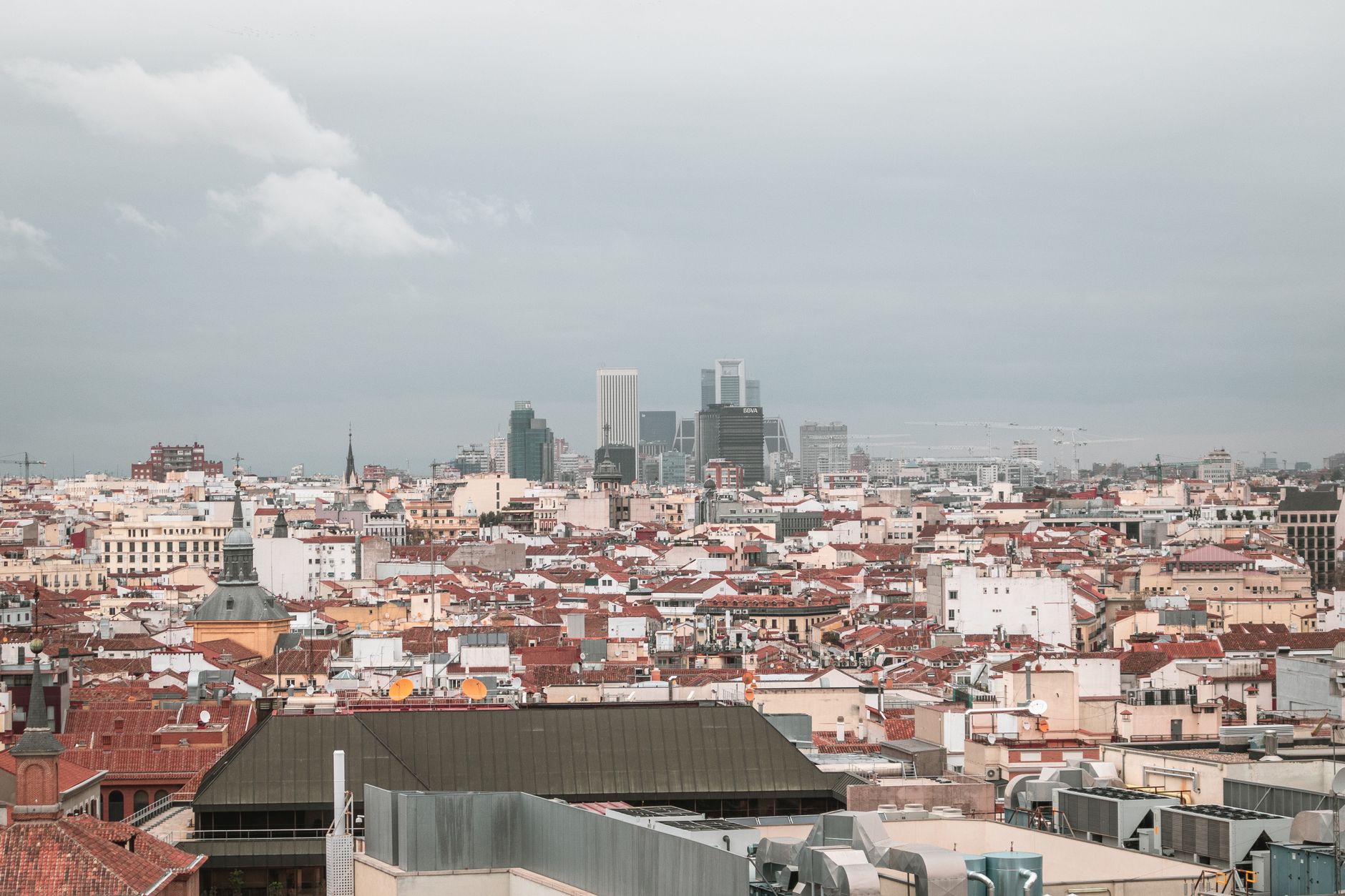
The center holds four sights within a short walk of each other: Puerta del Sol, Plaza Mayor, the Almudena Cathedral, and the Royal Palace. Together they represent Habsburg and Bourbon-era Madrid and can reasonably be covered in two to three hours on foot.
Puerta del Sol is Madrid’s best-known square and the official Kilómetro Cero — the zero point from which Spain’s radial road network is measured, marked by a plaque in the pavement. From there it is a short walk to Plaza Mayor, a 17th-century arcaded square built under Habsburg rule that once hosted markets, trials, and royal ceremonies; the district around both squares is described in full in what Madrid de los Austrias, or Habsburg Madrid, actually is.
West of Plaza Mayor sits the Royal Palace, the official residence of the Spanish royal family though rarely used as such today, and the Almudena Cathedral beside it, Madrid’s relatively young cathedral, consecrated in 1993. Both are covered in the site’s own explainers on the Royal Palace and the Almudena Cathedral.
Is it possible to add a second neighborhood or landmark?
One additional stop is realistic if it sits along the natural route between the museum axis and the historic center, or a single metro ride from either. Trying to add a district visit on top of a museum and the center usually means seeing all three badly.
Reasonable single additions include Plaza de Cibeles, the fountain-and-roundabout landmark linking Paseo del Prado to Gran Vía, described in what Plaza de Cibeles is and why it sits where it does; or a walk along Gran Vía, Madrid’s early-20th-century main thoroughfare, which connects naturally toward Plaza de España. Neighbourhoods further out — Malasaña, Chueca, La Latina — are worth a full afternoon on their own but generally don’t fit alongside a museum morning without cutting one short.
How does the food schedule affect a one-day plan?
Spanish meal times run later than in much of Europe, and this matters directly for a tight itinerary: lunch service typically starts around 2pm and dinner rarely before 9pm. A day planned around northern-European meal timing will find kitchens either not yet open or already closed.
This is explained fully in how Spanish meal times reshape a day in Madrid, and it’s worth reading before fixing a schedule — a museum visit that runs past 2pm can accidentally push lunch into a long wait, and the reverse is also true. The idea that everything closes for an afternoon siesta is a related myth worth checking against reality, covered in whether the siesta actually applies in Madrid.
What’s the most efficient way to move between the two clusters?
Walking the roughly 20 minutes between the museum axis and the historic center is often faster than the metro once transfer and waiting time are counted, though the metro remains the reliable fallback in heat or rain. Both options are worth understanding before the day starts.
Madrid’s metro runs on a zone-based fare system, generally requiring a rechargeable card rather than single paper tickets for anything beyond one journey; the mechanics are set out in how the Madrid metro fare system works. For a single day’s use, the practicalities of cards and contactless payment are covered in how payments work in Madrid. Broader transport planning, including bus and bike-share alternatives, sits in the practical hub for getting around and planning a day.
Does the season change what’s realistic in a day?
Yes — mainly through heat and daylight. Madrid summers run genuinely hot, and outdoor walking between sights is far less comfortable from roughly June to September, while winter’s shorter daylight hours compress an outdoor-heavy plan.
The city’s own patterns around this are described in how Madrid handles summer heat practically and in the broader overview of Madrid’s climate through the year. August in particular changes the character of the center, as many long-standing local businesses close for the month — a pattern explained in what happens in Madrid in August. None of this rules out a one-day visit in summer, but it does mean building in shade, water, and a slower pace between the two clusters.
What should be left out, deliberately?
A second major museum, any district requiring more than one metro change, and any landmark on the city’s outer edge — Santiago Bernabéu stadium, the Cuatro Torres business district, or a day trip beyond the city itself — do not belong in a one-day plan. Each deserves unhurried time of its own.
These sights and areas are documented properly across the site’s landmarks and sights archive and neighbourhoods archive, for a second visit or a longer stay. For a first-time visitor trying to decide what a longer trip could look like, the main Madrid guide hub lays out the fuller set of museums, landmarks, and day-trip options beyond what a single day can hold.
Access Madrid is an independent guide written from published, checkable sources. We have not visited the places described here and we do not publish personal recommendations or invented ‘local favourites’ — where something is singled out as notable, we say who says so. Opening times, fares, closures and prices change at short notice, so treat everything here as a starting point and confirm with the museum, operator or venue directly before building a day around it. We give no advice on visas, insurance, health or safety; use your own government’s official guidance for those.