Madrid handles summer heat by shifting time rather than fighting temperature: the working day splits around a long midday lull, outdoor life moves to early morning and late evening, museums and shaded arcades absorb the peak hours, and much of the resident population leaves the city outright in August. Buildings, transport and public spaces are also built with the heat in mind, not as an afterthought.
Why does Madrid get so hot in summer?
Madrid sits on a high inland plateau, the Meseta, with no coastline to moderate temperature and mountain ranges to the north that block cooling Atlantic air for long stretches. The result is a continental Mediterranean climate: dry, intense heat from June through September, with July and August the hottest months. The Spanish national weather agency, AEMET (aemet.es), records Madrid summer daytime highs regularly above 35°C, with spikes higher during heat waves. A full seasonal breakdown is covered in Madrid’s climate through the year.
Does the city shift its daily schedule because of the heat?
Yes, though not through a formal siesta closure as often assumed. Many shops and offices still run a split schedule with a long midday break, and meal times run later than in much of Europe — lunch from around 2pm, dinner from 9pm or later — partly a historical pattern, partly a practical response to avoiding the hottest hours outdoors. The details of how this actually plays out are covered in whether the siesta actually applies in Madrid and how Spanish meal times reshape a day. Standard commercial hours, and how heat-era exceptions affect them, are set out in Madrid’s typical opening hours.
What does August actually look like in Madrid?
August is the month the city empties. A large share of Madrid residents leave for the coast or for family towns elsewhere in Spain, many small family-run businesses close entirely for two to four weeks, and traffic and metro crowding both drop noticeably. This is a genuine structural feature of the calendar, not a rumour — it’s covered in detail in what happens to Madrid in August. For a visitor, it means quieter streets and shorter queues at major sites, but also a real chance that a specific neighbourhood restaurant or shop is shut for the month with no advance signage beyond a note on the door.
How is the city built to cope with heat?
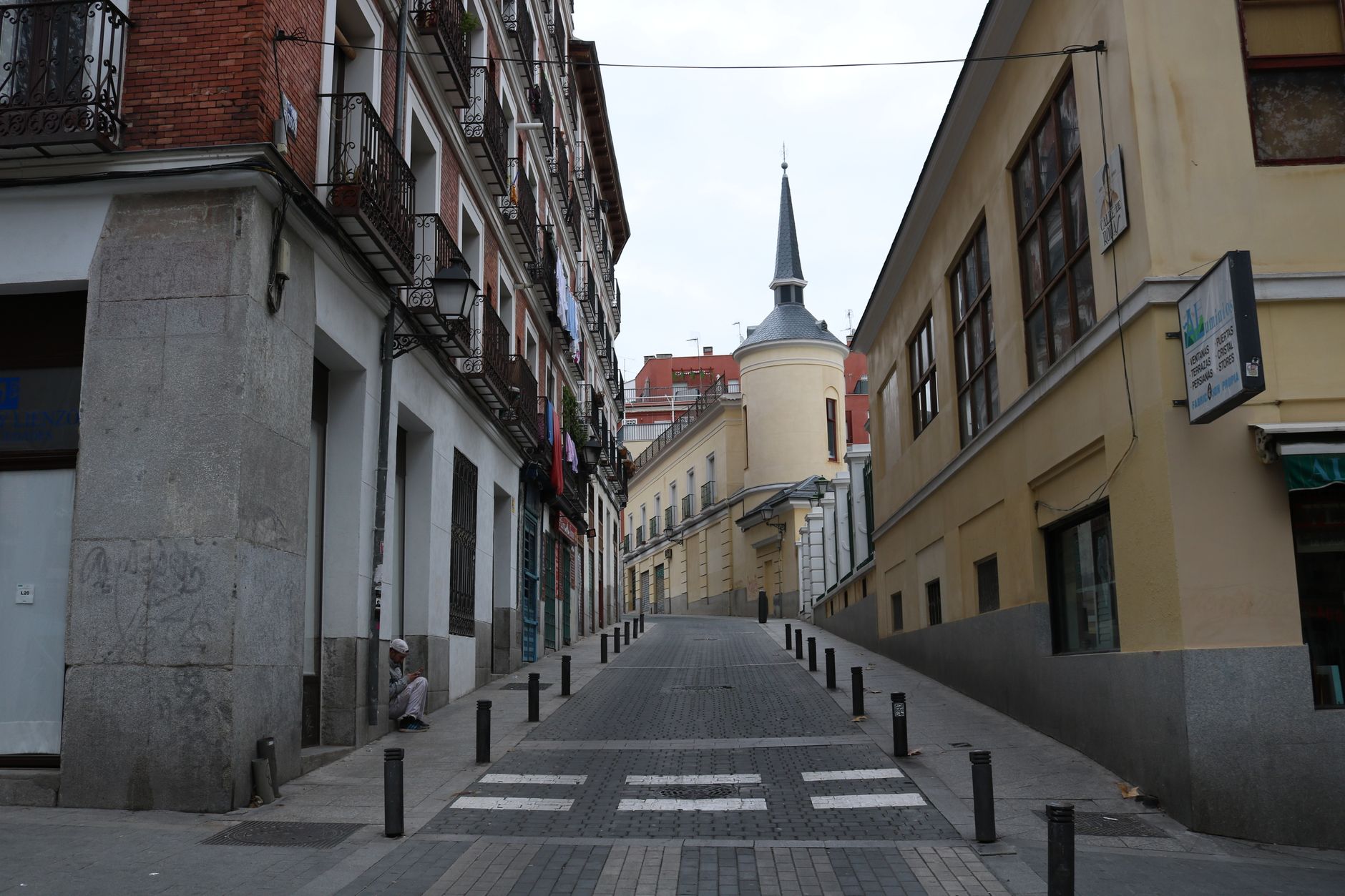
Central Madrid’s older quarters were laid out long before air conditioning, and the built form still reflects that. Narrow streets in areas like Madrid de los Austrias and La Latina create shade for much of the day, arcaded squares such as the Plaza Mayor shelter pedestrians from direct sun, and shopfronts along commercial streets routinely use retractable awnings (toldos) that are as much a functional necessity as a design feature.
The city council also runs seasonal cooling measures on some central streets and squares during the hottest weeks — misting points and temporary shade structures have been deployed in past summers around high-footfall areas, under measures announced by Madrid City Council (madrid.es). These are seasonal and location-specific, so current placement should be checked on the council’s own site rather than assumed from a previous year.
Where do people go to cool down?
Green space does real work here. The Retiro park, discussed in the Retiro district beyond the park, offers mature tree cover and a boating lake; the glass-and-iron Palacio de Cristal inside it sits shaded by surrounding woodland. Madrid Río, the riverside park along the Manzanares covered in Arganzuela and Madrid Río, adds fountains and splash areas used heavily by families in summer.
Municipal swimming pools (piscinas municipales) run by the city council are a genuinely important part of how ordinary residents deal with the season — Madrid operates dozens of public outdoor pools across its districts each summer, listed and priced on madrid.es, and they function as neighbourhood infrastructure rather than a visitor attraction.
Museums and covered institutions also serve as de facto heat refuges during peak afternoon hours: air-conditioned, often quieter after lunch, and free of direct sun. The museums and galleries covering the Prado, Reina Sofía and Thyssen-Bornemisza collections are all viable ways to spend the hottest part of a July or August day indoors, and the Paseo del Arte pass is worth understanding if visiting more than one of them in a short trip.
Does the metro help, or make things worse?
The Madrid Metro network runs largely underground and its stations and trains are air-conditioned, which makes it one of the more reliable ways to move around the city without prolonged sun exposure. Details of how the fare system and card work are in how the Madrid metro fare system works. Where Cercanías regional trains serve better than the metro for a given route is explained in Cercanías versus the metro. Waiting on open-air platforms or walking long distances between stations in peak afternoon heat is the main drawback; how walkable central Madrid actually is covers realistic distances, which matter more in July than in April.
Is there an official heat-warning system?
Yes. AEMET issues colour-coded heat alerts (yellow, orange, red) by province when temperatures are expected to reach thresholds that pose a health risk, and these are published on aemet.es. The regional government, Comunidad de Madrid, also runs a seasonal heat health plan (Plan de Actuación frente a Altas Temperaturas), coordinating public health messaging during warnings — details are published on the Comunidad de Madrid’s own site (comunidad.madrid). This site does not offer health or medical guidance; anyone concerned about heat risk to themselves or a family member should consult that official guidance directly, along with their own government’s travel advisories.
What should a visitor actually do about the heat?
Timing a visit around the season is the single most effective adjustment. How Madrid’s climate varies by month, and which months carry the heaviest heat load, is set out in Madrid’s climate through the year, while the best time of year to visit Madrid weighs that against crowd levels and museum scheduling. Within a summer trip, the practical adjustment is the same one residents make: front-load outdoor plans — landmarks, walking routes, markets — into the morning, treat early-mid afternoon as indoor time at a museum or gallery, and push anything outdoor back to early evening, when temperatures start to ease and much of the city’s own life resumes anyway. Broader planning resources for structuring a day around Madrid’s rhythms are gathered in planning and practicalities and living in Madrid.
Access Madrid is an independent guide written from published, checkable sources. We have not visited the places described here and we do not publish personal recommendations or invented ‘local favourites’ — where something is singled out as notable, we say who says so. Opening times, fares, closures and prices change at short notice, so treat everything here as a starting point and confirm with the museum, operator or venue directly before building a day around it. We give no advice on visas, insurance, health or safety; use your own government’s official guidance for those.