The Museo Sorolla is a national museum in Madrid’s Chamberí district housed in the building that painter Joaquín Sorolla y Bastida had built as his own home and studio between 1910 and 1911. It was never a converted palace or a repurposed civic building — the house was designed for the artist, by his own instruction, and it became a museum because his family donated it, and its entire contents, to the Spanish state after his death.
What was the building before it was a museum?
Before it was a museum, the building was a private residence — Sorolla’s own. He commissioned it from the architect Enrique María de Repullés y Vargas on a plot on what was then the edge of the built city, along the Paseo del General Martínez Campos. The house was finished around 1911, and Sorolla lived and worked there until his death in 1923.
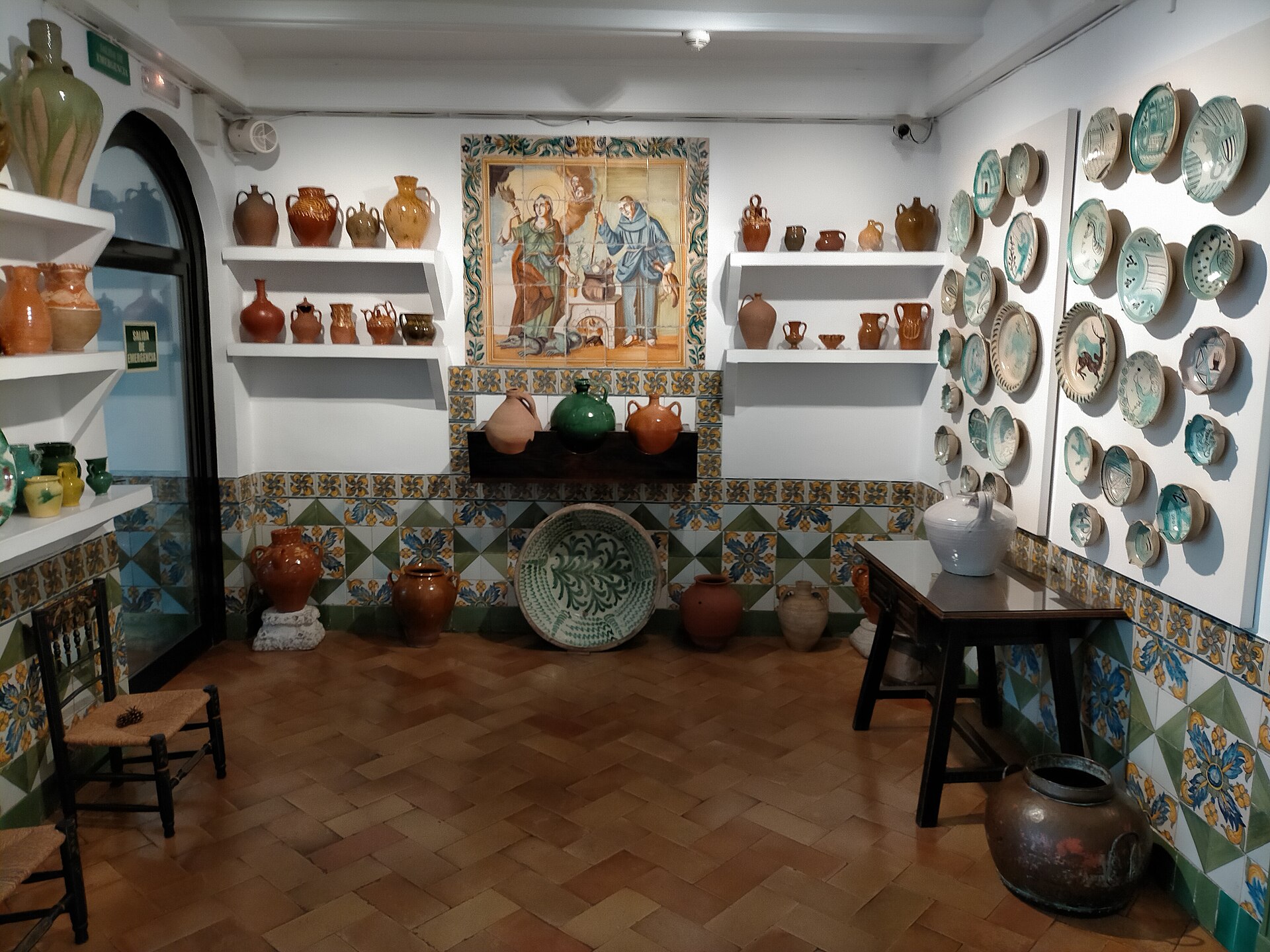
This distinction matters because it explains the museum’s physical logic. Rooms that read today as galleries were designed as a family’s living rooms, a library, and — critically — a working studio built with the large windows and north light a painter needs. The museum has not disguised this. Furniture, ceramics, and objects Sorolla collected during his life remain in place alongside the paintings, so a visitor moves through a house that still looks substantially like the one its owner left.
Who was Joaquín Sorolla?
Sorolla (1863–1923) was a Valencian painter known chiefly for luminist scenes of the Spanish coast — beaches, fishing boats, and figures rendered in strong, direct sunlight — as well as for portraits and a large body of work depicting Spanish regional life. He achieved international recognition in his lifetime, exhibiting in Paris, London, and the United States, and undertook major portrait and mural commissions, including a series for the Hispanic Society of America in New York.
He built the Madrid house specifically to work in, and its studio spaces were sized and lit for large-format canvases. The building was as much a professional tool as a home.
How did the house become a museum?
After Sorolla’s death in 1923, his widow, Clotilde García del Castillo, and later their children, arranged for the house and its entire contents — paintings, furniture, decorative arts, and Sorolla’s own collections of ceramics and ironwork — to pass to the Spanish state as a donation, on the condition that it be preserved and opened to the public as a museum dedicated to his work. The Museo Sorolla opened in 1932.
It has operated since as one of Spain’s national museums, administered by the Ministry of Culture, in the same institutional category as other state-run collections in the capital. Because the donation included the building itself, the museum is legally and physically continuous with the artist’s house — it was not assembled afterward from acquired works, the way some collections are.

What does the collection contain?
The Museo Sorolla’s holdings fall into two broad groups:
- Paintings by Sorolla himself, spanning beach and coastal scenes, portraits, garden studies, and preparatory work connected to his larger commissions — including studies related to the Hispanic Society murals.
- Objects Sorolla collected during his life: Spanish and Hispano-Moresque ceramics, ironwork, sculpture, furniture, and decorative pieces, displayed in the rooms much as they stood when the family lived there.
This second category is part of what distinguishes the Museo Sorolla from a conventional picture gallery. A visitor sees not only what Sorolla painted but the objects and interiors he chose to live with, which shaped his eye as a painter of light and material surface.
What is the garden, and did Sorolla design it?
The garden attached to the house was designed by Sorolla himself, in stages, as the property expanded. It draws visibly on Andalusian garden traditions — tiled fountains, enclosed courtyards, and planting arranged around water — echoing the kind of gardens Sorolla painted repeatedly, particularly those associated with the Alcázar of Seville and the Generalife in Granada. The garden functions as an extension of the museum’s rooms rather than as a separate attraction, and several of Sorolla’s own paintings depict corners of it directly.
How does the Museo Sorolla compare to Madrid’s larger art museums?
The Museo Sorolla is far smaller than the institutions that make up Madrid’s Golden Triangle of Art — the Prado, the Reina Sofía, and the Thyssen-Bornemisza — and it holds work by a single artist rather than a broad historical or international collection. Where the Museo del Prado’s collection spans centuries of European painting and the Thyssen-Bornemisza collection was assembled and later acquired from a private family holding, the Sorolla is a house-museum in the stricter sense: a single artist’s home, preserved intact and opened as a public collection.
In that respect it sits closer in category to Madrid’s other artist and collector house-museums than to the encyclopedic collections downtown. It rewards a different kind of visit — closer to touring a preserved residence than to working through galleries organized by period or school, an approach set out in more detail in coverage of the Museo Arqueológico Nacional and other single-subject Madrid museums.
Where is the Museo Sorolla, and how does it fit into a visit to Madrid’s museums?
The museum sits in Chamberí, north of the Golden Triangle museums along the Paseo del Prado, rather than within that cluster. It is reachable by metro and bus and is commonly combined with a day that also takes in the nearby Museo Arqueológico Nacional or the Sorolla-adjacent stretch of Paseo de la Castellana, though the museum itself is compact enough to see in far less time than the Prado or Reina Sofía require.
Like most of Spain’s national museums, the Museo Sorolla is closed on at least one fixed day each week; the pattern behind these closures across Madrid’s museums, and the reasoning most institutions give for it, is explained in why so many Madrid museums close on Mondays. As a state-run museum it also participates in the free admission windows that many national collections in Madrid offer at set times, a system explained in full in coverage of how Madrid’s national museum free-entry windows work. Because exact hours, closure days, and free-entry periods change and are set by the Ministry of Culture, readers should confirm current details on the museum’s own site before visiting.
Is the Museo Sorolla worth building a visit around?
That judgment depends on what a reader is looking for, and the museum’s own standing in the public record is the fairest basis for it: it is a state-run national museum with a single-artist collection preserved in its original setting, a category the Spanish Ministry of Culture treats on equal institutional footing with its larger national collections, even though the building and holdings are far smaller in scale. For anyone interested in Sorolla’s painting specifically, or in how a working artist’s house of the period was built and furnished, it is the only place in Madrid — or arguably anywhere — where both can be examined together. Broader context on how it fits alongside Madrid’s other museums is covered in the site’s Museums & Galleries section.
Access Madrid is an independent guide written from published, checkable sources. We have not visited the places described here and we do not publish personal recommendations or invented ‘local favourites’ — where something is singled out as notable, we say who says so. Opening times, fares, closures and prices change at short notice, so treat everything here as a starting point and confirm with the museum, operator or venue directly before building a day around it. We give no advice on visas, insurance, health or safety; use your own government’s official guidance for those.
Featured image: Photo by Emilio J. Rodríguez Posada, source, CC BY-SA 4.0
