A sensible first visit to Madrid moves from the centre outward: the old Habsburg core first, then the museum axis along the Paseo del Prado, then Retiro park and one residential district, with the metro and meal times built into the plan rather than fitted around it afterward. That order matches how the city is actually laid out, not how a list of sights suggests seeing it.
What order actually makes sense for a first visit to Madrid?
Start where the city started, move to where it put its art, then step into a neighbourhood that isn’t performing for visitors. Madrid’s central sights sit close together on foot, but they belong to different centuries and different logics, and visiting them in the wrong sequence tends to produce a day of doubling back rather than one that builds.
The practical reasoning is geographic before it’s cultural. The oldest part of the city — Madrid de los Austrias, the Habsburg-era core around Plaza Mayor — sits west of the newer nineteenth-century grid that holds the great museums. Retiro park and the eastern museum axis sit further east again. Walking that sequence in order means the first visit follows the city’s own historical layers outward, rather than criss-crossing them.
Where should the first day start, and why?
The first day should start at Puerta del Sol, the square that marks Spain’s Kilómetro Cero, and move on foot through the old core: Plaza Mayor, the Royal Palace and Almudena Cathedral, and the surrounding streets of Austrias Madrid.
This area is compact enough that a first-time visitor genuinely does not need transport to see it. The distance from Sol to the Royal Palace is under a kilometre, entirely flat, and mostly pedestrianised or lightly trafficked. Ordering the day this way — square, then market square, then palace — follows the same route Madrid’s own street plan follows, and it means the first hours orient a visitor to the city’s centre of gravity before anything else is attempted. The Royal Palace and Almudena Cathedral both have their own visiting arrangements and, at busier times, timed entry; the article on timed entry at Madrid’s major sites explains how that works and when to book ahead rather than queue.
How does the second day build on the first?
The second day is naturally the museum day, because the Paseo del Prado — the avenue holding the Prado, the Thyssen-Bornemisza and the Reina Sofía — sits a short walk east of where the first day ended, near Retiro.
These three institutions are collectively known as Madrid’s Golden Triangle of art museums, and each holds a different period: the Prado is built on the Spanish royal collections through the Baroque, the Thyssen fills the gaps either side of it with a private collection spanning medieval to twentieth-century work, and the Reina Sofía holds Spain’s national collection of modern and contemporary art, including Picasso’s Guernica. A first visit rarely has time to do justice to all three in one day; the piece on two days in Madrid built around the Golden Triangle sets out how to split that properly, and a related article addresses directly how much of the Prado a single visit can reasonably cover.
What does geography have to do with the order?
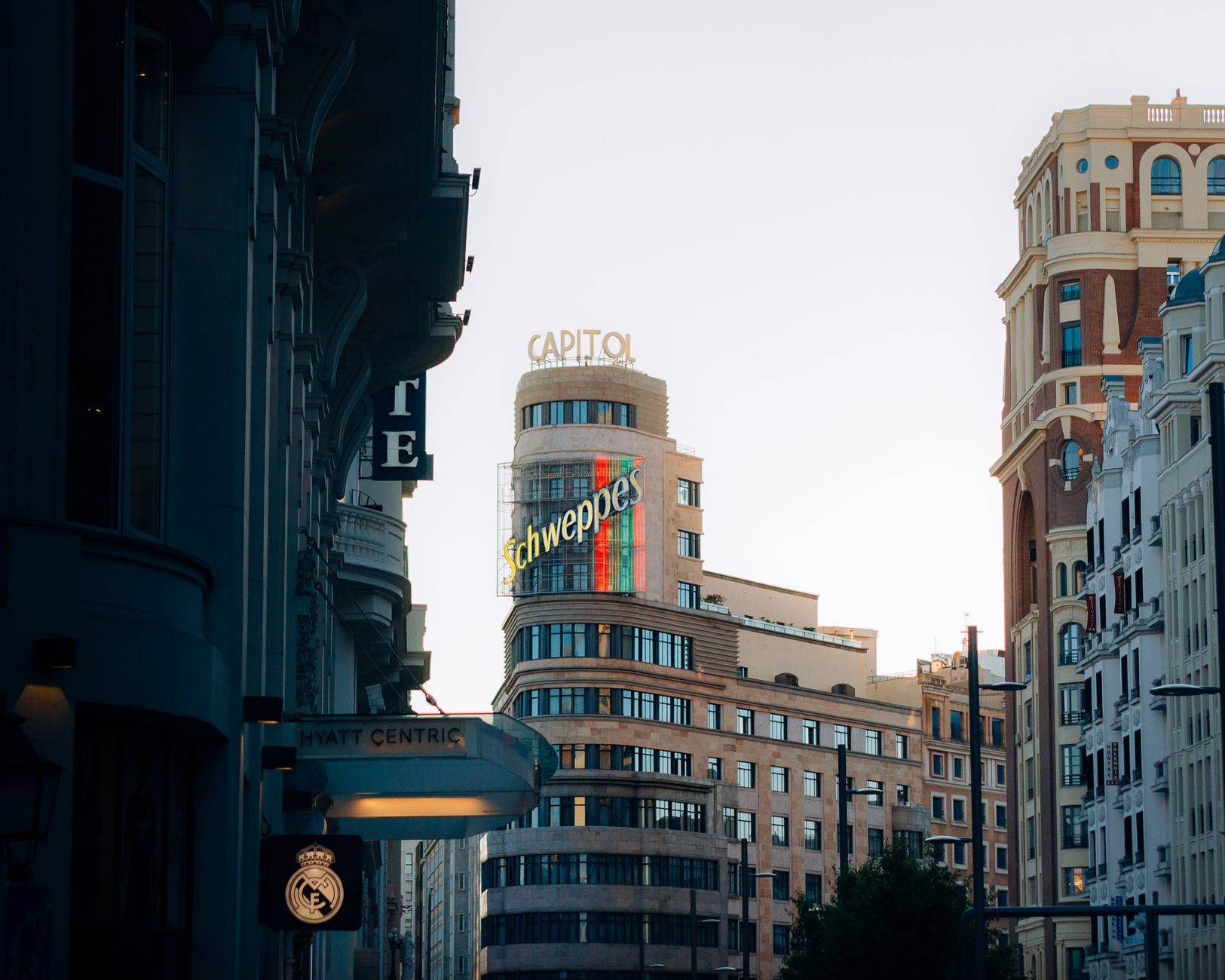
Geography decides the order more than any list of highlights does, because Madrid’s central sights fall along a rough east-west line, and reversing that line on a short visit means retracing the same ground twice.
The Habsburg core sits west, the museum axis sits along the centre, and Retiro park sits just east of the museums. A first visit that goes centre-first and works outward in both directions on separate days uses that shape efficiently. One that hops between, say, the Royal Palace and Retiro on the same afternoon, with the museums squeezed in between, tends to burn the day on transit rather than on the sights themselves. The overview at how walkable central Madrid actually is sets out the real distances involved, which are shorter than many visitors assume.
Should the itinerary include a park day or a district day?
Both, if time allows, and a third day is where they belong. Retiro park — a former royal garden, now a public park holding the Palacio de Cristal and other nineteenth-century structures — rewards unhurried time rather than a fast walk-through, and a residential district shows the city as it functions day to day rather than as a sight.
Madrid is formally divided into districts and, within those, smaller barrios; the structure is explained at how Madrid is divided into districts and barrios. For a first visit, one district beyond the centre is usually enough — something like La Latina, Malasaña or Chueca, all reachable on foot or by a short metro ride, each with a distinct character and history rather than a manufactured one. The neighbourhoods archive covers these in detail, and the piece on what a third day in Madrid makes room for deals directly with this stage of a trip.
How does the fare system fit into planning?
It fits in before day one, not during it. Madrid’s metro runs on a zone-based fare system with a rechargeable card, and buying that card at the airport or the first station used saves working it out mid-trip.
The mechanics are covered at how the Madrid metro fare system works, including how the card differs from a simple paper ticket and where zone boundaries actually fall. Anyone arriving via Barajas airport should also read how to get from Barajas into central Madrid, since the metro connection into the centre carries a specific airport supplement that a first-time visitor won’t expect from the base fare alone. The getting around archive covers the rest of the network — buses, Cercanías trains, night buses — for anyone staying longer than a first visit typically requires.
What about food and timing on a first visit?
Spanish meal times run later than many visitors expect, and this reshapes when things are open, not just when to eat. Lunch tends to run into early afternoon and dinner rarely starts before nine, and much of the centre closes or slows in the mid-afternoon accordingly.
The practical detail is set out at Spanish meal times in Madrid and how they reshape a day, and the related question of whether the traditional afternoon lull still applies is answered directly at does the siesta actually apply in Madrid. Planning a first visit around these rhythms — rather than assuming an international pattern of opening hours — avoids the common frustration of finding a shop or a smaller museum shut at 3pm on a weekday.
Does the season change the order?
Yes, mainly by adjusting when outdoor time happens rather than the underlying sequence. Madrid’s continental climate means hot, dry summers and cold winters, and both push the sensible timing of Retiro and walking sections toward morning or early evening.
The seasonal detail is in Madrid’s climate through the year and, for the practical question of heat management, how Madrid handles summer heat. A first-time visitor choosing when to come at all may find when the best time of year to visit Madrid is a useful starting point before booking anything.
What should a first visit deliberately leave out?
Everything that belongs to a longer stay: a full day trip beyond the city, a second museum pass, a deep dive into an outer district. The main Madrid guide and the practical planning hub both cover what a longer visit adds, and what can reasonably be seen in Madrid in one day is a useful check against overplanning the first 24 hours specifically. A first visit built centre-out, with transport and meal times accounted for from the start, tends to leave a visitor with a working sense of the city rather than a checklist of places passed through.
Access Madrid is an independent guide written from published, checkable sources. We have not visited the places described here and we do not publish personal recommendations or invented ‘local favourites’ — where something is singled out as notable, we say who says so. Opening times, fares, closures and prices change at short notice, so treat everything here as a starting point and confirm with the museum, operator or venue directly before building a day around it. We give no advice on visas, insurance, health or safety; use your own government’s official guidance for those.