Most of Madrid’s major art museums close on Mondays because that is the day when conservation staff, curators and technicians can work without the public in the building — cleaning galleries, rehanging works, running climate and security checks, and carrying out the maintenance that a collection of oil paintings, works on paper and sculpture requires. It is an operational choice shared across Spain’s national museum system, not a quirk unique to any one institution.
Is the Monday closure a Madrid-specific rule?
No. It is a pattern inherited from how Spain’s state-run museums are managed, and it shows up across the country and in many other European cities too. Museums that answer to the same ministry, or that follow similar conservation standards, tend to converge on the same weekly rest day because the logic behind it — protecting the collection and giving staff a predictable schedule — applies equally wherever it is used.
In Madrid this means the closure is not limited to one gallery. It affects the museums that make up what is often called the city’s Golden Triangle of Art — the Museo del Prado, the Museo Reina Sofía and the Museo Nacional Thyssen-Bornemisza — though, as covered below, not all three close on exactly the same day.
Which major Madrid museums actually close on Mondays?
The pattern is real but not universal, and the exceptions matter as much as the rule. Always confirm on the museum’s own site before planning a visit around it.
- The Museo Reina Sofía, Spain’s national museum of 20th- and 21st-century art and home to Picasso’s Guernica, closes on Tuesdays rather than Mondays — a detail explained in more depth in the piece on what is in the Reina Sofía, and how Guernica arrived.
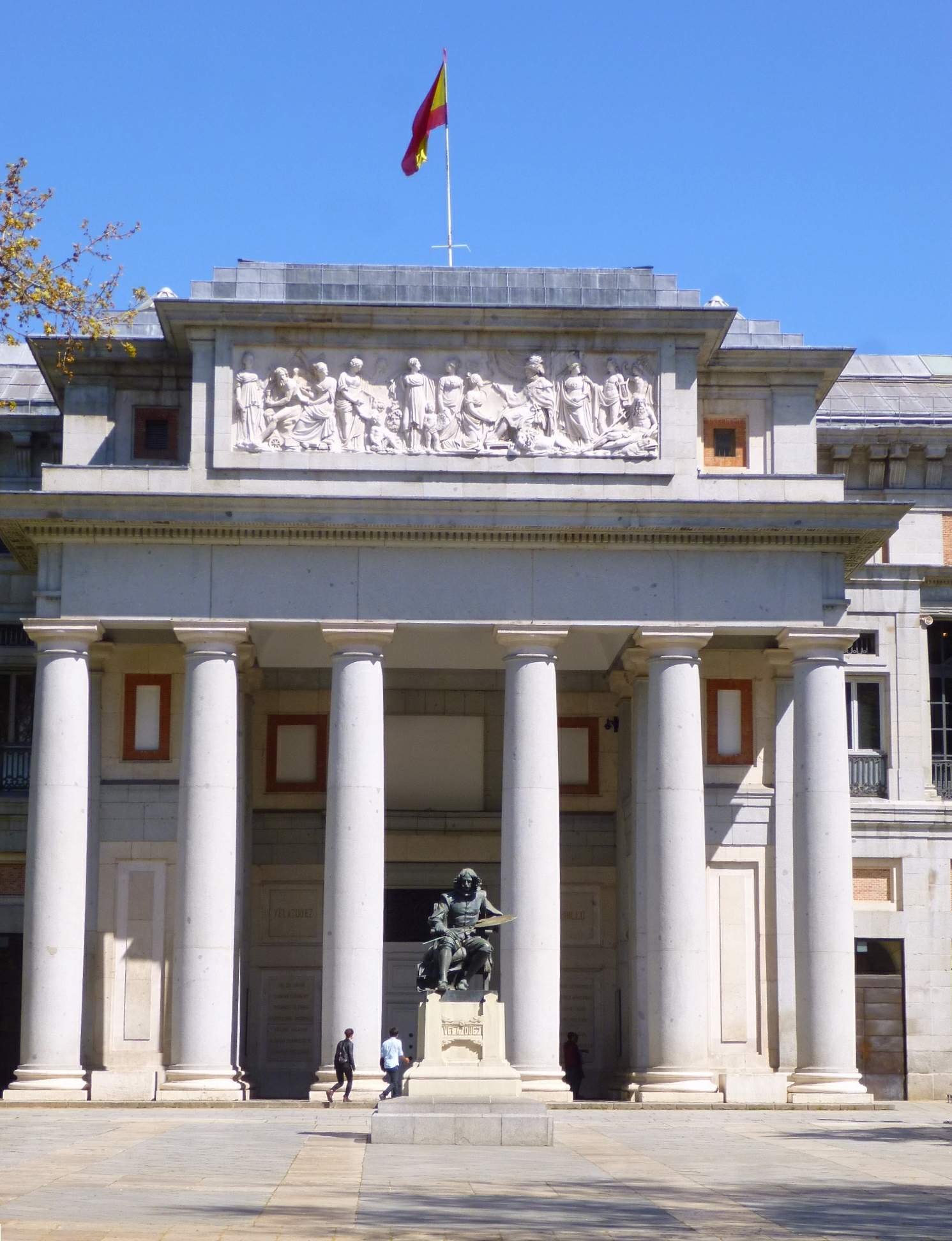
- The Museo del Prado, Spain’s principal national gallery of European painting from the 12th to the early 20th century, opens every day of the year on its usual published schedule, according to the museum’s own site — its closures are limited to a small number of fixed calendar dates rather than a weekly rest day. The collection itself is described in detail in the article on what the Prado holds and how it is arranged.
- The Museo Nacional Thyssen-Bornemisza, built around the private collection assembled by the Thyssen-Bornemisza family, does close on Mondays, based on the museum’s own published hours. Its holdings and how they arrived in Madrid are set out in the guide to the Thyssen-Bornemisza collection.
Beyond the three big national institutions, many of Madrid’s smaller and municipally-run museums — archaeological collections, house-museums, decorative arts galleries — also close on Mondays, following the same broad convention. Some close on a different weekday instead, and a handful stay open through the week with a different rest day built into their calendar. There is no single city-wide rule that applies to every building; each museum sets its own hours and publishes them independently.
Why not just close for one day mid-week whenever staff need it?
A fixed, publicly known closure day is more useful to an institution than an ad hoc one, because it lets conservation and installation work be scheduled predictably, lets staff take a consistent day off across the workforce, and lets the public plan around a known pattern rather than checking constantly for exceptions.
Monday specifically tends to follow the shape of the working week in Spain’s public administration: museums that are open through the weekend, when visitor numbers are highest, need a rest day immediately after — and Monday is that day. It also aligns with when many other cultural venues, including some cinemas and certain shops, are quieter or closed, so the closure is not experienced as an isolated inconvenience but as part of a broader civic rhythm.
Does the Monday closure affect free-entry hours too?
Yes, indirectly. Spain’s national museums typically offer windows of free or reduced-price entry on specific days or evening hours, and those windows are naturally suspended on whatever day the museum is closed. If a museum’s free evening falls, say, on a weekday and that same museum happens to be closed on a Monday, the schedule of free hours simply skips that day rather than shifting.
Because free-entry schedules, eligibility conditions and exact hours change periodically and vary by institution, the full mechanics — including which museums offer free entry, on what basis, and how the windows are typically structured — are explained in the article on how Madrid’s national museum free-entry windows work. That piece is the one to check before assuming a specific day or time; this article deliberately does not repeat exact hours, since they are exactly the sort of detail that changes without much notice.
How does this affect a short visit to Madrid?
For a visitor with two or three days in the city, the practical consequence is straightforward: a trip built around seeing the Prado, the Reina Sofía and the Thyssen in sequence needs to account for the fact that they are not all closed on the same day, but that at least one of them typically is closed on any given Monday. Building the museum-heavy part of an itinerary around Tuesday through Sunday, rather than assuming every day works equally well, avoids arriving at a shut entrance.
It is also worth checking whether a smaller museum on the list — a specialist collection, a historic house, a municipal gallery — follows the same Monday pattern or breaks from it, since there is no citywide guarantee either way.
Does this matter for people who live in Madrid?
For residents, the Monday closure is less of a planning problem and more of a fixed feature of the cultural calendar — the day cultural journalism, listings and museum newsletters treat as effectively “off” for the sector. It also shapes when temporary exhibitions change over: openings and de-installations are frequently scheduled to use the closed day, which is one reason a show can appear to change overnight between a Sunday and a Tuesday.
Residents with an annual card, membership or “Amigos” scheme at one of the major museums will find that membership terms are built around the institution’s actual closure days rather than a generic assumption, so the museum’s own member communications — not general listings — are the reliable source for exact scheduling.
Where to check before visiting
Because hours, closures and free-entry windows are updated by each institution independently and change with some regularity — around public holidays, seasonal hours, and temporary exhibition installs — the only durable advice is to check the museum’s own site immediately before a visit rather than relying on a fixed date remembered from elsewhere.
Broader background on how the major collections fit together, what each institution holds, and how they complement one another as a set is covered across this site’s Museums & Galleries section, which brings together the individual guides to each collection.
Access Madrid is an independent guide written from published, checkable sources. We have not visited the places described here and we do not publish personal recommendations or invented ‘local favourites’ — where something is singled out as notable, we say who says so. Opening times, fares, closures and prices change at short notice, so treat everything here as a starting point and confirm with the museum, operator or venue directly before building a day around it. We give no advice on visas, insurance, health or safety; use your own government’s official guidance for those.
Featured image: Photo by Dirección General de Turismo. Consejería de Economía e Innovación Tecnológica. C, source, CC BY 3.0 es

Related reading
Prado, Reina Sofia, Thyssen: Free Entry or the Paseo del Arte Card?.