What is the Museo de Historia de Madrid?
The Museo de Historia de Madrid is the city’s own museum of itself — a municipal collection tracing Madrid from a minor Muslim-era settlement to the capital of Spain, told through paintings, maps, models, ceramics and everyday objects. It occupies a former 18th-century hospice on Calle Fuencarral and is run by the Ayuntamiento de Madrid, the city council.
What building does the museum occupy?
The museum is housed in the former Real Hospicio de San Fernando, a poorhouse founded to shelter the city’s destitute and orphaned. Construction began in the 1670s under royal patronage, and the building was expanded through the early 18th century as Madrid’s population grew.
Its street facade is the reason many people recognise the building even without knowing its contents. The elaborate stone portada, added in 1722, is the work of Pedro de Ribera, the architect most associated with Madrid’s Churrigueresque Baroque style — dense, sculptural ornament framing a doorway that has little to do with the plain brick body of the building behind it. Heritage surveys of Madrid’s civil architecture routinely single this doorway out as one of the clearest surviving examples of Ribera’s decorative language in the city, distinct from the more restrained facades of the same period elsewhere in central Madrid.
The building functioned as a hospice and later as municipal offices before being adapted for museum use in the 20th century, which is why the interior reads as a converted institutional building rather than a purpose-built gallery — long corridors, tall plain rooms, and a courtyard structure that predates any curatorial plan.
What does the collection contain?
The museum’s holdings are organised around the physical growth of the city rather than around any single artistic movement or period. Core groups include:
- Maps, plans and topographical views documenting how Madrid expanded from a walled town into a modern capital
- Paintings and prints depicting street life, royal ceremonies, markets and public works across several centuries
- Decorative arts and ceramics, including pieces linked to Madrid workshops and households
- Models of the city at different periods, the best known being a large-scale reconstruction of Madrid as it stood in the early 19th century, built by the military engineer León Gil de Palacio
- Objects tied to municipal governance and civic life — signage, tools, documents and furnishings connected to how the city actually ran
This is a museum about urban development and municipal life more than about individual artists, which sets it apart from Madrid’s painting-focused institutions. Where the Prado or Thyssen-Bornemisza collections are built around masterworks, the Museo de Historia de Madrid is built around evidence — the kind of material a planner, archivist or historian would use to reconstruct how the city physically changed.
The museum was known for most of the 20th century as the Museo Municipal de Madrid; it took its current name, Museo de Historia de Madrid, in 2014, a change intended to signal the historical rather than purely administrative scope of the collection.

Where is it, and what’s around it?
The museum sits on Calle Fuencarral in the district straddling Malasaña and Chueca, a dense grid of 18th- and 19th-century streets north of Gran Vía. This puts it within easy walking distance of other small specialist museums covering the same broad period of Madrid’s history, including the Museo del Romanticismo, which documents domestic life among the Madrid bourgeoisie of the Romantic era just a few streets away.
The neighbourhood itself is a useful complement to the museum’s contents: the same 18th- and 19th-century street pattern the museum documents in maps and models is still legible outside its door, largely intact despite later development.
Is entry free?
The Museo de Historia de Madrid is a municipal museum, run by the city council rather than by Spain’s national government, and municipal museums in Madrid have historically operated a general free-admission policy for their permanent collections, sometimes with a charge for temporary exhibitions. This is a different arrangement from the free-entry windows used by national museums such as the Prado or Reina Sofía, where free access is limited to specific evening hours — a system explained in more detail in the piece on how Madrid’s national museum free-entry windows work. Because policy and exceptions can change, current admission terms should always be confirmed on the museum’s own listing on the Ayuntamiento de Madrid’s website before visiting.
When is it closed?
Like the large majority of Madrid’s museums, the Museo de Historia de Madrid closes on a fixed day each week, and Monday closures are the norm across the city’s museum sector for reasons tied to staffing cycles and maintenance schedules rather than any coordinated citywide policy — a pattern covered at length in why so many Madrid museums close on Mondays. Public holidays typically bring additional closures or reduced hours. As with admission cost, exact current opening days and hours should be checked against the museum’s own published schedule rather than assumed from general patterns.
How does it compare with Madrid’s other historical and house museums?
Madrid has several museums that approach the city’s past through a single household, collector or institution rather than through the city as a whole. The Museo Cerralbo preserves the residence and collection of a 19th-century aristocrat; the Museo Sorolla is the painter’s own house and studio; the Museo Lázaro Galdiano holds one collector’s wide-ranging private acquisitions. The Museo de Historia de Madrid works at a different scale — it is not the record of one household or one person’s taste, but an attempt to document the city as a whole, using the kind of civic and cartographic material that individual collectors rarely kept.
For readers assembling a picture of how Madrid dressed, worked and governed itself across different periods, the Museo del Traje covers clothing and material culture, while the Museo de Historia de Madrid supplies the urban framework — streets, buildings, markets, ceremonies — those objects belonged to.
Is it worth visiting alongside Madrid’s larger museums?
The museum is rarely mentioned in the same breath as the Prado, Reina Sofía or Thyssen-Bornemisza collections that make up Madrid’s so-called Golden Triangle of Art, and it isn’t trying to compete on that scale. Its value is more specific: it is one of the few places in the city set up to explain how Madrid itself came to look the way it does, rather than to hold masterworks assembled from elsewhere.
For a visitor or resident trying to understand the physical logic of central Madrid — why the street grid changes character between neighbourhoods, how the city expanded beyond its old walls, what municipal life looked like before the current administrative structures existed — the museum functions as reference material rather than as a highlight in its own right. Readers building a broader itinerary of the city’s museum landscape can find the full range covered in the Museums & Galleries archive, and buildings with a similarly layered civic or institutional history are covered in the Landmarks & Sights archive.
Access Madrid is an independent guide written from published, checkable sources. We have not visited the places described here and we do not publish personal recommendations or invented ‘local favourites’ — where something is singled out as notable, we say who says so. Opening times, fares, closures and prices change at short notice, so treat everything here as a starting point and confirm with the museum, operator or venue directly before building a day around it. We give no advice on visas, insurance, health or safety; use your own government’s official guidance for those.
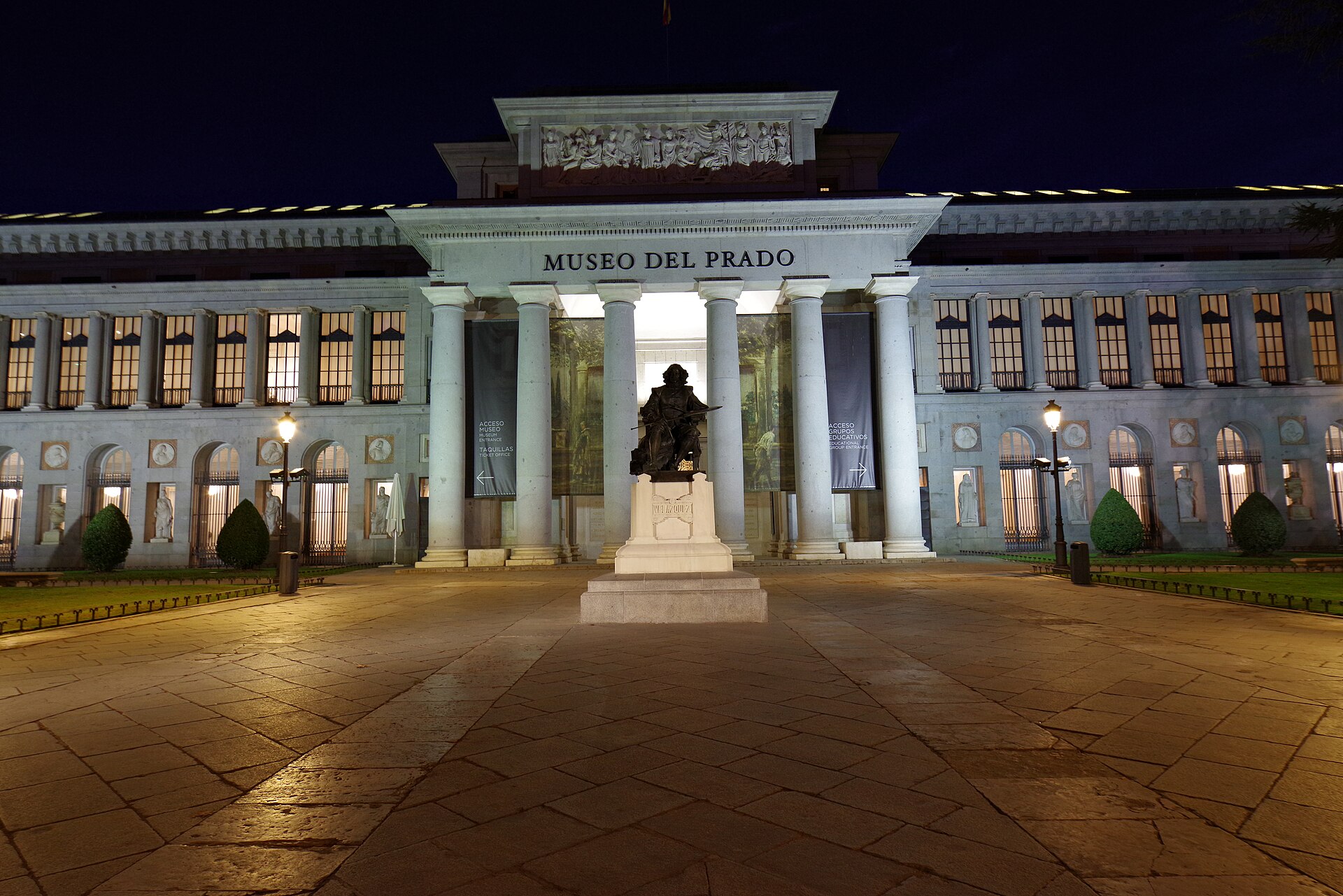
Featured image: Photo by Ernesto Paz Caínzos from Spain, source, CC BY 2.0
_03.jpg)