Most of Madrid’s day-trip towns are reached by one of three systems: the Cercanías regional rail network, longer-distance Renfe trains (including the AVE), or intercity coach services from Madrid’s bus stations. Which system applies depends on the town — some have no rail link at all and are bus-only.
What is the difference between Cercanías and the long-distance trains?
Cercanías Madrid is the commuter rail network operated by Renfe, the state rail company, running on lines labelled C1 through C10 across the region. It works like a metro with less frequent stops further out — you tap in, ride, and tap out, with fares set by zone rather than by named destination. Long-distance and AVE (high-speed) services depart from a smaller number of platforms at the same big stations, use assigned seating, and are booked as a specific journey, closer to how an intercity train works elsewhere.
Both systems can share a station — Chamartín and Atocha handle Cercanías, regional, and AVE services under one roof, which is covered in more detail on the site’s guide to Madrid’s main railway stations. The practical difference for a day trip is booking: Cercanías tickets are bought at the platform with no seat assignment, while AVE and many regional trains are reserved for a specific departure.
Which day-trip towns are reached by Cercanías?
Several of the region’s most-visited towns sit directly on a Cercanías line, which makes them the simplest to reach without advance booking. Notable examples include:
- Aranjuez, on the C3 line, described in the site’s explainer on Aranjuez as a royal garden town.
- Alcalá de Henares, served by Cercanías lines running out toward Guadalajara — see what Alcalá de Henares is and why it’s a day trip.
- San Lorenzo de El Escorial, on the C3 line into the Sierra de Guadarrama foothills, covered in the piece on El Escorial’s royal monastery.
- Points in the Sierra de Guadarrama, such as Cercedilla, on the C8 line, which also connects to a narrow-gauge mountain railway further into the range.
These journeys generally run close to an hour or under, and trains typically operate at intervals of thirty minutes to an hour depending on the line and time of day. Renfe’s own timetables, at renfe.com, are the source to confirm current departure times, since these are exactly the kind of detail that shifts with seasonal schedule changes.
Which towns need the AVE or a regional train instead of Cercanías?
Toledo, Segovia, Ávila, and Cuenca are outside the Cercanías network and require a Renfe long-distance or AVE service, generally departing from Atocha or Chamartín. These are booked journeys with assigned seats, not tap-in-tap-out travel.
Toledo is reached by a short AVE run from Atocha, covered in what makes Toledo a day trip from Madrid. Segovia has its own AVE stop, some distance from the historic centre and connected onward by local bus, detailed in the guide to Segovia and its aqueduct. Ávila sits on a regional and AVE line out of Chamartín, discussed in the piece on Ávila’s medieval walls. Cuenca, further out, is reached by a longer AVE journey and is treated separately in whether Cuenca works as a day trip or needs an overnight stay, since the round-trip time changes what’s realistic to see.
Because these are reserved services rather than open-access commuter trains, booking ahead — particularly for weekend travel — is worth doing through Renfe’s own site rather than assuming a seat will be available on arrival at the station.
Which towns can only be reached by bus?
Not every notable day trip has a rail option. Chinchón, known for its sloping colonnaded plaza, has no station and is reached only by intercity coach, typically from a stop near Madrid’s Conde de Casal or Plaza Elíptica area — the operator and route are described in what Chinchón is and how the day trip works. Manzanares el Real, at the foot of the Sierra de Guadarrama with its castle, is similarly bus-only, generally departing from Plaza de Castilla, as set out in the explainer on Manzanares el Real.
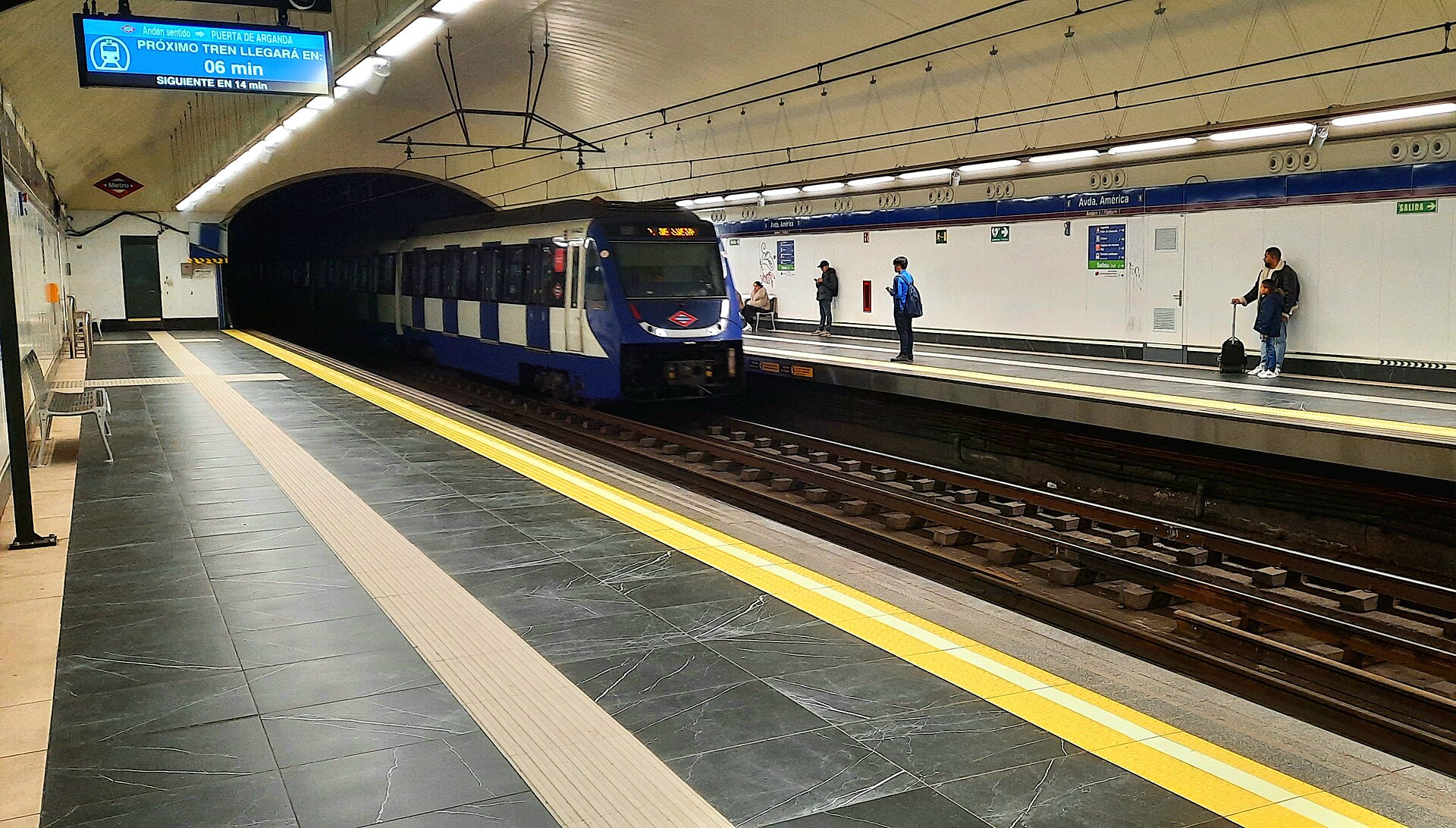
Madrid’s intercity coach network runs from several distinct departure points rather than one central station — the Estación Sur de Autobuses near Méndez Álvaro, plus stops at Moncloa, Plaza Elíptica, Avenida de América, and Plaza de Castilla depending on the destination. Each route is run by a specific licensed operator, and timetables sit with that operator rather than with any single regional authority, so confirming the current stop and schedule directly with the operator is the reliable approach.
How does the fare zone system work for these trips?
Madrid’s regional transport is organised by the Consorcio Regional de Transportes de Madrid (CRTM) into concentric zones — Zone A covers the city, with B1, B2, B3, C1 and C2 extending outward through the wider region. Most Cercanías-connected day-trip towns fall into these outer zones, and a Cercanías ticket, or a zone-appropriate travel card, is priced by how many zones the journey crosses rather than by the specific station.
This matters differently for a visitor and a resident. A visitor typically buys a single or return Cercanías ticket for the specific zone combination at a station machine. A resident holding an Abono (the regional travel pass) with the correct zone coverage can generally use it for these same Cercanías journeys without buying anything extra, which is one reason the pass is worth understanding properly rather than assuming it only covers the metro — the mechanics are set out in the comparison of the Multi card and the Abono and in the explainer on how Madrid’s metro fare system is structured. Long-distance and AVE tickets sit entirely outside this zone system and are priced and booked separately through Renfe.
Do you need to book ahead, or can these be spontaneous trips?
Cercanías and most local buses do not require advance booking — buy the ticket and travel. AVE and other reserved long-distance trains do, particularly on weekends, holiday periods, and around Spanish public holidays, when demand on routes like Madrid–Toledo or Madrid–Segovia rises noticeably. The explainer on Madrid’s public holidays is a useful cross-reference for anticipating those pinch points.
Bus routes to towns like Chinchón or Manzanares el Real can also fill on weekends, since they typically run at limited frequency — sometimes only a handful of departures a day — rather than the near-continuous service Cercanías offers on its busier lines.
Where do these trips fit into a wider visit?
Because each town sits on a different system — rail, AVE, or bus only — day trips from Madrid are rarely interchangeable in planning terms. A trip to Aranjuez or El Escorial can be decided on the morning of, given frequent Cercanías departures; a trip to Segovia or Toledo benefits from booking the specific AVE service in advance; a trip to Chinchón depends on checking the coach operator’s timetable, since services are less frequent.
The Day Trips archive covers each town in its own right, and the practical guide to getting around Madrid sets these journeys in the context of the city’s own metro, bus, and Cercanías network for readers weighing a day trip against a day spent in the city itself.
Related reading
what the city is like to actually live in, museums, landmarks, neighbourhoods and day trips, What Is Manzanares el Real? Madrid’s Castle Town Explained, What Is Cycling in Madrid Actually Like?, Day Trips From Madrid, Compared by Journey Time and Cost
Access Madrid is an independent guide written from published, checkable sources. We have not visited the places described here and we do not publish personal recommendations or invented ‘local favourites’ — where something is singled out as notable, we say who says so. Opening times, fares, closures and prices change at short notice, so treat everything here as a starting point and confirm with the museum, operator or venue directly before building a day around it. We give no advice on visas, insurance, health or safety; use your own government’s official guidance for those.
Featured image: Photo by Carlitos Manuel Ronquillo Ordóñez, source, CC BY 4.0
