Five places within easy reach of Madrid are worth a day, and the useful question is not which
is best — it is how much of the day the journey takes, and whether you can simply
turn up. Those two answers vary more than the distances do, because Madrid is served by
two completely different rail systems.
The five day trips, compared
| Destination | Journey each way | Service | From | Return fare |
|---|---|---|---|---|
| Segovia | ~28–30 min | AVE (high speed) | Chamartín | ~€22 |
| Toledo | ~33 min | Avant / AVE (high speed) | Atocha | ~€13 |
| Aranjuez | ~45 min | Cercanías C-3 | Atocha | ~€9 |
| El Escorial | ~1 hour | Cercanías / regional | Atocha | ~€10 |
| Ávila | ~1.5–2 hours | Regional | Chamartín | ~€12–25 |
fares vary by service and how far ahead you book — check the operator for your date.
The thing that catches people out: two different railways
Madrid’s day trips run on two systems that behave nothing alike, and which one serves your
destination changes how you plan the day.
| High speed (AVE / Avant) | Cercanías / regional | |
|---|---|---|
| Goes to | Segovia, Toledo | Aranjuez, El Escorial |
| Seat | Reserved — a specific departure | Turn up and board |
| Booking | Book ahead; Toledo sells out at weekends | No booking needed |
| Price behaviour | Promotional fares 15–60 days out; walk-up is dearest | Flat, cheap, same all day |
| If you miss it | You miss your train | You wait for the next one |
Journey time does not track distance
Segovia is further from Madrid than El Escorial and takes half as long to reach, because a
high-speed line happens to serve it and a commuter line serves the other. If you plan by looking
at a map you will get this backwards.
The practical consequence: Segovia and Toledo are half-day places you can treat as
long outings, while Ávila at up to two hours each way commits most of the daylight
before you have seen anything.
And check which station
Toledo, Aranjuez and El Escorial leave from Atocha. Segovia and Ávila
leave from Chamartín. They are at opposite ends of the city and the two are
about half an hour apart on the Metro, so arriving at the wrong one costs you the train and, on a
reserved high-speed service, the ticket.
What each one is
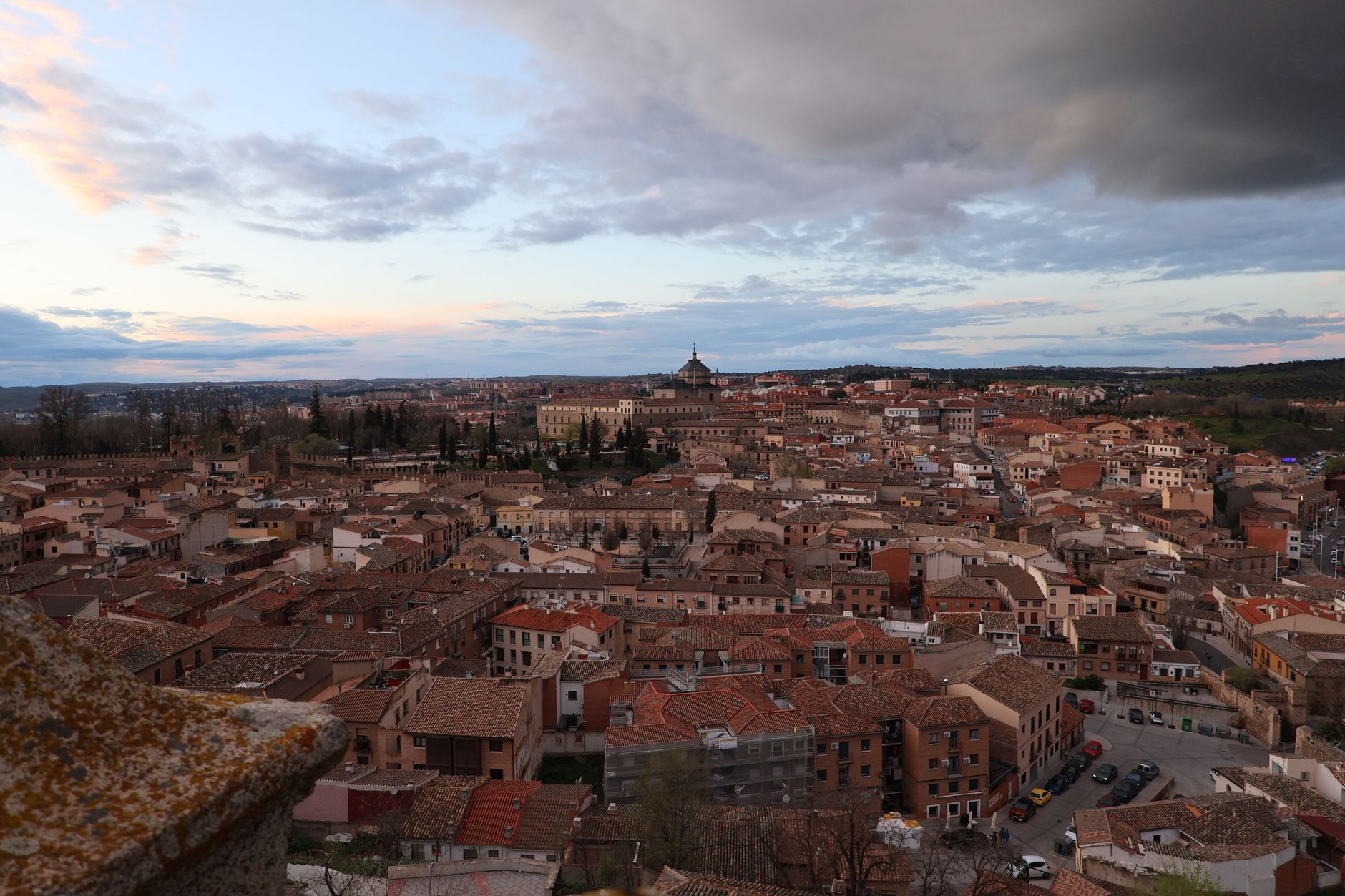
- Toledo — the walled hill city above the Tagus, with a cathedral and a
layered Christian, Jewish and Muslim history. - Segovia — the Roman aqueduct in the middle of town, and the Alcázar
on its rock at the end of the old quarter. - El Escorial — Philip II’s monastery-palace complex, vast and austere,
at the foot of the sierra. - Aranjuez — the royal palace and its gardens on the Tagus, the reason it
is called a garden town. - Ávila — the complete medieval walls, still circling the old city.
Times and fares compiled 2026 from published operator information including
Trainline
and Renfe’s own schedules. Rail fares and timetables change, and high-speed prices move with how
far ahead you book — confirm your specific date with the operator rather than relying on the
figures here.
Related reading
Living in Madrid, Madrid, Practically, Prado, Reina Sofia, Thyssen: Free Entry or the Paseo del Arte Card?, Madrid Airport to the City Centre: What Each Option Really Costs, What Is Manzanares el Real? Madrid’s Castle Town Explained, Left Luggage in Madrid: The Stations Don’t Store Bags
Featured image: Photo by Alexan97, source, CC BY-SA 4.0
