Renting a flat in Madrid means signing a contract governed by Spain’s national tenancy law, paying a deposit that is usually lodged with the regional government rather than kept by the landlord, and registering your address with the local council. The process is largely standardised, but the paperwork and the pace of the market differ sharply between a long-term lease and a short-term or tourist let.
What kind of contract will you sign?
Almost all residential lets in Madrid fall under Spain’s Ley de Arrendamientos Urbanos (LAU), the national urban leases law, most recently reformed in 2019. A standard “vivienda habitual” contract — a lease for a primary residence — runs for an initial term agreed between landlord and tenant, but the LAU gives the tenant the right to extend it, year by year, up to five years if the landlord is an individual and seven if the landlord is a company, regardless of what the printed contract says. This right belongs to the tenant, not the landlord: a landlord cannot simply refuse to renew within that window without one of the specific legal grounds set out in the law, such as needing the property for personal use.
Contracts distinct from a habitual residence — a room in a shared flat, a let explicitly for a fixed non-residential purpose, or a genuinely temporary stay — are treated differently and carry weaker renewal protections. It matters which type is actually being signed, and the wording of the contract, not the estate agent’s description, is what governs.
How much deposit is required, and where does it go?
The LAU sets a legal minimum deposit — one month’s rent for an unfurnished or furnished residential let — which is compulsory and cannot be waived. Landlords in the Community of Madrid are legally required to lodge this deposit with the regional government’s housing agency rather than hold it themselves, a system designed so a dispute at the end of the tenancy has an independent record of what was paid in.
In practice, many landlords also ask for extra guarantees on top of the legal deposit — commonly an additional month or two as a “fianza adicional,” a bank guarantee, or a personal guarantor — and these additional sums are agreed privately rather than regulated in the same way. A tenant should expect the legal deposit to be separate, on paper, from any additional security requested.
Where do people actually search for flats?
The market runs almost entirely through online property portals rather than shopfront agencies, supplemented by direct listings from private landlords and by word of mouth in shared-flat listings aimed at students and young professionals. Estate agencies (inmobiliarias) operate on a commission basis and in Madrid this fee is customarily paid by whichever party engaged the agency — often the tenant, though this varies and is negotiable before signing anything, not after.
The state statistics office, the Instituto Nacional de Estadística, and the Bank of Spain both publish periodic data on rental price trends, and the Community of Madrid’s own housing department publishes reference rental indices for the region — useful for understanding whether an asking price is broadly in line with an area, since no fixed city-wide rent cap applies uniformly across all of Madrid.
What is empadronamiento, and why does it matter?
Empadronamiento is registration on the padrón, the municipal register of residents kept by the Ayuntamiento de Madrid (Madrid City Council). Anyone living in the city, regardless of nationality or immigration status, is entitled — and in practice expected — to register at their address. It is not a visa or residency document, but it is the record used to access local public schools, some healthcare pathways, and municipal services, and landlords are generally expected to allow a tenant to register even in a rented flat.
The council’s own site sets out the documents needed and where to book an appointment, and because requirements are periodically updated it is the source to check directly rather than rely on secondhand advice.
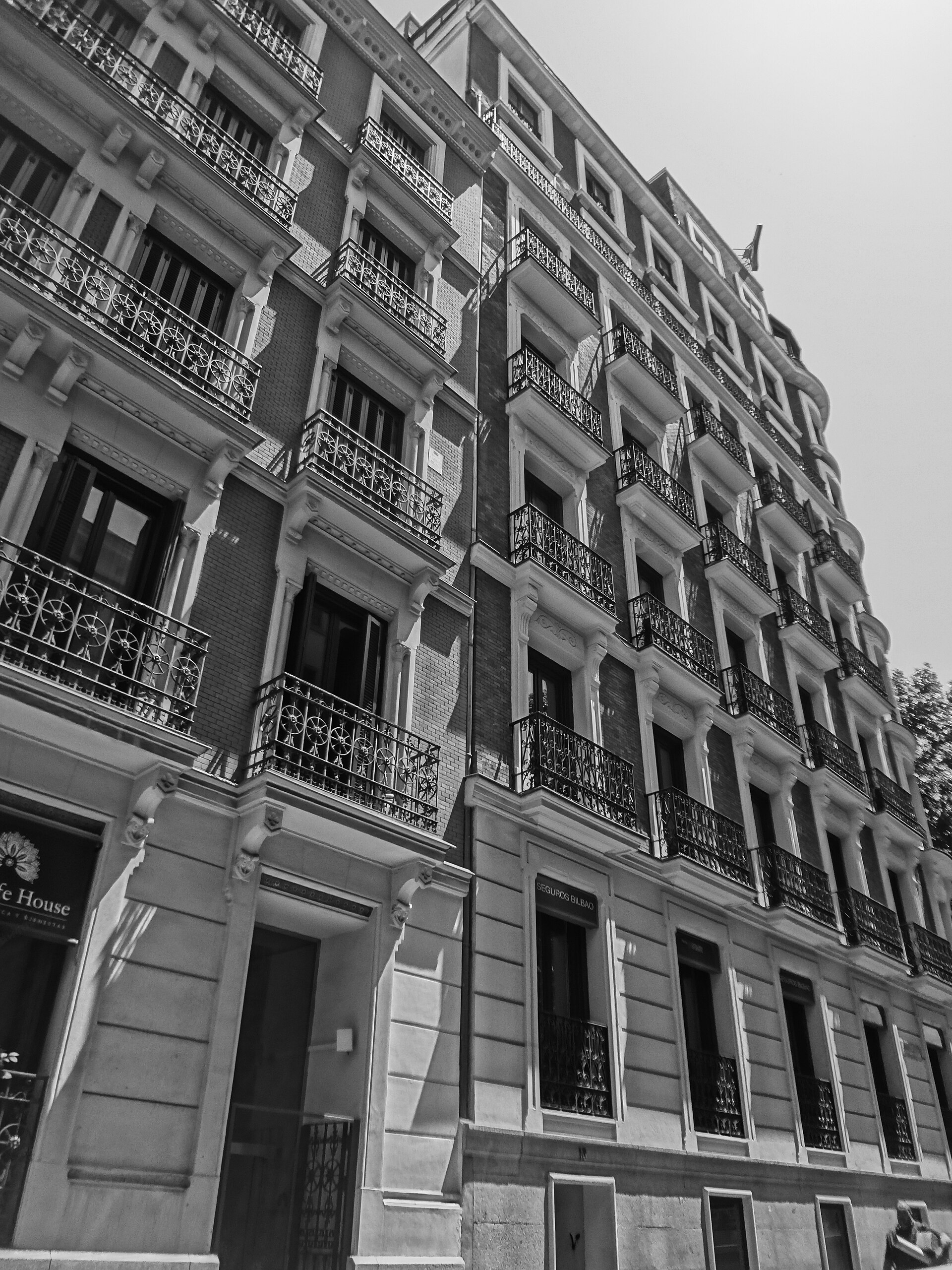
_exterior_black_and_white_photograph_of_an_antique_building.jpg)
How does a short-term let differ from a standard lease?
A short-term or “temporal” let — commonly used by people relocating before finding permanent housing, or by owners renting out a flat between longer tenancies — sits outside the LAU’s habitual-residence protections. These contracts typically state an explicit temporary purpose, run for a fixed period without the automatic extension rights of a standard lease, and are priced at a premium accordingly. Tourist or holiday lets are a separate category again, regulated by the Community of Madrid’s own tourism licensing rules, and the city has in recent years tightened restrictions on licensing new tourist flats in parts of the centre — a live regulatory area worth checking against the regional government’s current rules rather than assuming an older article’s summary still holds.
Anyone unsure which category a listed flat falls into should ask directly, since the practical difference — whether a tenancy can be renewed for years or must end on a fixed date — is significant.
What do utilities and community fees add to the cost?
Rent quoted for a Madrid flat is not always inclusive of utilities. Electricity, water, gas, and internet are typically contracted separately by the tenant unless the listing states otherwise, and many buildings also carry a “comunidad de propietarios” fee — a building-maintenance charge covering shared areas, lifts, and upkeep — which is usually the landlord’s responsibility to pay but occasionally passed to the tenant by agreement. A prospective tenant should confirm, in writing, exactly which of these costs sit inside the rent and which are billed separately, since the gap between an advertised figure and the real monthly outlay is usually made up of these charges.
Which districts matter for a renter, and how do they differ?
Madrid’s rental market varies enormously by district (distrito) and by the smaller neighbourhoods (barrios) within each one, in ways that go well beyond price. Central districts inside or near the M-30 ring road — including areas covered in detail in this site’s guide to what Madrid’s districts are like to live in — tend to carry older building stock, smaller flats, and higher rents relative to outer districts, but also shorter commutes and denser services. Districts further out, several of which are profiled individually on this site, function more like self-contained towns within the city, each with its own market rhythm, transport links, and community character; the general Neighbourhoods archive and the broader Living in Madrid archive cover this ground in more depth than any single district can.
Transport access is a genuine factor in rental decisions, not an afterthought: a flat’s real convenience depends on which metro line and which fare zone it sits in, covered in this site’s explanation of how Madrid’s metro fare system is structured, and on how the wider network of buses, the Cercanías regional rail, and night services connect a given address to the centre — subjects covered across the Getting Around archive.
What should a foreign renter expect procedurally?
Landlords typically ask for proof of income or employment, a copy of a passport or residence document, and sometimes a Spanish bank account already open before a contract is signed — a chicken-and-egg problem some newcomers solve by using a temporary let for the first weeks in the city while sorting out paperwork, which is one reason short-term contracts exist as a distinct category in the first place. None of this is legal or immigration advice; entry and residency requirements are set by the Spanish government and by the reader’s own government, and both should be checked on the relevant official site before making any commitment tied to a visa or residency status.
Beyond the paperwork, day-to-day life in a rented Madrid flat runs on the same civic rhythms covered elsewhere on this site — how opening hours in Madrid are structured, what the city empties into every August, and how public holidays reshape a working month, all of which are more relevant to someone actually living in a flat here than to someone passing through it for a weekend, and are covered across the Planning & Practicalities archive.
Access Madrid is an independent guide written from published, checkable sources. We have not visited the places described here and we do not publish personal recommendations or invented ‘local favourites’ — where something is singled out as notable, we say who says so. Opening times, fares, closures and prices change at short notice, so treat everything here as a starting point and confirm with the museum, operator or venue directly before building a day around it. We give no advice on visas, insurance, health or safety; use your own government’s official guidance for those.
Related reading
Living in Madrid, Madrid, Practically, What Are Madrid’s Summers Like to Live Through?, How Does Refuse and Recycling Work in Madrid?.