Madrid summers mean roughly three months of sustained, dry heat, with daytime highs regularly above 35°C in July and August, according to Spain’s national meteorological agency, AEMET. For residents, this is not a heatwave to endure for a week — it is the operating condition of an entire season, and it reorganises when people go outside, when shops open, and who is even in the city at all.
How hot does Madrid actually get?
AEMET’s historical records place Madrid’s July and August average maximums in the mid-30s Celsius, with spikes well above 40°C not unusual during multi-day heat episodes. The heat is dry rather than humid — Madrid sits on a high plateau, the Meseta, far from the coast — which changes how it’s experienced but doesn’t make it mild.
Nights matter as much as days. Because the city is large, paved and inland, overnight temperatures often fail to drop much below the mid-20s during the worst stretches, a pattern climatologists call the urban heat island effect. That’s the detail visitors rarely appreciate and residents feel most: there is limited overnight recovery. For a fuller picture of how this fits the rest of the year, see the guide to Madrid’s climate through the year.
Why does Madrid’s heat feel different from other European cities?
Two things compound the raw temperature: altitude and continentality. Madrid sits at roughly 650 metres above sea level, with no large body of water to moderate swings, so summer days are intensely hot and dry, and winter can turn sharply cold — a contrast locals sometimes summarise as “nine months of winter, three of hell,” a saying repeated widely but not an official slogan of any institution.
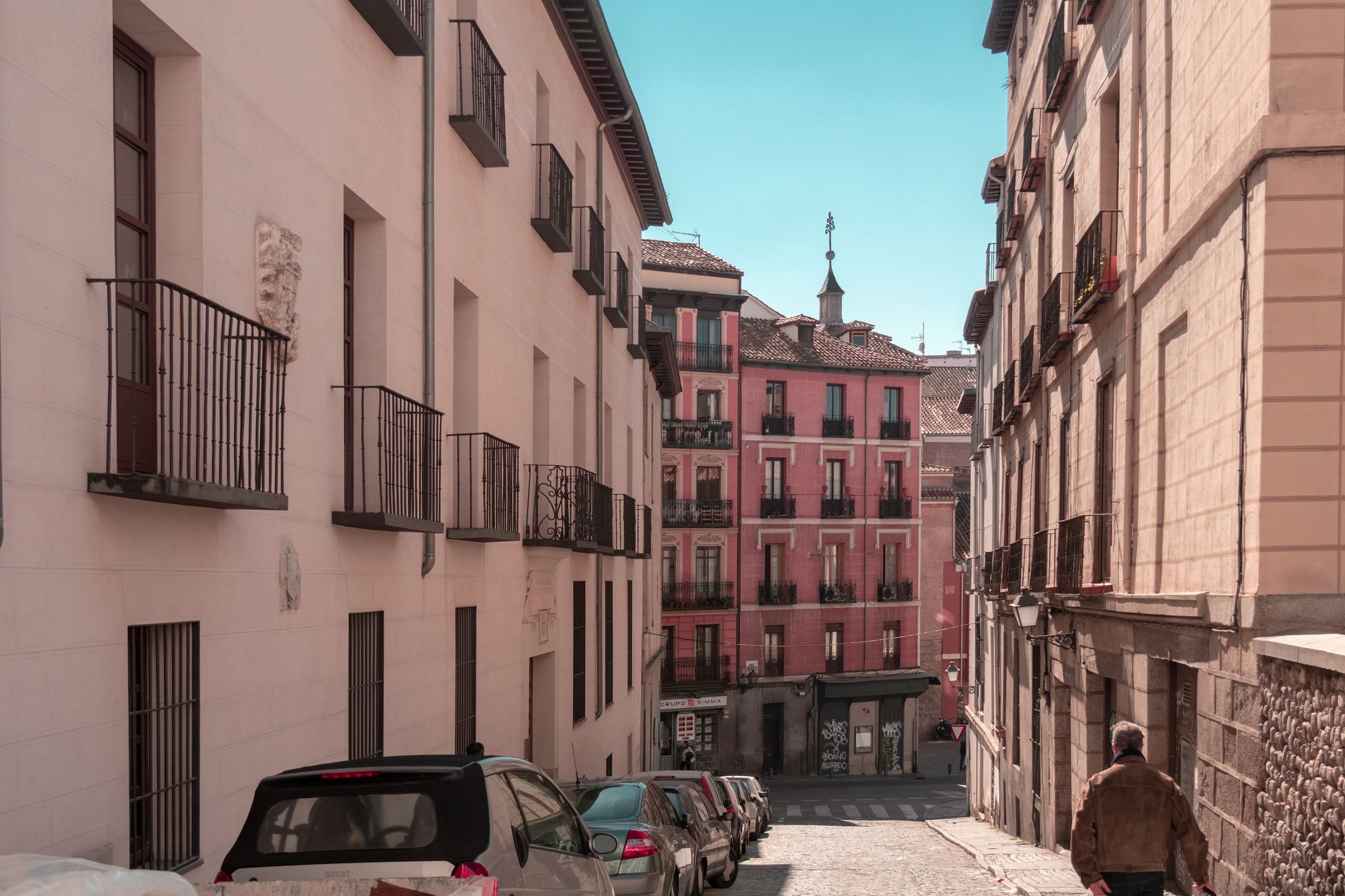
The dryness means shade and airflow do more work than in muggier cities. Streets running north–south trap direct sun for longer stretches; narrow, older streets in the centre offer more relief than the wide boulevards of areas like Salamanca or Chamberí. This is one of the few times of year where a district’s physical layout — building height, street width, tree cover — has a direct, daily effect on comfort. The overview of Madrid’s districts and what they’re like to live in covers how these differences play out beyond summer as well.
What actually changes in daily life during summer?
The most concrete answer: the clock shifts. Many offices and public bodies move to an intensive summer schedule (jornada intensiva), starting early and finishing by early afternoon, a practice widespread enough that it shapes when the city is on the street. Meal times, already later than much of Europe, push even later in the evening, since midday and mid-afternoon are simply too hot to be outside comfortably. The rhythms behind Spanish meal times and how a Madrid evening is structured are covered in the site’s guides to Spanish meal times and what counts as late in Madrid.
Retail hours contract around the same logic: some smaller, independent shops close for a few hours in the early afternoon and reopen later, a pattern distinct from — and often confused with — the siesta, addressed directly in does the siesta apply in Madrid?. It isn’t a universal nap; it’s a practical adjustment to when the street is bearable.
What happens to the city in August specifically?
August is its own distinct phase within the summer, not just its hottest stretch. A substantial share of Madrid’s population leaves the city for the coast or for family towns elsewhere in Spain during August, a pattern tied to national holiday customs rather than any single festival. Many family-run businesses close for two to four weeks, and some neighbourhoods, particularly residential ones, empty out noticeably. The details of this — what stays open, what doesn’t, and why the city feels different — are set out in what happens to Madrid in August.
How do residents deal with the heat at home?
Housing stock matters more than most visitors realise. Much of central Madrid’s residential building predates widespread air conditioning, and older buildings often rely on thick walls, shutters (persianas) and cross-ventilation rather than mechanical cooling. Air conditioning is common but not universal, and where it exists, running it through July and August is a real cost, tied to time-of-use electricity pricing that residents have to plan around. The practical mechanics of this — how a Madrid flat’s utilities actually work, including cooling and electricity billing — are explained in how utilities work in a Madrid flat.
The daily habit that follows from this housing reality is simple: shutters stay closed through the hottest hours to keep interiors dark and cooler, then open again in the evening once the outside air drops. It’s a routine, not a lifestyle choice, and it’s one of the clearest markers of how residents’ relationship to summer differs from a visitor’s few days in the city.
Where do people go to cool down?
Green space becomes functional infrastructure rather than scenery in summer. Madrid has a considerable amount of it relative to its density — the scale and distribution is covered in how much green space Madrid has — and parks with mature tree cover, such as El Retiro, or riverside spaces like Madrid Río, see genuinely different patterns of use in summer: mornings and late evenings, avoiding the mid-afternoon entirely.
For those able to leave the city for a day, the Sierra de Guadarrama, the mountain range within reach of Madrid, offers a measurable temperature drop through altitude — a detail explained in what the Sierra de Guadarrama is and how close it sits. It’s a pattern residents use regularly through summer weekends, not a one-off excursion.
Does this change how a visitor should plan a summer trip?
Yes, and the practical adjustments are covered in detail in how to plan a Madrid day in serious heat: shifting outdoor plans to morning and evening, using the midday hours for museums or indoor sites, and treating hydration and shade as planning constraints rather than afterthoughts. The core difference for a resident versus a visitor is duration — a visitor manages three or four days of it; a resident manages three months, and the adaptations described above (shifted schedules, shuttered flats, an emptied August) exist because of that longer horizon.
For a broader sense of how the city’s rhythms and routines work across the whole year, not just summer, the Living in Madrid hub and its wider Living in Madrid archive set this season in context alongside housing, transport and other durable structures of daily life in the city.
Related reading
getting around, planning, itineraries, food and green space, museums, landmarks, neighbourhoods and day trips, How Does Refuse and Recycling Work in Madrid?, How Does Madrid’s Cost of Living Compare With Spain?
Access Madrid is an independent guide written from published, checkable sources. We have not visited the places described here and we do not publish personal recommendations or invented ‘local favourites’ — where something is singled out as notable, we say who says so. Opening times, fares, closures and prices change at short notice, so treat everything here as a starting point and confirm with the museum, operator or venue directly before building a day around it. We give no advice on visas, insurance, health or safety; use your own government’s official guidance for those.
Featured image: Photo by Diario de Madrid, source, CC BY 4.0
