What is the Ermita de San Antonio de la Florida?
The Ermita de San Antonio de la Florida (ermita means “hermitage” or small chapel) is a late-18th-century neoclassical chapel on the Paseo de la Florida, near the Manzanares river in Madrid’s Moncloa-Aravaca district. It is small, plain on the outside, and famous for one thing: its entire interior — dome, pendentives and apse — was frescoed by Francisco de Goya in 1798. It also holds Goya’s tomb.
Who built it, and why?
The chapel was commissioned by King Carlos IV and built between 1792 and 1798, replacing an earlier hermitage on the site dedicated to Saint Anthony of Padua. The architect is usually credited as the Italian Filippo Fontana, working under royal patronage. It was conceived as a modest royal chapel rather than a parish church — a single nave under a shallow dome, of a kind found across Madrid’s outskirts in the period, none of which would be remarkable on its own.
What made it exceptional was the decision to bring in Goya, by then established as a court painter, to fresco the dome directly onto wet plaster rather than commission conventional canvases. The work was completed in a matter of months in 1798, an unusually fast turnaround for a full fresco cycle, and it is generally treated by art historians as one of the most complete surviving examples of Goya working at this scale.
What did Goya paint inside?
The dome shows the central miracle attributed to Saint Anthony of Padua: the saint, appearing before a crowd, briefly resurrects a dead man so that the man can testify and clear the saint’s own father of a murder charge. It is a standard subject in the iconography of the saint, but Goya’s treatment of it is not standard at all.
Instead of painting an idealised heavenly host, Goya filled the dome with a crowd of contemporary Madrid figures — women in the working-class dress of the period known as majas, men leaning over a painted trompe-l’oeil balustrade, ordinary onlookers rather than saints or angels. A ring of cherubs and putti holds up drapery around the base of the cupola, and the pendentives below carry further figures. The effect, widely discussed in Prado and Academia scholarship on Goya, is of a religious miracle witnessed not by a heavenly court but by the street life of Madrid itself.
Why does the crowd in the fresco look so unusual?
Because Goya was already moving away from formal religious painting toward the observational, sometimes unsparing depiction of Spanish society that defines his later work — the same instinct visible in his court portraits and, later, in the Black Paintings now held by the Museo del Prado. The San Antonio dome is one of the clearest points where that shift happens inside a devotional commission rather than a private one.
Goya held the post of court painter and was later director of painting at the Real Academia de Bellas Artes de San Fernando, whose own collection holds further work from across his career and gives useful context for how his style developed before and after this commission.
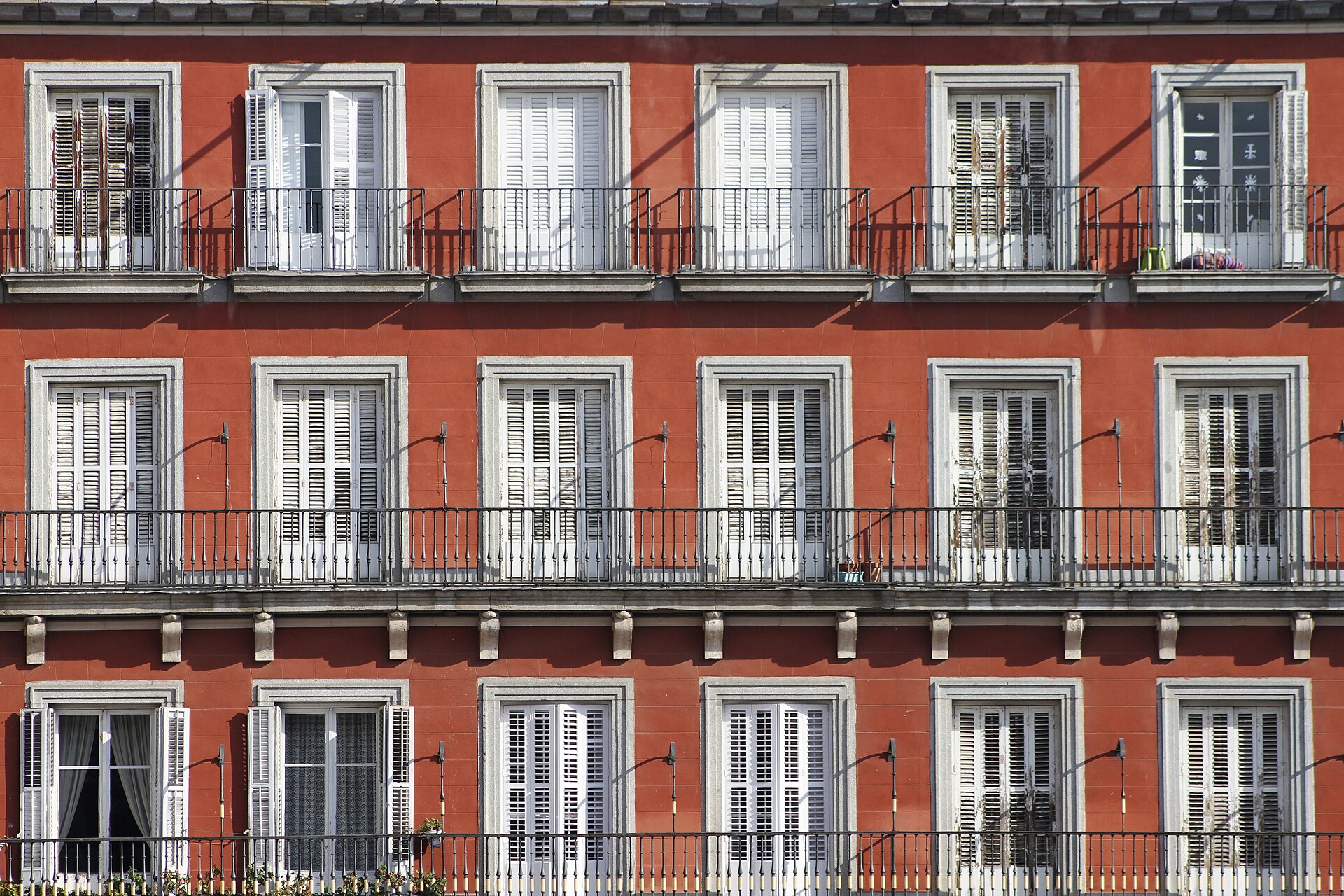
.JPG)
Why is there a second, identical chapel next door?
Because the frescoes and ongoing worship turned out to be incompatible. The original ermita became a site of pilgrimage and daily use, and by the early 20th century the wear from regular congregations, candle smoke and foot traffic was judged a threat to the frescoes. In 1928, on the orders of the Madrid City Council, a second chapel — an exact exterior replica of the first — was built immediately alongside it. Religious services and the annual romería (a popular saint’s-day procession and gathering) held every June 13 were transferred to this twin building, while the original became a protected monument, deconsecrated for regular worship and given over to conservation and public viewing.
The result is two near-identical domed chapels standing side by side on the same street — one active as a place of worship, the other preserved as what is effectively a single-room museum around Goya’s fresco.
Is Goya actually buried there?
Goya’s remains are interred beneath the floor of the original ermita, but he did not die in Madrid. He spent his final years in Bordeaux, in self-imposed exile, and died there in 1828. His remains were exhumed and repatriated to Spain in 1919, and were placed in the ermita specifically because it held his own work — an unusual honour, effectively making the chapel both a gallery of one commission and a mausoleum for its painter.
One detail is regularly noted in accounts of the reburial: when the remains were exhumed in France, the skull was reportedly missing from the coffin. The circumstances were never conclusively established, and it remains an open historical question rather than a settled fact — worth noting as something reported, not something this guide can verify.
How is it run today, and can you visit?
The original chapel is administered by the Madrid City Council as a small municipal museum, distinct from the working chapel next door. Like many Madrid museums it is not open every day of the week, and hours, closure days and any admission arrangements should be confirmed on the city council’s own listings before visiting, since these details change and this guide does not maintain a live calendar. In line with the pattern seen across the city’s national and municipal collections — covered in more detail in our explainer on why so many Madrid museums close on Mondays — a weekday closure of some kind is common practice, though the exact day here is set by the city council rather than the national museums authority.
There is no admission charge structure comparable to the Prado or Reina Sofía, since this is a single-room municipal site rather than a national museum, but current arrangements should still be checked directly rather than assumed.
Where is it, and what else is nearby?
The ermita sits on the Paseo de la Florida, close to the Manzanares riverbank and within reach of the Príncipe Pío transport interchange, on the western edge of the area covered by Madrid’s Templo de Debod and the wider Parque del Oeste. It is a short, walkable distance from that part of the city rather than an isolated site, though it sits apart from the museum concentration further east.
Goya’s broader body of work is spread across several Madrid institutions. The largest holding of his paintings, including the Black Paintings, is in the Museo del Prado’s collection, one leg of the city’s so-called Golden Triangle of art museums. Further Goya material, alongside other Spanish old masters, is held by the Museo Lázaro Galdiano. Readers building a wider itinerary around Madrid’s landmark buildings and monuments can start from the site’s Landmarks & Sights archive for the rest of the city’s protected sites, or the Museums & Galleries archive for how the ermita fits alongside the city’s larger collections.
Access Madrid is an independent guide written from published, checkable sources. We have not visited the places described here and we do not publish personal recommendations or invented ‘local favourites’ — where something is singled out as notable, we say who says so. Opening times, fares, closures and prices change at short notice, so treat everything here as a starting point and confirm with the museum, operator or venue directly before building a day around it. We give no advice on visas, insurance, health or safety; use your own government’s official guidance for those.
Featured image: Photo by Nemo, source, CC BY-SA 4.0
.jpg)