What is the Edificio Metrópolis?
The Edificio Metrópolis is an early 20th-century office building at the corner of Calle Alcalá and Gran Vía, built for an insurance company and known for its slate dome, sculpted stone facade and the bronze winged figure on its roof. It is not open to the public and is viewed from the street.
Where exactly does it stand?
The building occupies a narrow, wedge-shaped corner site where Calle Alcalá meets the start of Gran Vía, close to Plaza de Cibeles and its fountain. This is the eastern end of Gran Vía, the point where the avenue begins its run northwest through central Madrid. The location is also a short walk from the Círculo de Bellas Artes, and anyone tracing the history of the avenue itself will pass directly beneath it — the building predates most of what now lines Gran Vía.
Who built it, and when?
It was designed by the French architects Jules and Raymond Février and constructed between 1905 and 1911. The commission came from La Unión y El Fénix Español, an insurance company that wanted a headquarters building to match the confidence of a firm doing well in Spain’s early 20th-century financial market. The Février brothers worked mainly in Paris, and the building is a Spanish example of the French Beaux-Arts style that was fashionable across European commercial architecture at the time — heavy stonework, classical ornament and a domed corner tower designed to be seen from several streets away.
What does the building actually look like?
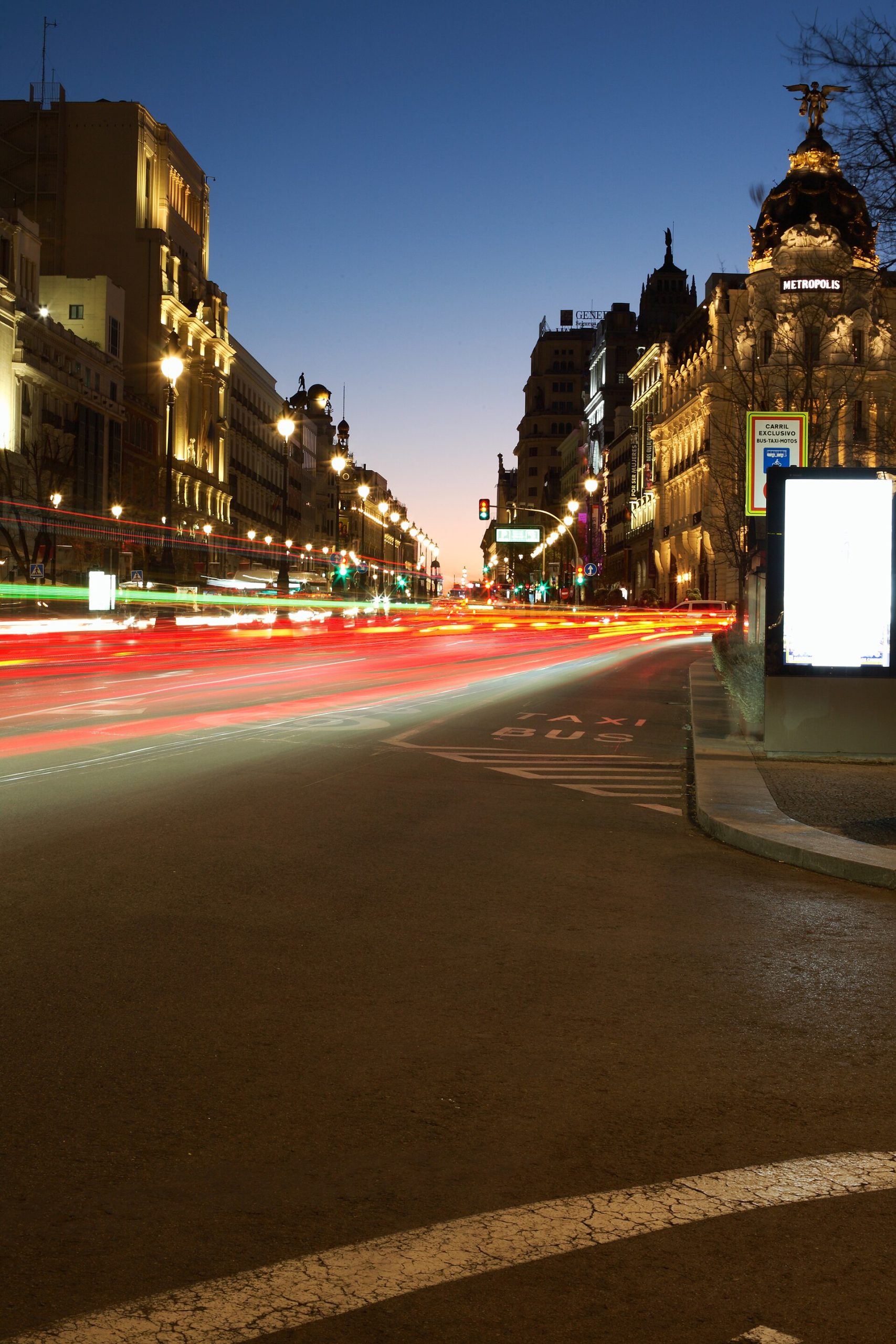
The facade is built up in tiers of columns and pilasters, with sculpted figures, garlands and window surrounds cut in relief across the stone. The corner is capped by a rounded tower roofed in slate, a material choice that gives the dome its dark, slightly northern-European tone against the paler stone below. The overall effect belongs to the same architectural moment as the grand insurance and bank headquarters built in Paris and other European capitals in the decades either side of 1900 — buildings designed explicitly to project financial solidity through scale and classical detail, rather than through any functional need for the space inside.

What is the winged figure on top of the dome?
The bronze figure on the dome is a phoenix with outstretched wings, added in 1975 by the sculptor Federico Coullaut-Valera. It replaced an earlier rooftop statue that had deteriorated and been removed, and it is a deliberate reference to the “Fénix” in the original insurance company’s name — La Unión y El Fénix Español used the phoenix as its emblem. The statue is one of the most photographed rooftop details in central Madrid, largely because it is visible from a long stretch of Gran Vía and from Plaza de Cibeles, making it a natural point of reference when navigating that junction on foot.
Can visitors go inside?
No. The Edificio Metrópolis has functioned as commercial office space for financial and insurance firms for most of its history, and the interior has never been arranged as a public attraction. There is no ticketed entry, no visitor centre and no published route through the building. What can be seen is the exterior — the dome, the facade and the phoenix — from the pavements around the Alcalá–Gran Vía junction and from across the road at Cibeles.
Why does the building matter to the story of Gran Vía?
Gran Vía was cut through the old city centre in stages from 1910 onward, and the Edificio Metrópolis was already under construction on Calle Alcalá when the first section of the new avenue opened nearby, which is why the building predates almost everything else along the street it now appears to anchor. Its scale and dome set an early benchmark for the kind of ornamented, commercially confident architecture that would follow along Gran Vía over the next two decades, as banks, cinemas and department stores went up along the new route. The building is frequently cited in guides to the avenue’s architecture precisely because it sits at the hinge between the old city and the new one, marking the boundary rather than sitting inside either.
How does it fit into a walk through this part of Madrid?
The Edificio Metrópolis sits at a junction that links several separately notable points: Plaza de Cibeles and the building behind its fountain, the start of Gran Vía running northwest, and Calle Alcalá running southeast toward the Puerta de Alcalá. It is a useful fixed point for orientation rather than a destination requiring dedicated time, and it is commonly seen in passing by anyone walking between the Plaza de Cibeles and the lower end of Gran Vía. Readers building a longer itinerary around Madrid’s landmark architecture can find related buildings, gates and monuments gathered in the Landmarks & Sights section, and a contrast in scale and period with the newer business district covered in the piece on the Cuatro Torres skyscrapers.
Is the building protected as heritage?
The Edificio Metrópolis is widely listed in architectural surveys of Madrid’s early 20th-century commercial buildings and is treated by heritage bodies as part of the protected fabric of the Gran Vía and Alcalá corridor, alongside other buildings from the same construction wave. As with any protected structure in central Madrid, the operative detail — listing category, any restrictions on the facade, ongoing maintenance work — sits with Spain’s national and Madrid regional heritage authorities rather than with any tourism body, and readers wanting the formal record should consult those official sources directly rather than a general guide.
What else is nearby worth knowing about?
The immediate area around the Edificio Metrópolis is dense with buildings that reward the same kind of factual approach — what something is, who built it, and why it stands where it does, rather than an experience being sold. The Círculo de Bellas Artes is a short walk up Calle Alcalá. Plaza de Cibeles, with the building behind its fountain, sits directly across the junction. Further along Calle Alcalá toward Retiro Park stands the Puerta de Alcalá, one of Madrid’s ceremonial gates. None of these require the Edificio Metrópolis to be visited on its own terms — the building works better as a fixed reference point in a longer route through this stretch of the city than as a stop with its own opening hours or ticket desk.
Access Madrid is an independent guide written from published, checkable sources. We have not visited the places described here and we do not publish personal recommendations or invented ‘local favourites’ — where something is singled out as notable, we say who says so. Opening times, fares, closures and prices change at short notice, so treat everything here as a starting point and confirm with the museum, operator or venue directly before building a day around it. We give no advice on visas, insurance, health or safety; use your own government’s official guidance for those.